Many people in the Midwest know about and admire flowering dogwood trees and their distinctive spring flowers, which display conspicuous white or pink bracts (flower structures that resemble petals). Reportedly, George Washington and Thomas Jefferson were fans of this tree as well, planting them at their homes in Mount Vernon and Monticello, respectively. Did you…Read more about Distinguishing Dogwoods[Read More]
Resources for landscapes and gardens in the Midwest
Landscape Report
Found 585 Articles
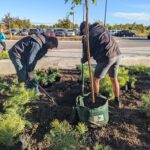
Fall is one of my favorite times of year. The temperatures begin to cool, the humidity drops, and the landscape starts its annual transformation as trees trade their summer greens for shades of yellow, orange, and red. For those of us who enjoy spending time outdoors, it can also be one of the most pleasant…Read more about Can I Plant Trees in the Fall?[Read More]
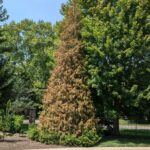
This year, we have recently been finding Armillaria root rot at an increased frequency on Arborvitae samples submitted to the Purdue University Plant and Pest Diagnostic Lab. This is a fungal disease, caused by fungi in the genera Armillaria or Desarmillaria. Desarmillaria is a more recent name given to two species of basidiomycetes (2018 and…Read more about Armillaria root rot[Read More]
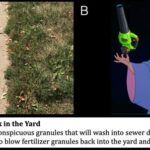
Home lawns are often vilified as detriments to the environment. In reality, however, these greenspaces provide many environmental benefits including carbon sequestration, runoff and erosion reduction, groundwater recharge, heat dissipation, soil reclamation and habitat for macro and microorganisms… when managed responsibly. Nearly all of the home lawns in Indiana are comprised of cool season…Read more about BIBITY: Be the Fairy Godmother in Lawn Care[Read More]
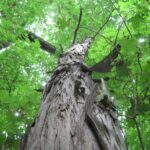
Following a recent tornado in Monroe County, an Indiana homeowner noticed something remarkable among the storm damage. More than 30 trees, including walnut and butternut, were either uprooted or snapped. Yet several mature shagbark hickory trees stood largely untouched amid the destruction. This observation prompted an interesting question: Is there something about shagbark hickory trees…Read more about Question: Why Did the Shagbark Hickories Survive the Tornado?[Read More]
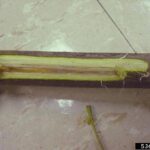
This article is not meant to raise an alarm for a new, deadly tree disease. Rather, I wish to increase your awareness of a disease that has been around for a long time. According to Purdue experts, it is one of the most common and destructive diseases of woody ornamental plants in the Midwest. John…Read more about Disease May Cause Wilting and Eventual Death of Certain Trees and Shrubs[Read More]
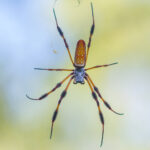
Recently, many Hoosiers have been reporting suspected sightings of an invasive spider species known as the jorō spider. This species, scientific name Trichonephilia clavata, is native to Japan, the Koreas, China, Taiwan, India, and Vietnam. The name of the spider is derived from its Japanese name “jorōgumo”. Due to the nature of the Japanese language,…Read more about Jorō spiders and similar species[Read More]

Indiana DNR inspectors found small green leafhoppers on tropical hibiscus at a garden center in Delaware County and sent specimens to us at Purdue for confirmation. They turned out to be the two-spotted cotton leafhopper, Amrasca biguttula (Ishida), the first record of this species in the state (Fig. 1). It is a slender, pale green…Read more about First Detection of the Invasive Two-Spotted Cotton Leafhopper in Indiana[Read More]

When considering trees, shrubs, and forbs or grasses to plant for landscaping, a little research in advance can lead to dual benefits for both the appearance of your planting area and a wildlife-friendly landscape. Our native wildlife species are tuned into using our native plant species, so selecting plants that are naturally found in your…Read more about What You Plant Matters to Wildlife[Read More]

Is It Too Early to Think About Christmas Tree Pests? Is it too early (and too hot outside) to think about Christmas trees? Maybe, but many of the pests that attack them are active at this time of year. In this week’s IDNR Entomology review, Jared Spokowsky shared damage he observed on pine from white…Read more about Is It Too Early to Think About Christmas Tree Pests?[Read More]
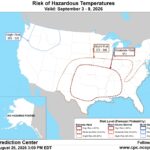
There’s been a general break since the heavy rain events from several weeks ago. Summer is coming to an end and even some leaves are starting to turn colors. What does all this mean for our weather and climate over the next few weeks and months? Indiana has remained drought free for the 2nd week…Read more about A possible extreme heat event for early September[Read More]

Transforming grass into a thriving garden takes more than just planting fruits and vegetables. Grass to Garden provides practical guidance for professionals that manage parks or other municipal green spaces. Learn how to assess potential sites, develop garden policies, and engage community partners to create and maintain a successful community growing space. This four-part series…Read more about Grass to Garden: From Public Green Space to Community Resource[Read More]

When Division is Desirable: Splitting Up Perennials to Promote Plant Health Division often has a negative connotation; it is something that separates us. In the garden, however, division can be a good thing. Some perennials become crowded over time which may result in smaller or fewer flowers; the center of the plant may die out, or the entire clump becomes so dense that it flops over….Read more about When Division is Desirable[Read More]
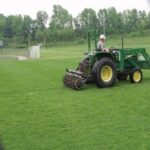
Homeowners often think about their lawns in the spring, when it’s time to pull out the mower for the first time and dandelions begin showing off their blooms. As a result, inputs such as fertilizer, seed, and pesticides are often applied during the spring months. Cabin fever doesn’t help. After being cooped up all winter,…Read more about Lawn Considerations for the Fall[Read More]

The 2026 Purdue Turf and Landscape Field Day, hosted by the Midwest Regional Turf Foundation and Purdue University, took place on July 21 at the W.H. Daniel Turfgrass Research and Diagnostic Center in West Lafayette. A near-record crowd of 486 attendees traveled from 15 states to be there, a reach that shows how far the…Read more about Purdue Turf and Landscape Field Day 2026 Recap and a Look Ahead to 2027[Read More]
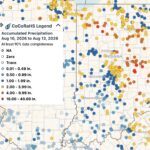
There was a period earlier this year when southern Indiana was getting all the rain. Flooding was a concern. The rest of Indiana was hoping for their share. Then this week happened. A lot of rain has fallen almost everywhere but southern Indiana. Perhaps this will provide some time for those down south to assess…Read more about A lot of rain before a break comes[Read More]
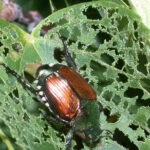
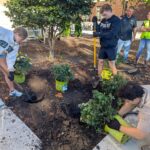
The Green Industry offers exciting opportunities for young professionals who are passionate about plants, people, and the environment. Whether you work in landscape management, nursery production, turfgrass management, arboriculture, garden centers, or another horticulture-related field, the first years of your career can shape your future success. Join the Young Professionals of the Green Industry webinar…Read more about Young Professionals Webinar: Growing Careers in the Green Industry[Read More]
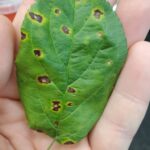
Rosaceous plants are fairly disease prone and it can be fairly hard to keep them healthy and clean in the landscape, especially without applying large quantities of fungicide. One of the more common diseases we see on apple, crabapple, and ornamental pear is fire blight, caused by Erwinia amylovora, that causes significant damage to susceptible…Read more about Black rot, stem canker, and frogeye, Oh My!: Black rot of Apple and Friends[Read More]
By late July, Indiana had settled into a typical midsummer pattern. Warm, humid days with warm overnight temperatures were common, and scattered thunderstorms left a patchwork of rainfall across the state. Extreme heat was brief, but the steady warmth kept crops progressing at a near-normal pace. Through July 28, accumulated MGDDs ranged from around 1,440…Read more about July Settles into a Familiar Indiana Summer Pattern[Read More]
It is the policy of the Purdue University that all persons have equal opportunity and access to its educational programs, services, activities, and facilities without regard to race, religion, color, sex, age, national origin or ancestry, marital status, parental status, sexual orientation, disability or status as a veteran. Purdue is an Affirmative Action Institution. This material may be available in alternative formats. 1-888-EXT-INFO Disclaimer: Reference to products in this publication is not intended to be an endorsement to the exclusion of others which may have similar uses. Any person using products listed in this publication assumes full responsibility for their use in accordance with current directions of the manufacturer.
Sign-up to receive email news and alerts from Purdue Landscape Working Group:

This is US

For More Information

Purdue Home Page

Purdue Extension

Find your county office