Espalier is a pruning and training technique that shapes a tree or shrub to grow in a flat, usually two-dimensional form, often against a wall, fence, or trellis. Rather than allowing branches to grow in every direction, espalier uses careful cutting and tying to guide stems into a planned pattern. The result can be both practical and beautiful, turning a fruit tree or ornamental plant into a living architectural feature.
This method has been used for centuries, especially in places where gardeners wanted to maximize growing space or use walls to create a warmer microclimate. Espalier is especially popular with fruit trees such as apples, pears, and sometimes figs or stone fruits, because the open structure can improve light penetration and make harvesting easier. It is also valued in formal gardens and small urban spaces where a full-sized tree would be too large or unruly.
One of the biggest advantages of espalier is efficient use of space. A tree trained flat can fit into narrow courtyards, along property lines, or against sunny walls where space is limited. It can also make maintenance easier, since pruning, spraying, thinning, and harvesting are often more accessible than in a dense, free-growing tree. In fruit production, better sunlight and air circulation can improve fruit quality and reduce some disease problems. For many gardeners, espalier is also appealing because it adds a strong visual design element to the landscape.
Espalier does have challenges. It requires patience, regular attention, and a willingness to prune frequently during the training phase. The technique is not ideal for every species, and success depends on choosing a plant that responds well to bending and cutting. If neglected, an espaliered tree can lose its shape quickly and become difficult to correct. It also demands a level of planning that is greater than ordinary pruning, since the final form must be imagined and maintained over time.
The technique is most commonly associated with Europe, especially France, Italy, and England, where it has long been used in formal gardens, orchards, and along estate walls. Today it is also popular in North America among home gardeners, landscape designers, and urban fruit growers who want to combine productivity with ornament. While espalier is less about a single geographic region than pollarding, it remains especially visible in European garden traditions and in places where intensive use of limited space matters.
Espalier is both practical and artistic. It can help gardeners grow more in less space while creating a distinctive look that feels deliberate and refined. For the right plant and the right site, it is a pruning style that blends horticulture with design.
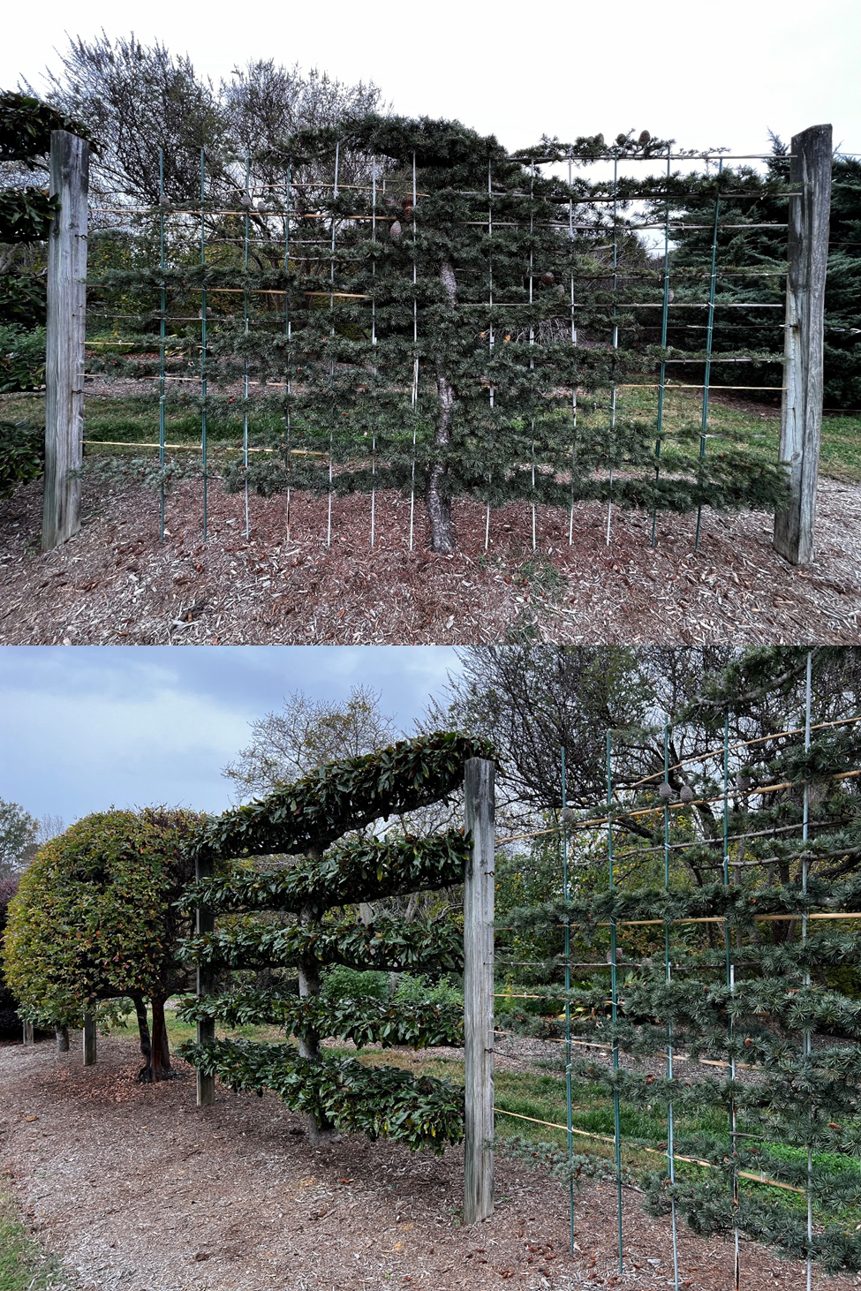
Figure 1: Examples of espalier from the Bartlett Tree Research Lab. Photo Credit: Ben McCallister