Many people in the Midwest know about and admire flowering dogwood trees and their distinctive spring flowers, which display conspicuous white or pink bracts (flower structures that resemble petals). Reportedly, George Washington and Thomas Jefferson were fans of this tree as well, planting them at their homes in Mount Vernon and Monticello, respectively. Did you…Read more about Distinguishing Dogwoods[Read More]
Resources for landscapes and gardens in the Midwest
Landscape Report
Horticulture
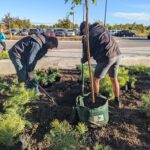
Fall is one of my favorite times of year. The temperatures begin to cool, the humidity drops, and the landscape starts its annual transformation as trees trade their summer greens for shades of yellow, orange, and red. For those of us who enjoy spending time outdoors, it can also be one of the most pleasant…Read more about Can I Plant Trees in the Fall?[Read More]
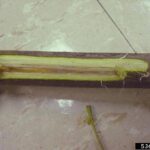
This article is not meant to raise an alarm for a new, deadly tree disease. Rather, I wish to increase your awareness of a disease that has been around for a long time. According to Purdue experts, it is one of the most common and destructive diseases of woody ornamental plants in the Midwest. John…Read more about Disease May Cause Wilting and Eventual Death of Certain Trees and Shrubs[Read More]

When considering trees, shrubs, and forbs or grasses to plant for landscaping, a little research in advance can lead to dual benefits for both the appearance of your planting area and a wildlife-friendly landscape. Our native wildlife species are tuned into using our native plant species, so selecting plants that are naturally found in your…Read more about What You Plant Matters to Wildlife[Read More]

Is It Too Early to Think About Christmas Tree Pests? Is it too early (and too hot outside) to think about Christmas trees? Maybe, but many of the pests that attack them are active at this time of year. In this week’s IDNR Entomology review, Jared Spokowsky shared damage he observed on pine from white…Read more about Is It Too Early to Think About Christmas Tree Pests?[Read More]
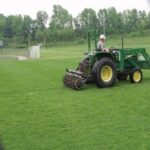
Homeowners often think about their lawns in the spring, when it’s time to pull out the mower for the first time and dandelions begin showing off their blooms. As a result, inputs such as fertilizer, seed, and pesticides are often applied during the spring months. Cabin fever doesn’t help. After being cooped up all winter,…Read more about Lawn Considerations for the Fall[Read More]
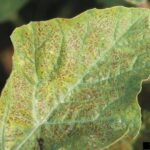
Those of a certain age will remember concerns about a hole in the ozone layer dominating the news in the mid 1980’s. This concern led to the ban of chlorofluorocarbons (CFC’s), and other ozone-depleting chemicals via the Montreal Protocol. According to the European Environment Agency, since the early 2000’s, the hole has been shrinking and…Read more about Ozone Damage to Landscape Plants: A hidden stress[Read More]
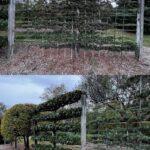
Espalier is a pruning and training technique that shapes a tree or shrub to grow in a flat, usually two-dimensional form, often against a wall, fence, or trellis. Rather than allowing branches to grow in every direction, espalier uses careful cutting and tying to guide stems into a planned pattern. The result can be both…Read more about Pruning Highlight; Espalier Pruning: Training Trees into Living Patterns[Read More]
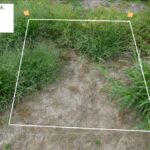
Managing weeds in commercial and residential landscapes is a constant battle. Landscape professionals have historically relied heavily on a combination of mulching, manual pulling, and preemergence (PRE) herbicides to maintain clean planting beds. However, a recent, multi-state study published in Agrosystems, Geosciences & Environment titled ‘Landscape weed control varies by preemergence herbicide, formulation, and geography’…Read more about Landscape Weed Management: How Geography and Formulation Impact Landscape Preemergence Herbicides[Read More]
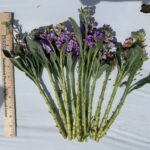
The Purdue cut flower team is currently conducting cut flower demonstrations at three locations in Indiana. In this article, we provide updates and observations on cool-season flowers from the three sites, including open-field and high-tunnel plantings in Vincennes, an open-field site in Indianapolis, and an open-field site in West Lafayette, representing southern, central, and northern…Read more about Spring Planted Cool-Season Cut Flower Update — Snapdragon, Stock, Ornamental Cabbage[Read More]
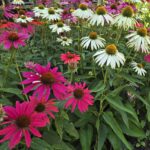
Indiana summers are often hot and dry, creating challenging conditions for many landscape plants. Fortunately, some flowers are naturally suited to these conditions. Once established, the following flowers continue to grow and bloom with little supplemental irrigation, making them excellent choices for low-maintenance landscapes. Coneflower – Echinacea spp. (Figure 1) Coneflower is an herbaceous perennial that grows 3 to 4 feet tall in full sun. This Indiana native blooms from early…Read more about Summer Flower Spotlight – Drought Resistant Edition[Read More]
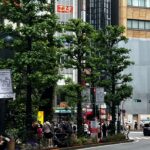
Pollarding is a tree pruning method in which the upper branches of a tree are cut back to the same points on a regular schedule, creating a framework of knobby growth points from which new shoots emerge. The practice has been used for centuries and is especially common in landscapes where trees must be kept…Read more about Pruning Highlight- Pollarding Trees: A Traditional Pruning Practice with Modern Uses[Read More]

Scale Spotlight: Azalea Bark Scale Have you noticed crusty white flecks or cottony patches building up along the stems and branch forks of an azalea or rhododendron? The culprit is likely azalea bark scale, Acanthococcus azaleae (Comstock). We received a sample of this scale at the Purdue Plant & Pest Diagnostic Lab earlier this month,…Read more about Azalea Bark Scale[Read More]

Earlier this year, Ohio expanded its quarantine for box tree moth (Cydalima perspectalis) to include seven additional counties, bringing the total number of quarantined counties in the state to 14 (ODA, 2026). Michigan currently has 13 counties under quarantine as well. Although this invasive pest has not yet been detected in Indiana, populations close to…Read more about Box Tree Moth range is expanding[Read More]

Have you ever touched a pine tree then picked something up – anything – and not be able to put it down? It is now semi-permanently glued to your hand from the sticky resin produced by the tree. If you manage to extricate the object from your hand, you will need industrial strength cleaner with…Read more about Help! My conifer is bleeding![Read More]

With tulips blooming and peonies emerging, plant sales and garden events are also in full swing across the Midwest. As more gardeners incorporate native perennials into their landscapes, it is important to set realistic expectations and understand how management differs during the first few years. Native gardens are often described as low-maintenance, but this does not mean no maintenance, particularly during establishment. In the first couple growing…Read more about Establishing a Native Perennial Garden: Understanding the “Sleep, Creep, Leap” Pattern[Read More]
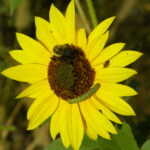
It sounds like the start of a bad joke, but what do a pine cone, a sunflower head, and a pineapple have in common? Your first thought may be an emphatic, “Nothing.” However, they all have a secret code in common – the Fibonacci sequence. While this may not be the typical “how-to” article for…Read more about Unlocking Nature’s Secret Code[Read More]
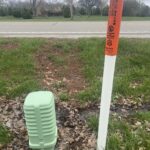
Each of us utilize mobile devices and daily consume services that require fiber and other utility infrastructure. Necessary utility work along roadways often leaves sunken trenches, compacted soil for lawns that are uneven or stripped of vegetation. If damage is significant, check with the utility provider, as many companies have restoration policies or reimbursement options…Read more about Roadside Rehab: Rebuilding Soil and Cover After Utility Damage[Read More]
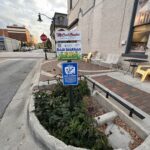
What is Rainscaping? Rainscaping is the practice of designing landscapes to capture, absorb, and use rainwater where it falls. Rather than sending water off-site through storm drains, the water slows down, spreads across the landscape, and soaks into the soil. In Indiana, spring often brings intense rain events that can quickly overwhelm drainage systems, soils, and rivers. Rainscaping offers a different approach. Instead of treating rainwater as…Read more about Rainscaping: Turning Water Problems into Sustainable Solutions[Read More]
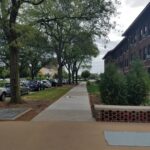
An unfortunate question I am sometimes asked is similar to this: “I lost my prized shade tree! What can I plant that will grow fast and give me shade?” While there is no instant fix to this scenario, let’s review a few trees that might be better choices here in northern Indiana. One obstacle to…Read more about Fast-Growing Trees for the Landscape[Read More]
Sign-up to receive email news and alerts from Purdue Landscape Working Group:

This is US

For More Information

Purdue Home Page

Purdue Extension

Find your county office