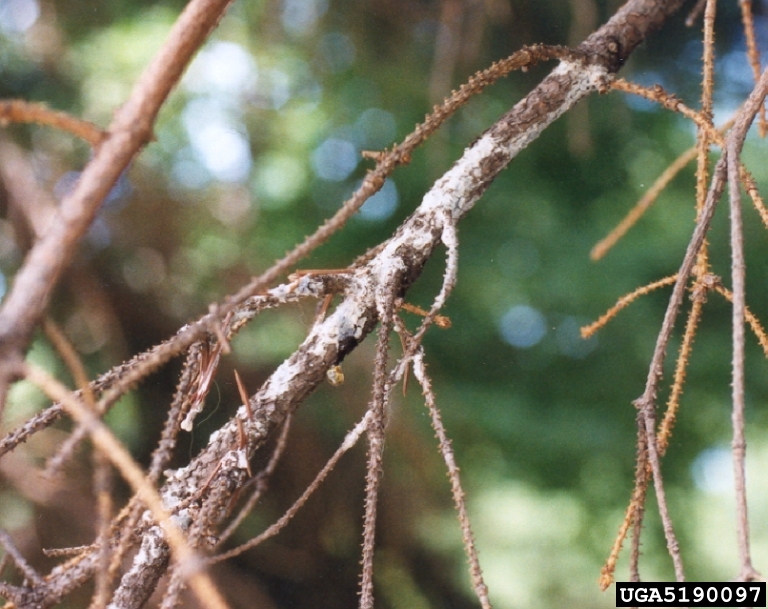
Have you ever touched a pine tree then picked something up – anything – and not be able to put it down? It is now semi-permanently glued to your hand from the sticky resin produced by the tree. If you manage to extricate the object from your hand, you will need industrial strength cleaner with pumice to get it off your skin. Many plants produce resin, but most conifers produce it in abundance.
Resin is not the same as sap. It does not appear to transport water for hydration, sugars, or nutrients. Resin is produced in specific channels or canals, called resin ducts and is comprised of multiple compounds, including terpenes (volatile chemicals).
Sap is fluid while resin can be almost gel-like inside the tree and can harden overtime on the surface of the tree as these volatile terpenes evaporate. There has been ongoing debate about what resin actually does, but it has been linked to multiple functions, including wound sealing, plant defense, and winter hardiness (think antifreeze for trees).
Why is your conifer oozing resin (not sap)? There are many possible reasons.
- Injury
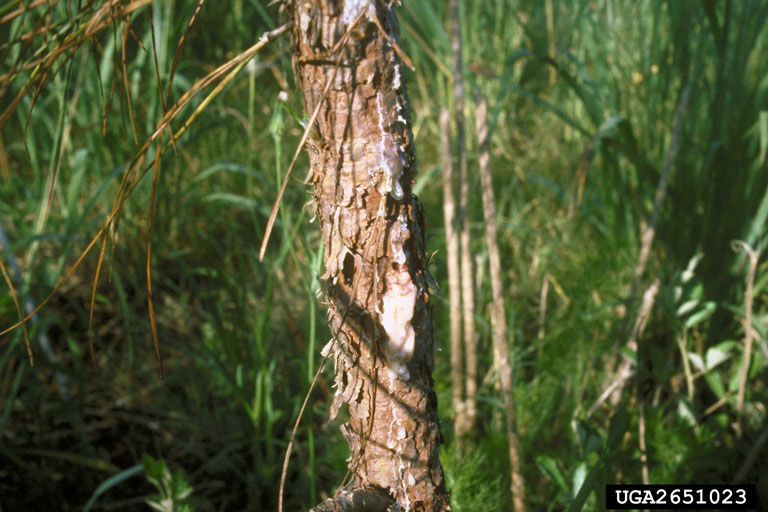
When a hardwood is damaged, it will bleed sap. When a conifer is damaged, it will bleed resin which will act to cover and seal the wound. Resin has some antimicrobial properties and is rot-resistant (like amber in Jurassic Park) so it can help stave off infections as the tree attempts to repair the damage. Physical injury can open up large areas of these channels to allow the resin to flow (Figure 1).
- Insects
Insect infestation also causes physical damage to the tree. Wood-boring insects, like Zimmerman pine moth, pine shoot-tip moth, sawyer beetle, and bark beetles (Figure 2), tunnel into the wood of the tree and cause resin to bleed out of holes in the trunk. In some situations, the tree will flood the galleries being made to push the insects out. In time, the tree will dry out, and the foliage will change from healthy green to yellow then brown. In smaller branches and younger trees, where mature bark has not developed, you may see the bark become slightly wrinkly as it is drying out and pulling in. In most cases, resin will appear white to a slight cream color when it dries on the exterior of the tree. The caterpillars of the Zimmerman pine moth create yellow, salmon, to pink colored pitch tubes on the exterior of the trunk (Figure 3). The presence, color and location (at branch nodes) of these tubes on pine trees can help identify this insect pest compared to other woodboring pests.
- Disease
Trunk infections may cause resin production, especially canker diseases that cause cracks in the bark. Excessive resin exudation is termed hyper-resinosis and may look like a simple, continuous flow of resin or may look like a slow-motion waterfall. This can depend on the type of disease, but even with certain disease issues that typically produce prodigious amounts of resin, like Cytospora canker, it still can depend on disease severity and environmental conditions. It is important to note that most of the canker problems we observe on conifers require a wound or a stressed plant to be able to become established. This could be due to insect infestation, mammals, or environmental injury (hail/lightning) or adverse environmental stress like freezing, flooding, or drought. Some diseases that are known to produce resin exudation include:
- Calciopsis canker (Eastern US primarily – Figure 4)
- Diplodia canker of two needle pines (branch tips – Figure 5)
- Pitch canker (Southeast US and California)
- White Pine Blister rust (Figure 6)
- Seiridium canker (not very common in Midwest, to my knowledge).
- Cytospora Canker (widespread, wide host range – Figure 7).
- Phomopsis canker and dieback (widespread, but may not be a heavy resin producer)
- Environmental Stress
Diseases and insects aren’t only cause for resin production. Environmental stress, including significant changes in drainage across a large area or even changes in precipitation/flooding could induce resin production. In our experience at the lab, we have seen trunk resin exudation occur when trees were planted too deep, leading to chronic root stress.
Typically, we suspect that resin exudation will occur due to some outside stress. When the tree is hurt it will bleed. However, conifers may occasionally also produce a small amount of resin flow early in the spring that is considered normal. It is not usually obvious or dramatic like we might see with actual problems. My big thing is, when your conifer seems sad and is “crying,” look for the source and you might find some evidence as to why its occurring. If there are no prominent cracks, splits, or holes, look down and evaluate the planting depth and root history.
-
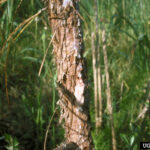
- Figure 1 Resin production after hail injury. Photo Credit: David J. Moorhead, University of Georgia, Bugwood.org
-
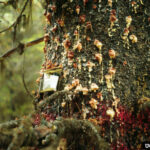
- Figure 2 Mass attack of mountain pine beetle on lodgepole pine Photo Credit: Leslie Chong, Simon Fraser University, Bugwood.org

-

- Figure 3 Gummy sap/tubes produced by Zimmerman Pine Moth infestation. Photo Credit: Cliff Sadof, Purdue University

-
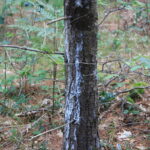
- Figure 4 Calciopsis canker of eastern white pine. Photo Credit: Steven Katovich, Bugwood.org

-
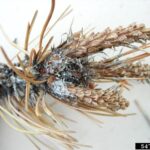
- Figure 5 Diplodia shoot blight of two needle pines killing the branch tips and producing a small amount of resin around the affected tissue. Photo Credit: Elizabeth Bush, Virginia Tech, Bugwood.org
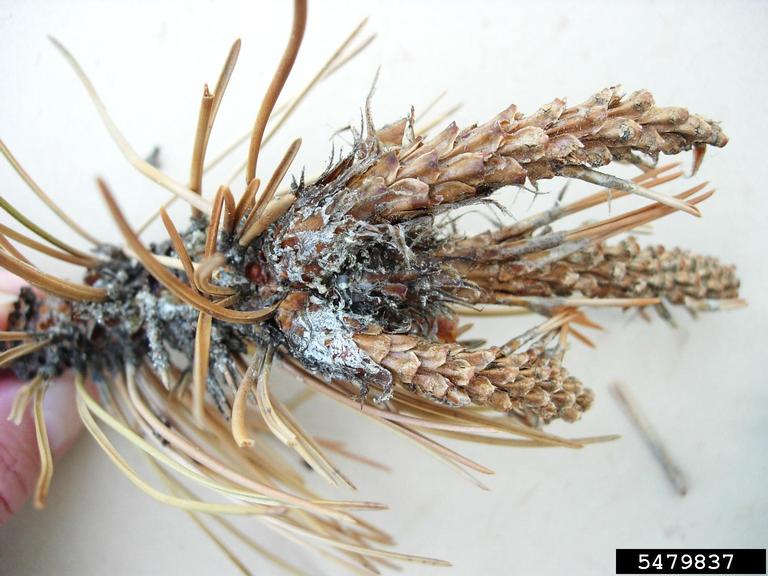
-

- Figure 6 White pine blister rust infections producing a large amount of resin. Photo Credit: Joseph OBrien, USDA Forest Service, Bugwood.org

-
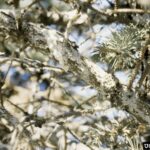
- Figure 7 Cytospora canker on spruce producing large amounts of resin. Photo Credit: Joseph OBrien, USDA Forest Service, Bugwood.org

-
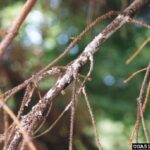
- Figure 8 Cytospora canker on smaller branches of a blue spruce. Photo Credit: Michael Kangas, NDSU – North Dakota Forest Service, Bugwood.org