With tulips blooming and peonies emerging, plant sales and garden events are also in full swing across the Midwest. As more gardeners incorporate native perennials into their landscapes, it is important to set realistic expectations and understand how management differs during the first few years. Native gardens are often described as low-maintenance, but this does not mean no maintenance, particularly during establishment.
In the first couple growing seasons, native gardens require careful management, including weed control and irrigation. Many native species have slower aboveground growth than gardeners may expect. In contrast to ornamental annuals bred for quick color, native perennials prioritize root development. The garden adage “sleep, creep, leap” is commonly used to describe the establishment pattern of many native species.
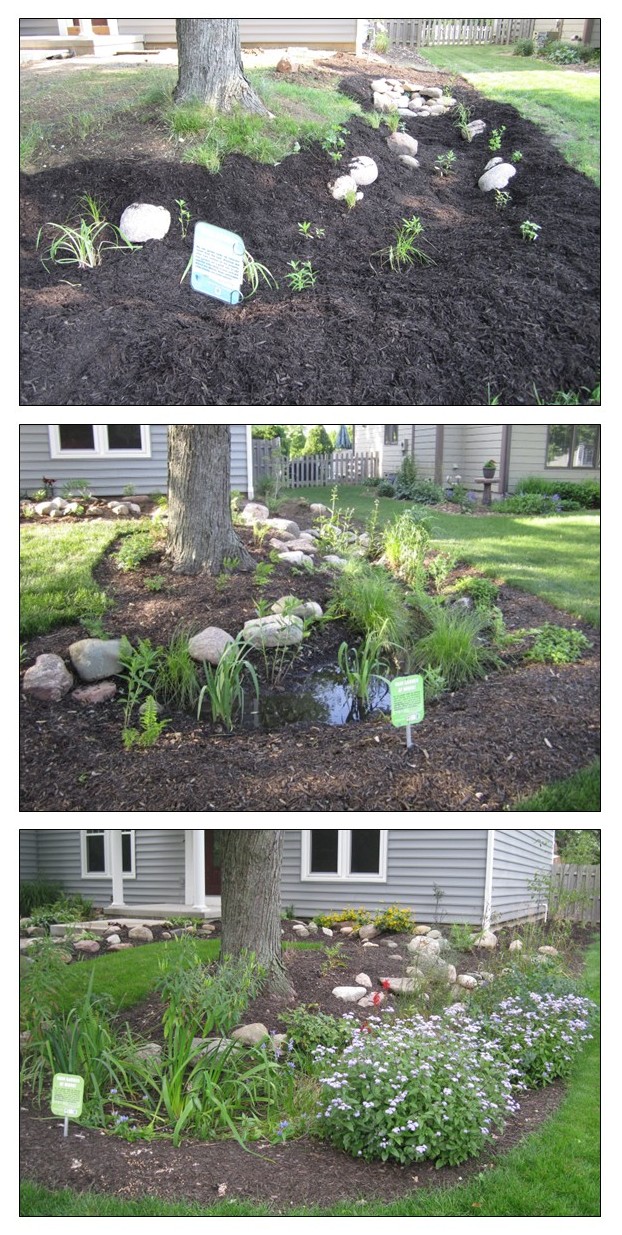
- Year 1 – Sleep: Limited shoot growth; resources allocated to root development
- Year 2 – Creep: Increased vegetative growth; some flowering
- Year 3 – Leap: May reach full size with increased blooms and stress tolerance
During establishment, native perennials allocate resources belowground to develop extensive root systems. This strong root system is why native gardens are more tolerant of our harsh winters and dry summers. As a result, gardeners can expect minimal aboveground growth in the first season and more time spent weeding and watering.
Weed control is one of the most important and often underestimated tasks when establishing a native garden. The slow early growth increases susceptibility to weed pressure during the first couple of seasons. Uncontrolled weeds not only ruin the garden’s aesthetics, but they also compete for light, water, and nutrients which may further delay garden establishment.
As root systems develop, irrigation is important during extended dry periods. Water should be applied deeply and infrequently to encourage roots to grow deeper into the soil profile in search of moisture. In contrast, frequent, shallow watering can limit root depth and reduce drought tolerance. Applying water less often but more thoroughly supports stronger, more resilient plants over time.
The success of a native garden is measured over multiple seasons rather than a single year. Patience and proper maintenance during the establishment phase allows plants to develop the extensive root systems necessary to survive and thrive in the extremes of Midwestern weather, including variable rainfall, intense summer heat, and bitter winter temperatures.
-

- Figure 1. Native plantings often follow a “sleep, creep, leap” establishment pattern. The first year (sleep) is typically characterized by slow aboveground growth as plants establish roots (top image, May 2012). During the second year (creep), plants slowly begin to spread and increase in size (center image, May 2013). By the third year (leap), the planting shows vigorous vegetative growth as it reaches mature size. (bottom image, September 2014). Credit: Laura Esman, Purdue University.
-

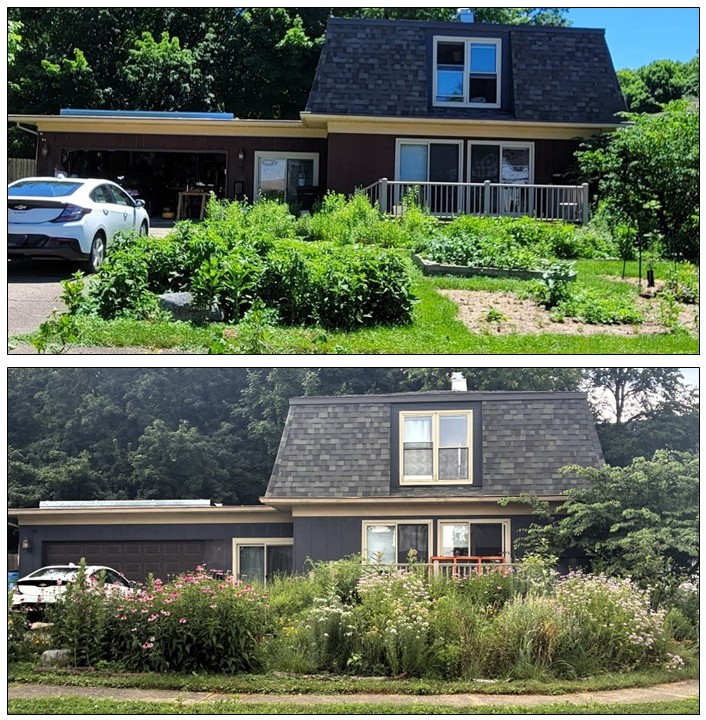
- Figure 2. While many native plantings follow a “sleep, creep, leap” establishment pattern, favorable growing conditions and the use of healthy, well-established transplants can accelerate establishment. This planting showed substantial growth during the first growing season (top image, May 2024) and developed into a dense, thriving garden by the second year (bottom image, July 2025). Credit: Amy Krzton-Presson, Wabash River Enhancement Corporation.