Transforming grass into a thriving garden takes more than just planting fruits and vegetables. Grass to Garden provides practical guidance for professionals that manage parks or other municipal green spaces. Learn how to assess potential sites, develop garden policies, and engage community partners to create and maintain a successful community growing space. This four-part series…Read more about Grass to Garden: From Public Green Space to Community Resource[Read More]
Karen Mitchell

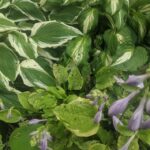
When Division is Desirable: Splitting Up Perennials to Promote Plant Health Division often has a negative connotation; it is something that separates us. In the garden, however, division can be a good thing. Some perennials become crowded over time which may result in smaller or fewer flowers; the center of the plant may die out, or the entire clump becomes so dense that it flops over….Read more about When Division is Desirable[Read More]
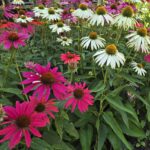
Indiana summers are often hot and dry, creating challenging conditions for many landscape plants. Fortunately, some flowers are naturally suited to these conditions. Once established, the following flowers continue to grow and bloom with little supplemental irrigation, making them excellent choices for low-maintenance landscapes. Coneflower – Echinacea spp. (Figure 1) Coneflower is an herbaceous perennial that grows 3 to 4 feet tall in full sun. This Indiana native blooms from early…Read more about Summer Flower Spotlight – Drought Resistant Edition[Read More]

With tulips blooming and peonies emerging, plant sales and garden events are also in full swing across the Midwest. As more gardeners incorporate native perennials into their landscapes, it is important to set realistic expectations and understand how management differs during the first few years. Native gardens are often described as low-maintenance, but this does not mean no maintenance, particularly during establishment. In the first couple growing…Read more about Establishing a Native Perennial Garden: Understanding the “Sleep, Creep, Leap” Pattern[Read More]

What is Rainscaping? Rainscaping is the practice of designing landscapes to capture, absorb, and use rainwater where it falls. Rather than sending water off-site through storm drains, the water slows down, spreads across the landscape, and soaks into the soil. In Indiana, spring often brings intense rain events that can quickly overwhelm drainage systems, soils, and rivers. Rainscaping offers a different approach. Instead of treating rainwater as…Read more about Rainscaping: Turning Water Problems into Sustainable Solutions[Read More]
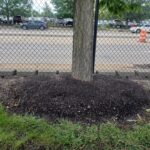
As the Midwest gardening season winds down, there’s still one task that can make a big difference come spring: mulching. Once the soil has cooled but before it freezes, a layer of mulch helps protect plant roots from the freeze-thaw cycles common in Midwestern winters. Mulch stabilizes soil temperatures, conserves moisture, and shields roots from…Read more about Mulching Matters: Autumn Application for Spring Success[Read More]
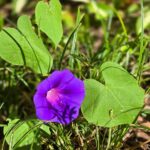
Untangling the Vines: Identifying Bindweed, Morning Glory, and Honeyvine Milkweed Few garden problems cause as much frustration as untangling vines. Sometimes the vines are beautiful climbers planted with intention. Other times, they creep in uninvited and smother everything in their path. Among the most common, and the most confusing, vines in Indiana are bindweed, morning…Read more about Untangling the Vines: Identifying Bindweed, Morning Glory, and Honeyvine Milkweed[Read More]
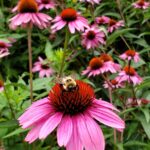
Fall is quickly approaching, bringing cooler temperatures, refreshing rains, and fewer pests. It’s a perfect time to tackle garden tasks, from pruning perennials to planting vegetables. Pruning Fall is a good time to prune out dead, damaged, or diseased plant material (Fig. 1). You can also tidy up perennials that have finished blooming and…Read more about Fall Pruning and Planting for Indiana Gardens[Read More]
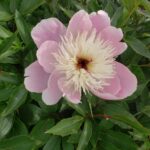
Peonies are a springtime showstopper in many Indiana gardens, and fall is the time to plant your own. This publication covers everything from selecting the right site and variety to proper installation and long-term care. Whether you’re starting fresh or adding to an established bed, these tips will help you grow healthy, beautiful peonies. With…Read more about Growing Peonies in the Indiana Landscape[Read More]
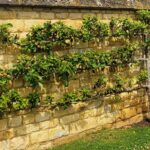
A perennial edible garden offers an opportunity to integrate beauty and utility. By incorporating fruit trees, berry bushes, and other long-lived edible plants, the home landscape can be both aesthetically pleasing and agriculturally productive. A perennial edible garden not only provides seasonal harvests but also supports local biodiversity. Plan(t) for Success Careful planning and site…Read more about Beauty and Bounty: The Perennial Edible Landscape[Read More]
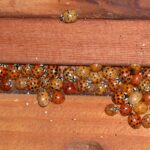
As the growing season winds down and cooler temperatures approach (despite today’s unseasonable 81 degrees F), many beneficial bugs begin searching for their winter hideaways. While many people see fallen leaves as just more plant waste to dispose of, some of our beneficial bugs see a cozy bed to bundle up in for the winter….Read more about Huddle Up and Hunker Down: The Winter Life of Beneficial Bugs[Read More]
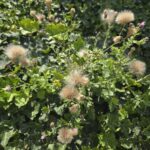
As summer comes to a close, plants are rapidly releasing seeds and the most noticeable are the flying fluffy type. Thistles, asters, and milkweed are just a few of the summer-flowering plants that depend on the wind to disperse their seeds, sometimes carrying them miles away to potentially suitable locations, though seeds typically land with…Read more about What the Fluff?![Read More]

Gardeners are bombarded with sayings like save the stems, leave the leaves, and no mow May. These sayings are rooted in the same goal of protecting pollinators, but often leave gardeners with more questions. Let’s dig into each of the sayings. Save the stems: The first question that often arises from this saying is: “When…Read more about So, the saying goes… Save the Stems, Leave the Leaves, and No Mow May[Read More]

Planting may not be the first chore that comes to mind when considering the fall garden, but as Purdue Urban Forestry Specialist, Ben McCallister mentioned in the last issue, it’s an excellent time to install a new tree1. However, trees aren’t the only thing that can be added to the garden this time of year. …Read more about The Perennial Garden: Fall Planting and Propagation[Read More]

The unpredictable Midwest weather has gardeners checking their rain gauge daily, because one rule gardeners learn early on is that landscapes need about an inch of water each week. Of course, there are many factors that will impact the accuracy of this very general rule such as soil type, average temperature, sun exposure, plant type,…Read more about What is an Inch of Water?[Read More]

For some, the term “shade garden” may be an oxymoron. When imagining a garden, most will think of a sunny area filled with flowering plants. So, it’s not surprising that gardeners would often fill shady areas with a hardy, evergreen ground cover and never look back. However, ornamental shade gardens have been the source of…Read more about Throwing Shade on the Perennial Garden[Read More]

It’s time for spring cleaning the herbaceous perennial garden, but be careful not to pluck out any of your favorite flowers. With all the green quickly sprouting up, it may be difficult to tell friend from foe. Established herbaceous perennials will emerge from the ground in the same location as the previous year and are…Read more about To Weed or Not to Weed? The Perennial Garden: Early Season Plant Identification[Read More]

Indiana is well-known for its erratic weather. Hoosiers, along with all Midwesterners, have numerous sarcastic sayings regarding the weather. “If you don’t like the weather, just wait ten minutes.” “The forecast is made up and the seasons don’t matter.” “It will be winter at 6 am and summer by 3 pm. Dress accordingly.” …Read more about Ready, Set, Prune![Read More]

Soil testing is a common practice for both landscapers and farmers to ensure healthy plants. However, city soils are may be degraded and contaminated so you may wonder if the typical soil analysis is providing enough information. During this webinar series, participants will learn how to determine if their soils are contaminated and what they…Read more about Nurturing City Soils Webinar Series[Read More]

Fall is the time of year when many gardeners rush out to buy chrysanthemums by the gallon. Mums line the front of every shop and are great for replacing the fading annuals on the front step (Figure 1). As a perennial, mums have the potential to provide beautiful blooms year after year. However, gardeners may…Read more about Kiss My Aster[Read More]