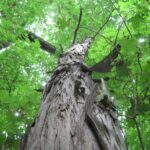
Following a recent tornado in Monroe County, an Indiana homeowner noticed something remarkable among the storm damage. More than 30 trees, including walnut and butternut, were either uprooted or snapped. Yet several mature shagbark hickory trees stood largely untouched amid the destruction. This observation prompted an interesting question: Is there something about shagbark hickory trees…Read more about Question: Why Did the Shagbark Hickories Survive the Tornado?[Read More]
Resources for landscapes and gardens in the Midwest
Landscape Report
Climate
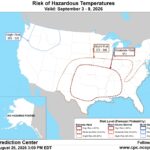
There’s been a general break since the heavy rain events from several weeks ago. Summer is coming to an end and even some leaves are starting to turn colors. What does all this mean for our weather and climate over the next few weeks and months? Indiana has remained drought free for the 2nd week…Read more about A possible extreme heat event for early September[Read More]
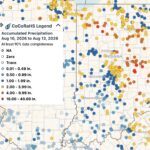
There was a period earlier this year when southern Indiana was getting all the rain. Flooding was a concern. The rest of Indiana was hoping for their share. Then this week happened. A lot of rain has fallen almost everywhere but southern Indiana. Perhaps this will provide some time for those down south to assess…Read more about A lot of rain before a break comes[Read More]
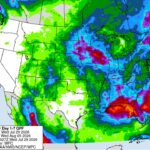
By late July, Indiana had settled into a typical midsummer pattern. Warm, humid days with warm overnight temperatures were common, and scattered thunderstorms left a patchwork of rainfall across the state. Extreme heat was brief, but the steady warmth kept crops progressing at a near-normal pace. Through July 28, accumulated MGDDs ranged from around 1,440…Read more about July Settles into a Familiar Indiana Summer Pattern[Read More]
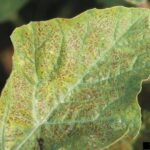
Those of a certain age will remember concerns about a hole in the ozone layer dominating the news in the mid 1980’s. This concern led to the ban of chlorofluorocarbons (CFC’s), and other ozone-depleting chemicals via the Montreal Protocol. According to the European Environment Agency, since the early 2000’s, the hole has been shrinking and…Read more about Ozone Damage to Landscape Plants: A hidden stress[Read More]
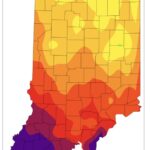
Our first significant heat wave hit Indiana this week with the added benefit of high humidity. Because the humidity reduces the rate our sweat can evaporate from our skin (a natural cooler process), conditions felt more uncomfortable and hotter than what it really was. Fortunately, daily high air temperatures should gradually drop into the 80s…Read more about The Heat Is On[Read More]
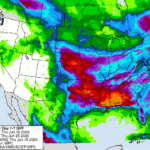
Indiana has seen several rounds of severe weather, and many are likely ready for a break. The good news is there does not seem to be more severe weather in our forecast for at least a week. Heavy rain is anticipated for northern Indiana at the end of this coming weekend, but otherwise, periodic showers…Read more about Calmer weather on its way[Read More]

Indiana summers are often hot and dry, creating challenging conditions for many landscape plants. Fortunately, some flowers are naturally suited to these conditions. Once established, the following flowers continue to grow and bloom with little supplemental irrigation, making them excellent choices for low-maintenance landscapes. Coneflower – Echinacea spp. (Figure 1) Coneflower is an herbaceous perennial that grows 3 to 4 feet tall in full sun. This Indiana native blooms from early…Read more about Summer Flower Spotlight – Drought Resistant Edition[Read More]

The term “flash drought” has become popularized in recent years to describe a rapidly intensifying drought situation. It could occur within a prolonged drought period where conditions suddenly deteriorate at a much faster rate, or it could start without any preliminary dry condition. In northwestern Indiana, precipitation has been below normal over the past month. …Read more about Flash Drought Coming our Way?[Read More]

Recent rounds of thunderstorms have brought highly variable rainfall totals across Indiana, continuing a familiar spring pattern of “haves and have-nots” when it comes to precipitation. While some areas have received multiple inches of rainfall over the past week, others have not, allowing dry conditions to redevelop. Heavy precipitation was concentrated primarily from Indianapolis southward,…Read more about Heavy Rainfall Divides Indiana: Some Areas Soak Inches While Others Miss Out[Read More]
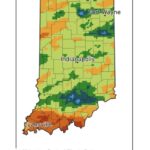
After another rainy start to the week, some of you may be ready for a few dry days to get out in the garden or field to start planting. Figure 1 shows how much rain has fallen over the past 30 days and Figure 2 shows how many inches above or below normal those amounts…Read more about Cooler temperatures and rain continues[Read More]
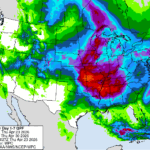
For at least 100 straight weeks (since mid-July 2024!) counties in north-central Indiana (from about Newton and Benton counties in the west to Allen, Adams, and Jay counties in the east) have been in some level of dryness. While not all these counties have been impacted, at least some of them have been anywhere from…Read more about Spring rains help relieve northern dryness[Read More]

What is Rainscaping? Rainscaping is the practice of designing landscapes to capture, absorb, and use rainwater where it falls. Rather than sending water off-site through storm drains, the water slows down, spreads across the landscape, and soaks into the soil. In Indiana, spring often brings intense rain events that can quickly overwhelm drainage systems, soils, and rivers. Rainscaping offers a different approach. Instead of treating rainwater as…Read more about Rainscaping: Turning Water Problems into Sustainable Solutions[Read More]
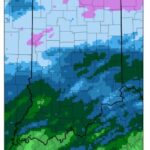
Temperatures dipped below freezing earlier this week as spring perennials started forcing their way out of their winter slumber. Forecasts over the next few weeks are suggesting temperatures should be above normal. Does this mean no more snow is likely for the season? Can we start putting away our snowplows and make space for our…Read more about Is the snow behind us?[Read More]
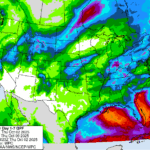
Fall and drought have been nearly synonymous in recent years; 2025 is no different. The September 30 US Drought Monitor, released on October 2, indicated that over 92 percent of the state was categorized as either abnormally dry (D0) or moderate drought (D1), with additional areas classified as severe drought (D2) or extreme drought (D3)…Read more about Drought Conditions Improve in Southern Indiana, Worsen in Northern Areas[Read More]
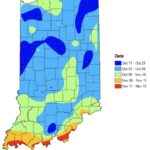
The last week has caused many to struggle with whether to turn the heat on inside. Mornings have been quite chilly, and I am guessing several readers may have also struggled with the decision to wear a jacket as they started their workday. These are tough decisions, no doubt. Several data sources have suggested we…Read more about A false sense of autumn[Read More]
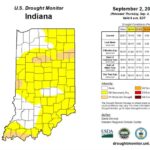
If you have any stakes in agriculture, you may have noticed a fairly rapid drying trend as summer has come to a close. According to the U.S. Drought Monitor on September 2, 76 percent of Indiana is considered abnormally dry—up from just 26 percent one week earlier. Moderate drought conditions have also expanded from less…Read more about Abnormally Dry and Drought Conditions Are On The Rise[Read More]
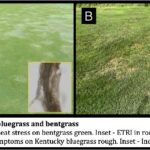
Summer patch hits hard in early August; fall rust outbreaks causing orange shoes; cool temperatures allowing a head start on recovery plans. August in the region started cool, got back to summer hot, and now dare I say it feels like fall. This “false fall” in Indiana certainly is convincing as a stagnant high-pressure dome…Read more about Purdue Turfgrass Disease Report: Cool Breeze Offers Some Ease[Read More]
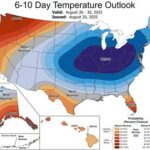
With brute and sudden force, the atmosphere is doing its job: acting like a fluid. Weather is not a precise science, which means the atmosphere is constantly shifting. There tends to be some sort of pattern shift come mid-late August, and it looks like it’s just about here. Temperatures are on their way down, as…Read more about Super cool & super dry for August’s end: How the weather tables have turned[Read More]
The Midwestern Regional Climate Center (MRCC), with support from the United Soybean Board, has launched the Ag Climate Dashboard — a centralized digital hub offering streamlined access to integrated climate and agricultural data and decision-support tools for producers, advisors and researchers in the Midwest. Designed to support on-farm decision-making, the Ag Climate Dashboard offers up-to-date weather data, National Weather Service…Read more about New Ag Climate Dashboard makes climate resources more accessible for Midwest farmers[Read More]
Sign-up to receive email news and alerts from Purdue Landscape Working Group:

This is US

For More Information

Purdue Home Page

Purdue Extension

Find your county office