When Division is Desirable: Splitting Up Perennials to Promote Plant Health
Division often has a negative connotation; it is something that separates us. In the garden, however, division can be a good thing. Some perennials become crowded over time which may result in smaller or fewer flowers; the center of the plant may die out, or the entire clump becomes so dense that it flops over. In these situations, dividing the plant is crucial for the health of the plant. A crowded plant may lose some of its visual appeal when it flops over, but more importantly, a dense canopy can also increase disease and insect pressure.
Look at the plant, not the calendar
There isn’t a universal schedule for dividing perennials. Some plants benefit from division every few years, while others rarely need to be divided. For Midwest gardens, spring and fall are generally the best seasons to make divisions. Many spring- and summer-blooming plants can be divided in late summer or fall, while fall-blooming perennials are best divided in spring. In general, fall divisions should be made at least four to six weeks before the ground freezes to give roots time to establish.
Prepare to divide and plant
Once you have decided to divide, water the original plant if the soil is dry and then prepare the new planting locations. This allows you to get the divisions back into the soil quickly and reduces the chance that the roots will dry out.
Dig around the entire clump and lift the root ball out carefully. Separate the clump by teasing apart natural divisions or cutting through the crown with a sharp spade or soil knife. Each section should have healthy roots and several shoots or growing points. Larger, healthy sections usually establish more quickly.
Replant the divisions at the same depth they were growing and water thoroughly. Irrigate as necessary to provide about an inch of water each week as the plants establish. If conditions are hot and dry, it’s best to wait for cooler weather if possible.
When division is not desirable
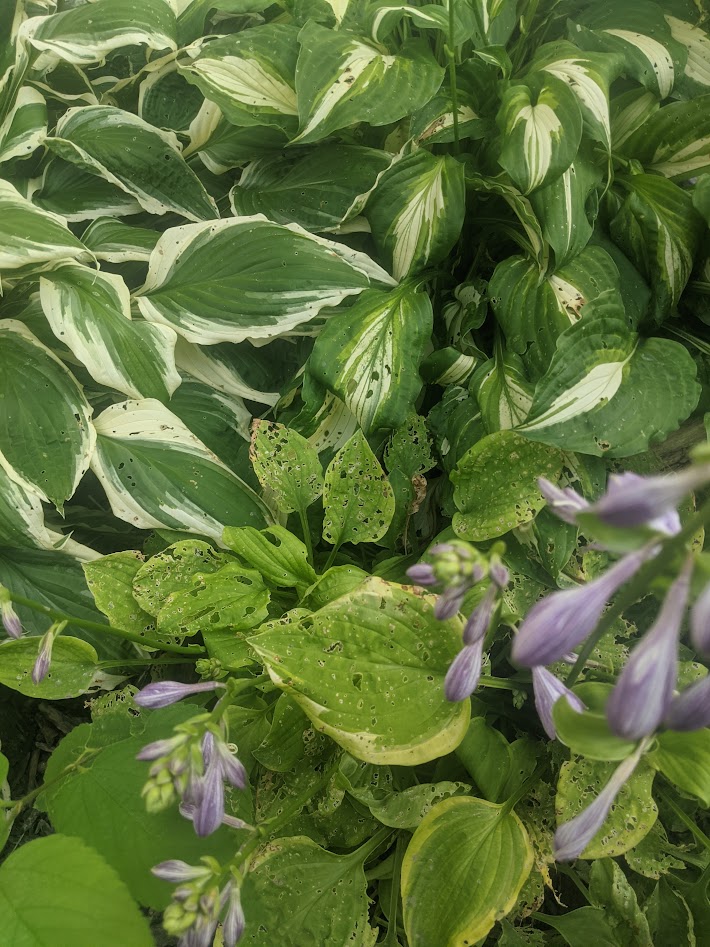
Not every perennial is a good candidate for division. Hostas and daylilies are familiar examples of plants that are generally easy to divide and transplant. In contrast, Baptisia, or false indigo, develops deep roots that make it difficult to dig and divide successfully, and it is best left undisturbed when possible. Peonies can be divided, but their fleshy roots are easily damaged, and new divisions may take several years to flower.
When an established perennial starts looking crowded, loses its usual vigor, or flops over under its own weight, consider if it’s a good candidate for division. The best plant candidates for division are usually perennials that form multiple shoots or growing points with root systems that are fibrous, spreading, or clumping such as ornamental grasses, hosta, or iris.