
On September 20, 2025 students from Purdue University’s Field Production of Horticultural Crops and Landscape Contracting and Management classes participated in a day-long field trip exploring several key horticultural sites in central and southern Indiana. The courses, both part of Purdue’s Department of Horticulture and Landscape Architecture, provide students with practical exposure to commercial horticultural…Read more about Purdue Horticulture Students Tour Southern Indiana Green Industry Operations[Read More]
Resources for landscapes and gardens in the Midwest
Landscape Report
Horticulture
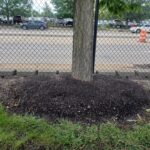
As the Midwest gardening season winds down, there’s still one task that can make a big difference come spring: mulching. Once the soil has cooled but before it freezes, a layer of mulch helps protect plant roots from the freeze-thaw cycles common in Midwestern winters. Mulch stabilizes soil temperatures, conserves moisture, and shields roots from…Read more about Mulching Matters: Autumn Application for Spring Success[Read More]
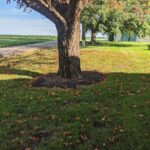
Fall has arrived! The beautiful foliage that we love to admire this time of year will soon become the yearly chore of managing fallen leaves. You have likely heard the adage “leave the leaves” many times by now. This practice is gaining traction along with many other pollinator-friendly landscape management tactics, such as saving dead…Read more about Leave the leaves – bugs are sleeping![Read More]
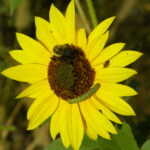
As you travel in rural Indiana this time of year, you may happen upon a field of sunflowers. It’s so beautiful that drivers will occasionally pull off on the side of the road and take pictures. Perhaps you grow sunflowers in a more limited capacity in your home garden. Today, we’ll review a few items…Read more about Amazing Sunflowers[Read More]
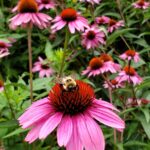
Fall is quickly approaching, bringing cooler temperatures, refreshing rains, and fewer pests. It’s a perfect time to tackle garden tasks, from pruning perennials to planting vegetables. Pruning Fall is a good time to prune out dead, damaged, or diseased plant material (Fig. 1). You can also tidy up perennials that have finished blooming and…Read more about Fall Pruning and Planting for Indiana Gardens[Read More]
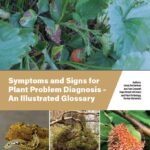
Do your landscape plants have cankers, mosaics, galls, mummies, or witches’ brooms? These and other symptoms are often difficult for the average homeowner to understand, let alone visualize. Purdue Extension staff can often assist with diagnosing plant diseases. Additionally, Purdue Extension specialists Janna Beckerman (retired) and Tom Creswell authored the publication, “Symptoms and Signs for…Read more about Plant Disease Symptoms You Could Notice in Your Home Landscape[Read More]
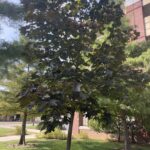
These three maples have somewhat similar-looking leaves. On the surface, you may think this is simply an academic exercise. But if you care about invasive plants and local ecology, this distinction is an important one. Norway maple is an invasive tree species, while sugar and black maples are native tree species (sometimes called hard maples)….Read more about Distinguishing Between Norway, Sugar, and Black Maples[Read More]
Schneider Nursery is hosting the “Women of the Green Industry” on Thursday, June 19th from 12pm-3 pm. Join the Schneider family and staff for a light lunch, tour of the greenhouse and retail center, and a tour of the growing fields. Hear a brief history of Schneider Nursery from family members while enjoying time with your…Read more about Women of the Green Industry Nursery Tour to Be Held at Schneider Nursery[Read More]
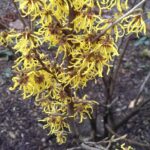
Spring is finally here! Everywhere you look, one can find some spring color around. Some of the first plants to peek out of the ground are spring-flowering bulbs like crocus, daffodil, and tulip. But there are some beautiful spring time shrubs you can add to your yard to be the first in the neighborhood with…Read more about Top 10 Spring Flowering Shrubs[Read More]
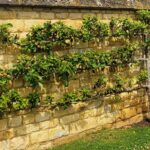
A perennial edible garden offers an opportunity to integrate beauty and utility. By incorporating fruit trees, berry bushes, and other long-lived edible plants, the home landscape can be both aesthetically pleasing and agriculturally productive. A perennial edible garden not only provides seasonal harvests but also supports local biodiversity. Plan(t) for Success Careful planning and site…Read more about Beauty and Bounty: The Perennial Edible Landscape[Read More]
The Purdue Horticulture Society embarked on the annual spring trip on March 28-30. This year the club picked Louisville to explore a botanical garden and arboretum. This annual trip provided members with an opportunity to expand their knowledge of horticulture and appreciate the beauty of diverse plant collections. On March 29, the group visited the…Read more about Purdue Horticulture Society Explores Louisville’s Botanical Scene[Read More]
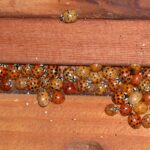
As the growing season winds down and cooler temperatures approach (despite today’s unseasonable 81 degrees F), many beneficial bugs begin searching for their winter hideaways. While many people see fallen leaves as just more plant waste to dispose of, some of our beneficial bugs see a cozy bed to bundle up in for the winter….Read more about Huddle Up and Hunker Down: The Winter Life of Beneficial Bugs[Read More]
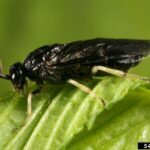
The elm zigzag sawfly (EZS), Aproceros leucopoda, is a non-native insect recently detected in several midwestern states. Originally from eastern Asia, this insect is rarely considered a problem in its native range, having several natural enemies and environmental factors able to keep it in check. However, when in new landscapes, aspects of this insect’s life…Read more about A New Threat to Elms in North America[Read More]

August was National Check Your Tree Month, but this is something that every tree owner/manager should be doing year-round. As the last hot days of summer are finishing up and we look forward to cooler fall days, we can look to our trees for different signs of trouble. Most people tend to look up at…Read more about Enjoy Your Trees While Checking Them[Read More]
In the last newsletter, an article on triclopyr (www.purduelandscapereport.org/article/the-summer-of-triclopyr-mounting-evidence-for-off-target-damage/) brought up much discussion on the Roundup brands now containing multiple active ingredients other than glyphosate. Professionals in the industry may encounter a client with herbicide damage symptoms that mimic growth-regulator injury instead of typical glyphosate damage symptoms. While the client may have used Roundup, they…Read more about When Roundup Isn’t Roundup: Clearing up the confusion between products[Read More]
With recent rain storms across the state, watering may not be at the forefront of everyone’s minds. But as we head deeper into summer it is food to remember most of Indiana is in a state of abnormal dryness to moderate drought, continuing similar conditions from previous years. With that in mind, we should be…Read more about Summer Tree Care: Watering Your Trees[Read More]
A recent conversation with a landscaper about tank mixing led to a brief discussion about glyphosate products with a contact herbicide included. I thought I would share my thoughts on the addition of contact herbicides and its effectiveness on weed control. We all know that we live in a microwave society. Most people want things…Read more about Does weed control improve with adding a contact herbicide to glyphosate?[Read More]

Most people these days have, at the very least, heard of Callery and Bradford pear trees and know something about the invasiveness of this ornamental street tree. But I still get questions about what it is and why it’s so bad. So, I’d like to offer a little history of this infamous tree. Where did…Read more about Invasive Bradford/Callery Pear: Why it is so detrimental and what to plant instead.[Read More]

Identifying a plant problem is the first step to improve the health of plants in the landscape. We created a series of short (5 to 7 min) YouTube videos to help you learn or just brush up your plant diagnostic skills. Each video guides you through the diagnostic process in real landscapes, reviews pest biology…Read more about Learn to Diagnose Plant Problems with Quick Guide YouTube Videos[Read More]

Identificar qué problema tiene la planta es el primer paso para mejorar la salud de las plantas en el jardín. Hemos creado una serie de videos cortos (5 a 7 minutos de duración) en YouTube. Esto lo hemos hecho para ayudarlo a aprender o simplemente mejorar sus habilidades de diagnóstico de plantas. Cada video te…Read more about Aprenda a Diagnosticar Problemas de las Plantas con Videos en YouTube[Read More]
Sign-up to receive email news and alerts from Purdue Landscape Working Group:

This is US

For More Information

Purdue Home Page

Purdue Extension

Find your county office