The Purdue cut flower team is currently conducting cut flower demonstrations at three locations in Indiana. In this article, we provide updates and observations on cool-season flowers from the three sites, including open-field and high-tunnel plantings in Vincennes, an open-field site in Indianapolis, and an open-field site in West Lafayette, representing southern, central, and northern Indiana. The cool-season cut flowers evaluated in the project were started from seed in February and transplanted in March.
At the Vincennes and West Lafayette locations, plants were grown on raised beds covered with plastic mulch, while at the Indianapolis location they were grown on flat beds covered with a fabric weed barrier. Multiple flower species have bloomed at the southern Indiana location, but not in central and northern Indiana locations yet. This article primarily discusses observations on snapdragon, stock and ornamental cabbage.
Snapdragon
Snapdragon cultivars are divided into Groups 1-4. Group 1 and 2 generally prefer cool temperatures, short day and low light; and Group 3 and 4 are adaptive to warm temperature and long days. In this evaluation, we selected cultivars representing different groups, including ‘Antibes Apricot’ (Group 1), ‘Maryland Lavender’ (Group 2), ‘ChantillyTM Purple’ (Group 1-2), ‘Potomax Ivory’ (Groups 3-4) and ‘Orleans Red’ (Group 3-4).
At the southern Indiana location, all snapdragon cultivars were transplanted into the open field on March 19. ‘Antibes Apricot’ and ‘Potomax Ivory’ were also transplanted in a high tunnel on March 27. Plants were not pinched. The Group 1 cultivar ‘Antibes Apricot’ flowered the earliest, with first blooms observed approximately 4–5 weeks after transplanting. Harvest began around middle May, 6 weeks after transplanting in the high tunnel and 7 weeks after transplanting in the open field. Flowers harvested from the high tunnel had acceptable stem length (>12 inches), whereas stems from open-field plants were generally too short to be marketable by florist. The other Group 1–2 cultivars, ‘Maryland Lavender’ and ‘ChantillyTM Purple’ flowered about one week later than ‘Antibes Apricot’. All Group 1–2 cultivars grown in the open field had unmarketable stem lengths (Figure 1).
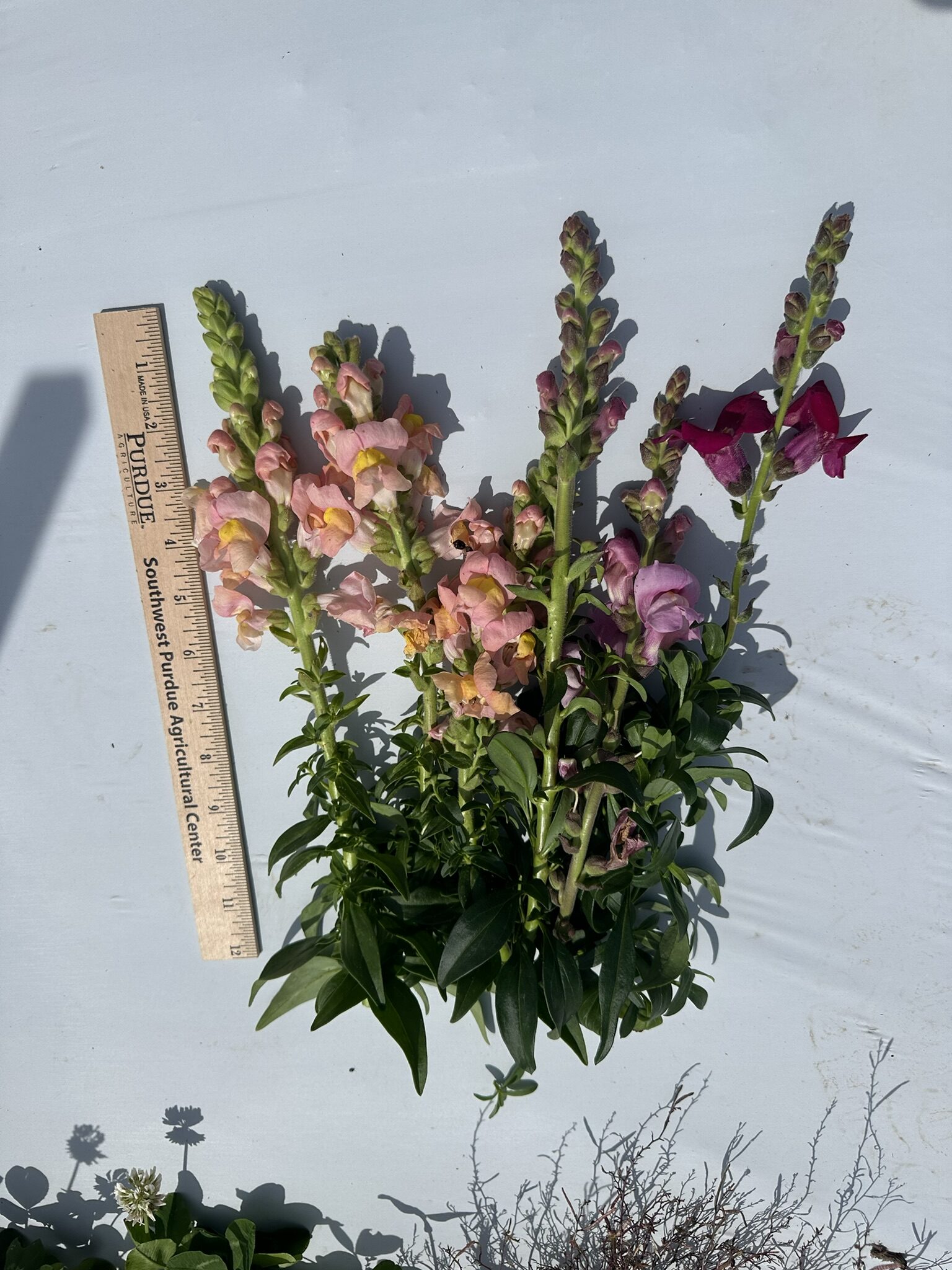
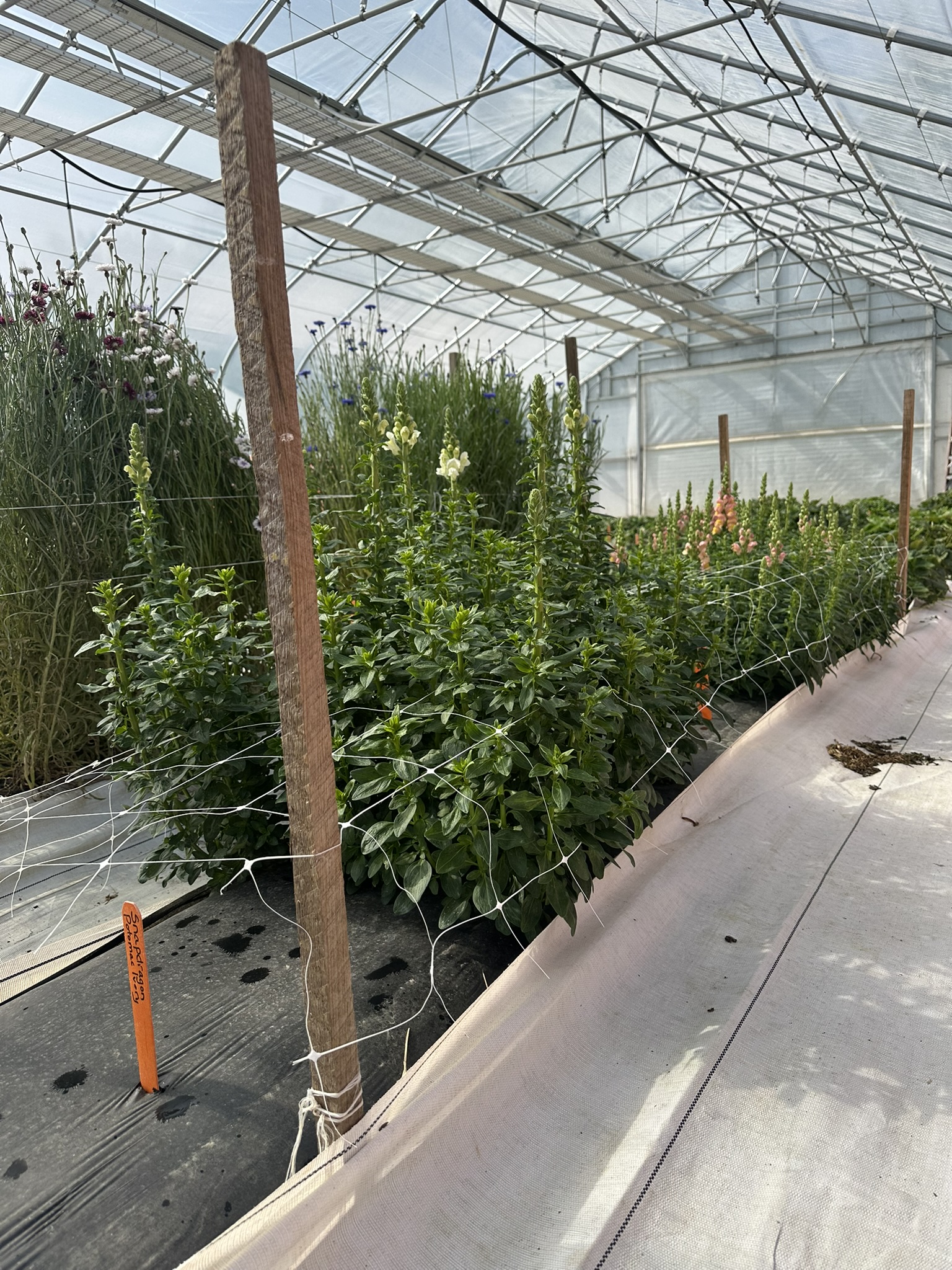
The Group 3–4 cultivar ‘Orleans Red’ began flowering as this article was being prepared, approximately 9 weeks after transplanting in the open field, earlier than ‘Potomac Ivory’. ‘Potomac Ivory’ grown in the high tunnel also started flowering this week and produced noticeably longer stems compared to ‘Antibes Apricot’ (Figure 2). We will continue to monitor the performance of the Group 3–4 cultivars and provide updates in the next article.
-
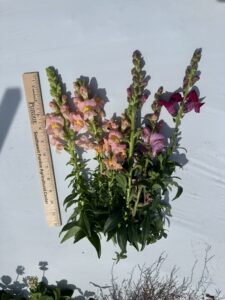
- Figure 1. Snapdragon cultivars Group 1-2 grown in open field at the southern Indiana location. The flowers were harvested on May 25. 2026. (Photo credit: Wenjing Guan)
-

- Figure 2. Snapdragon cultivar ‘Potomac Ivory’ in front of the row and ‘Antibes Apricot’ in the back of the row. The plants were grown in a high tunnel at Southwest Purdue Agricultural Center. Photo taken on May 25, 2026 by Wenjing Guan.
Stock
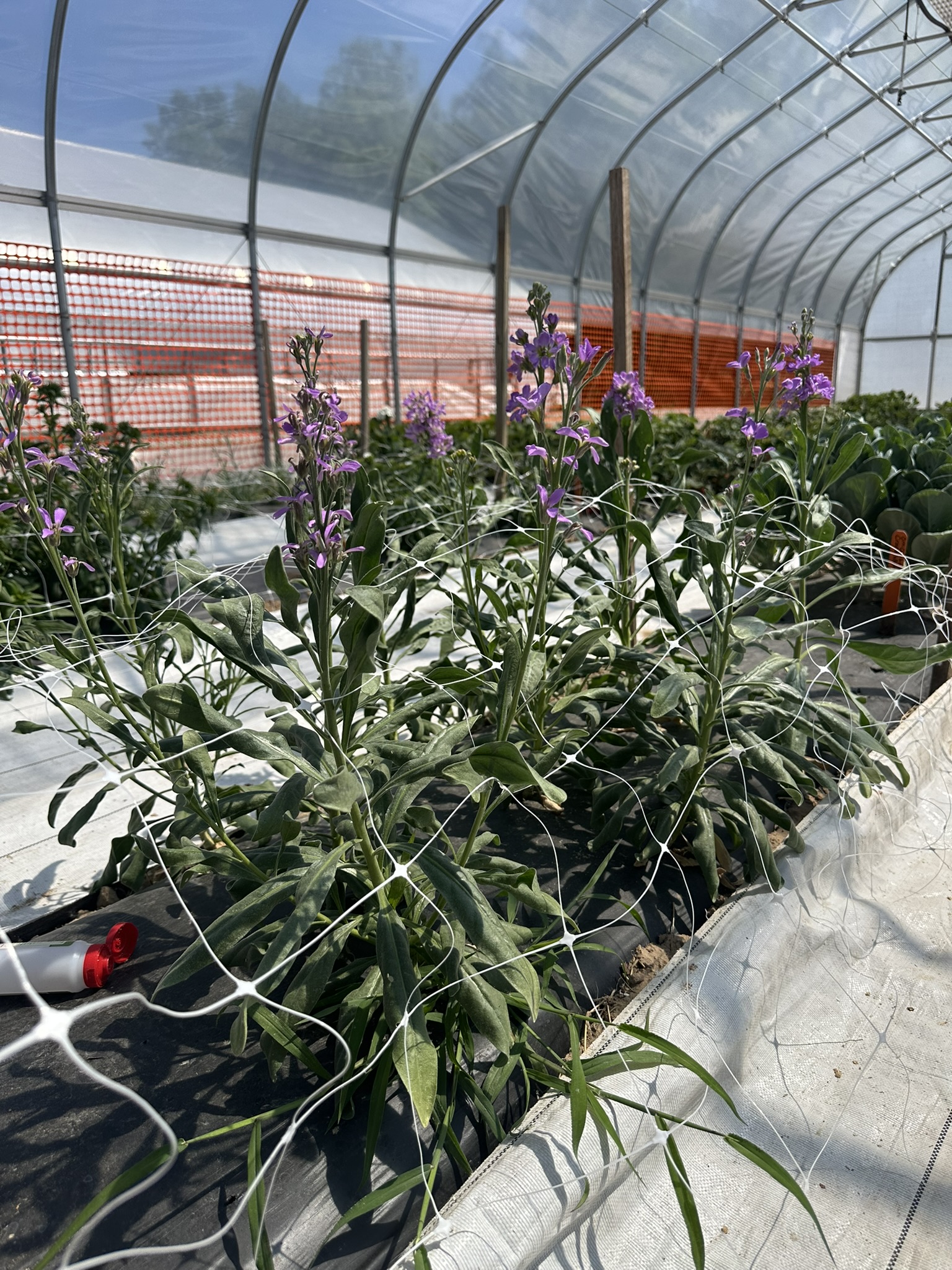
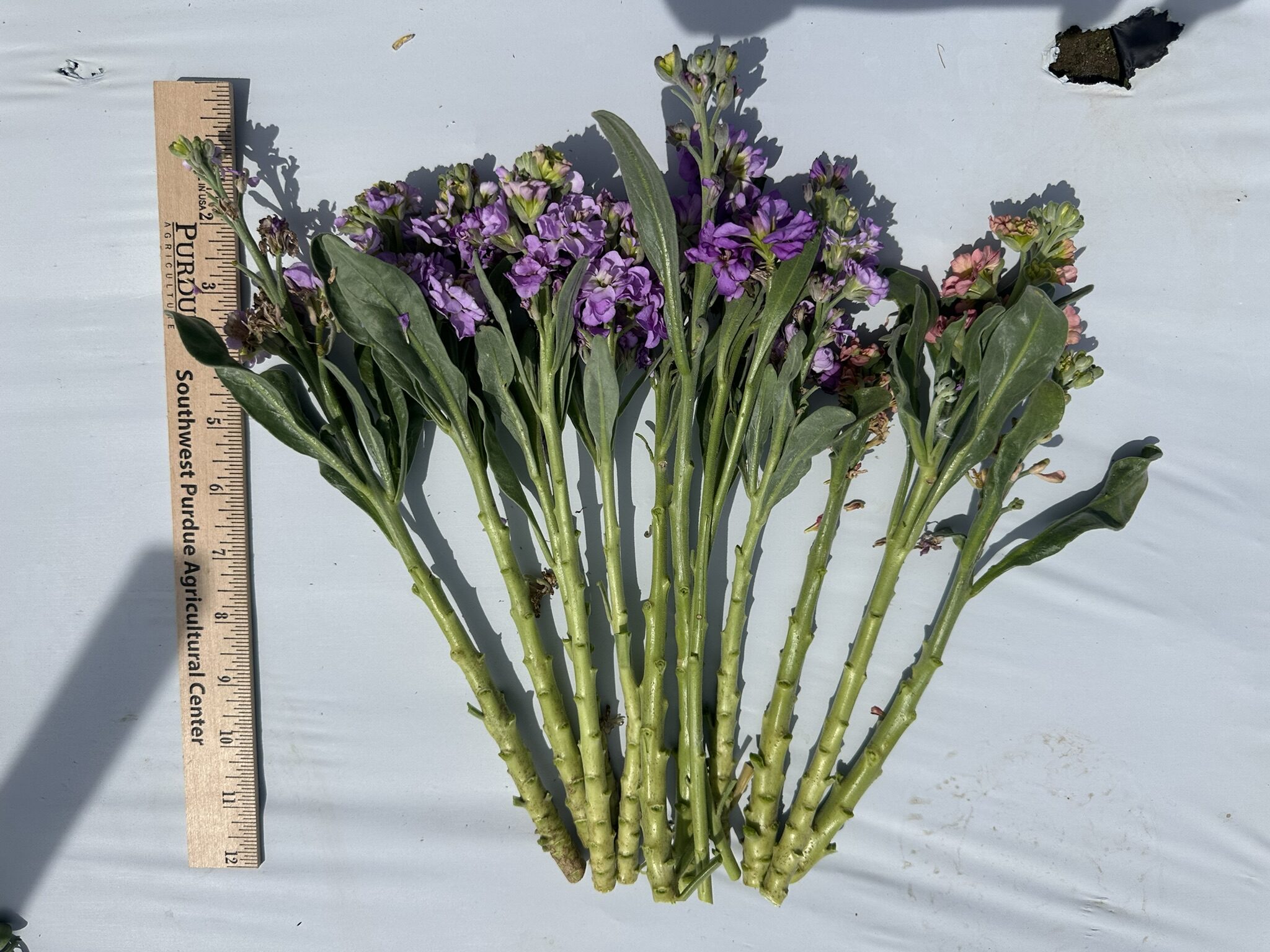
We included cultivars ‘Katz Lavender Blue’, ‘Iron Marine’, and ‘StoX® Antique Rose’ to represent Katz, Iron, and StoX series of stock in the evaluation. The three cultivars were planted in both high tunnels and open field on March 19 at the Southern Indiana location. Among the three cultivars, ‘Katz Lavender Blue’ bloomed the earliest, and some plants produced more than one stems with longer stem length. Plants grown in the high tunnels were harvested 8–9 weeks after transplanting, and in open field about 9-10 weeks after transplanting. Blooms in the high tunnel reached stem lengths at 12 inches, whereas stem length and flower quality were generally unmarketable for those grown in open field.
-
- Figure 3. Some ‘Katz Lavender Blue’ developed more than one stem per plant in a high tunnel at the southern Indiana location. Photo was taken on May 11 (Photo credit: Wenjing Guan)
-
- Figure 4. Stocks grown in open field had short stems and unmarketable flower quality. Photo was taken on May 25 (Photo credit: Wenjing Guan)
Ornamental Cabbage
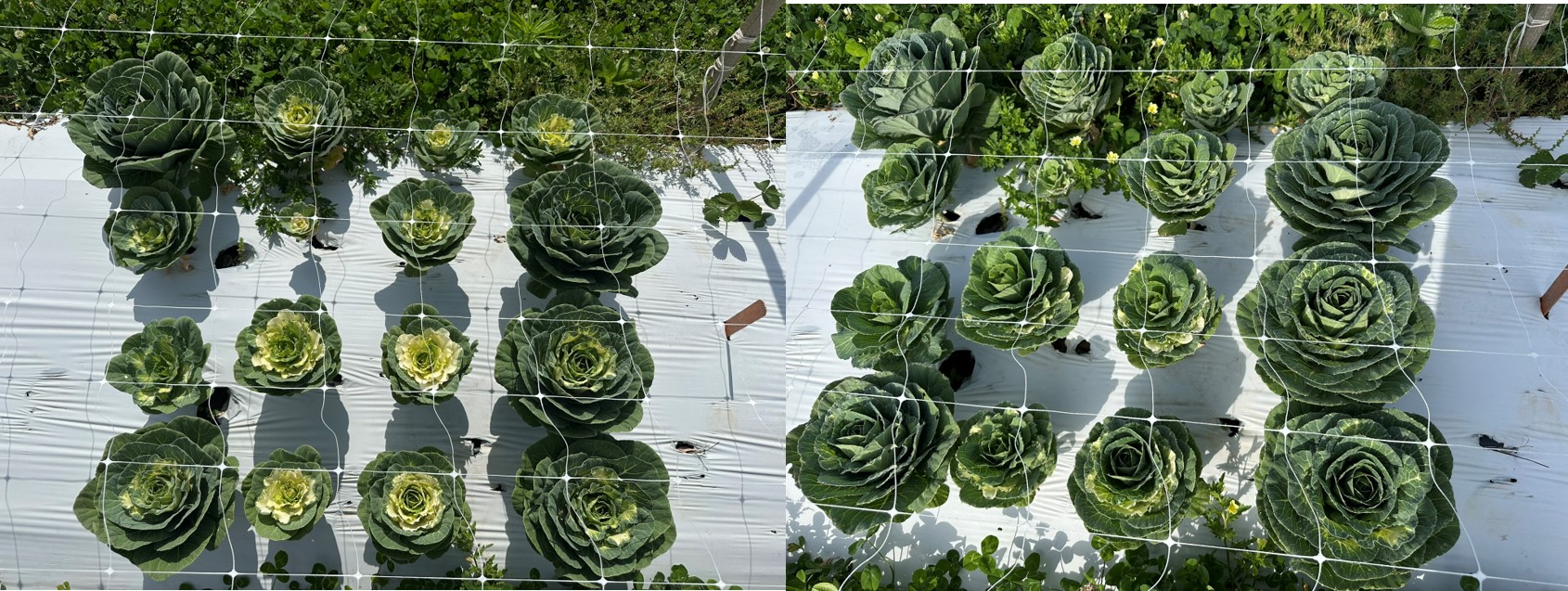
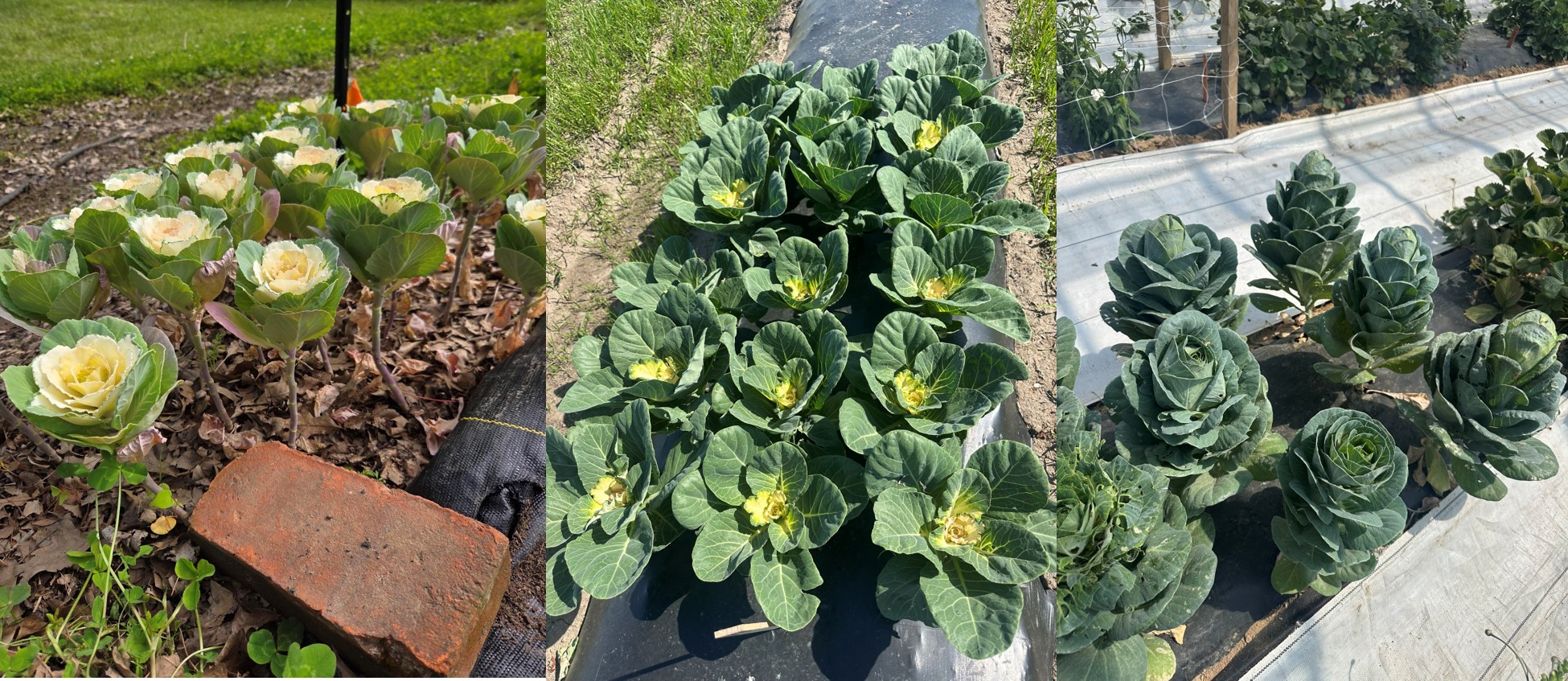
Unlike many cut flowers, the value of ornamental cabbage comes from its colorful foliage rather than its flowers. We observed interesting differences in the performance of ornamental cabbage ‘Crane White’ across the three locations. Plants grown at the central Indiana location developed the best white coloration compared to those at the other sites, even though many other cut flowers at the location experienced stress from excessive moisture (Figure 5). At the southern Indiana location, ‘Crane White’ grown in the high tunnel did not develop the characteristic white coloration. In contrast, plants grown in the open field at the same location developed white coloration earlier, but the color gradually faded as temperatures increased (Figure 6).
-

- Figure 5. Ornamental cabbage ‘Crane White’ grown at three locations. Left: ‘Crane White’ grown at the central Indiana location (photo taken on May 21), Middle: ‘Crane White’ grown at the northern Indiana location (photo taken on May 12), Right: ‘Crane White’ grown in high tunnel at the southern Indiana location (photo taken on May 19). Photo credit: Jayde Marie Grisham, Laura Ingwell and Wenjing Guan
-

- Figure 6. Ornamental cabbage ‘Crane White’ grown at the southern Indiana location in open field, note the color faded. Photo taken on May 19 (left) and May 25 (Right). Photo credit: Wenjing Guan