Those of a certain age will remember concerns about a hole in the ozone layer dominating the news in the mid 1980’s. This concern led to the ban of chlorofluorocarbons (CFC’s), and other ozone-depleting chemicals via the Montreal Protocol. According to the European Environment Agency, since the early 2000’s, the hole has been shrinking and is expected to be completely recovered by the middle of the century (EEA, 2024)
These days you are more likely to hear about ozone (O3) the molecule as opposed to the ozone layer (Figure 1). The ozone layer is an area in the stratosphere (upper atmosphere) that contains highly concentrated ozone molecules that help protect earth from ultraviolet radiation. This is where approximately 90% of ozone is located. The remainder 10% is located close to ground level (Fahey and Hegglin, 2010). The ground-level ozone is a pollutant caused by emissions from vehicles, industrial areas, and the sun. This pollutant can harm to both humans and plants. Kline et. al. (2008) state that ozone is the most important air pollutant affecting plants.
-
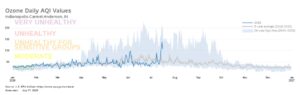
- Figure 1. United States Environmental Protection Agency Daily Air Quality Tracker for Indianapolis in 2026. The spike in July 2026 may have caused damage on susceptible plants. https://www.epa.gov/outdoor-air-quality-data/air-data-daily-air-quality-tracker
Unlike the protective ozone layer high in the atmosphere, ground-level ozone is harmful to both people and plants. It forms when sunlight reacts with pollutants such as nitrogen oxides and volatile organic compounds emitted from vehicles, industrial facilities, and other combustion sources. Ozone levels are typically highest during warm, sunny days, particularly in summer. Much of the Midwest has been experiencing high levels of ozone recently, with some areas receiving air quality alerts from the National Weather Service (in addition to the smoke from Canadian wildfires).
How Ozone Affects Plants
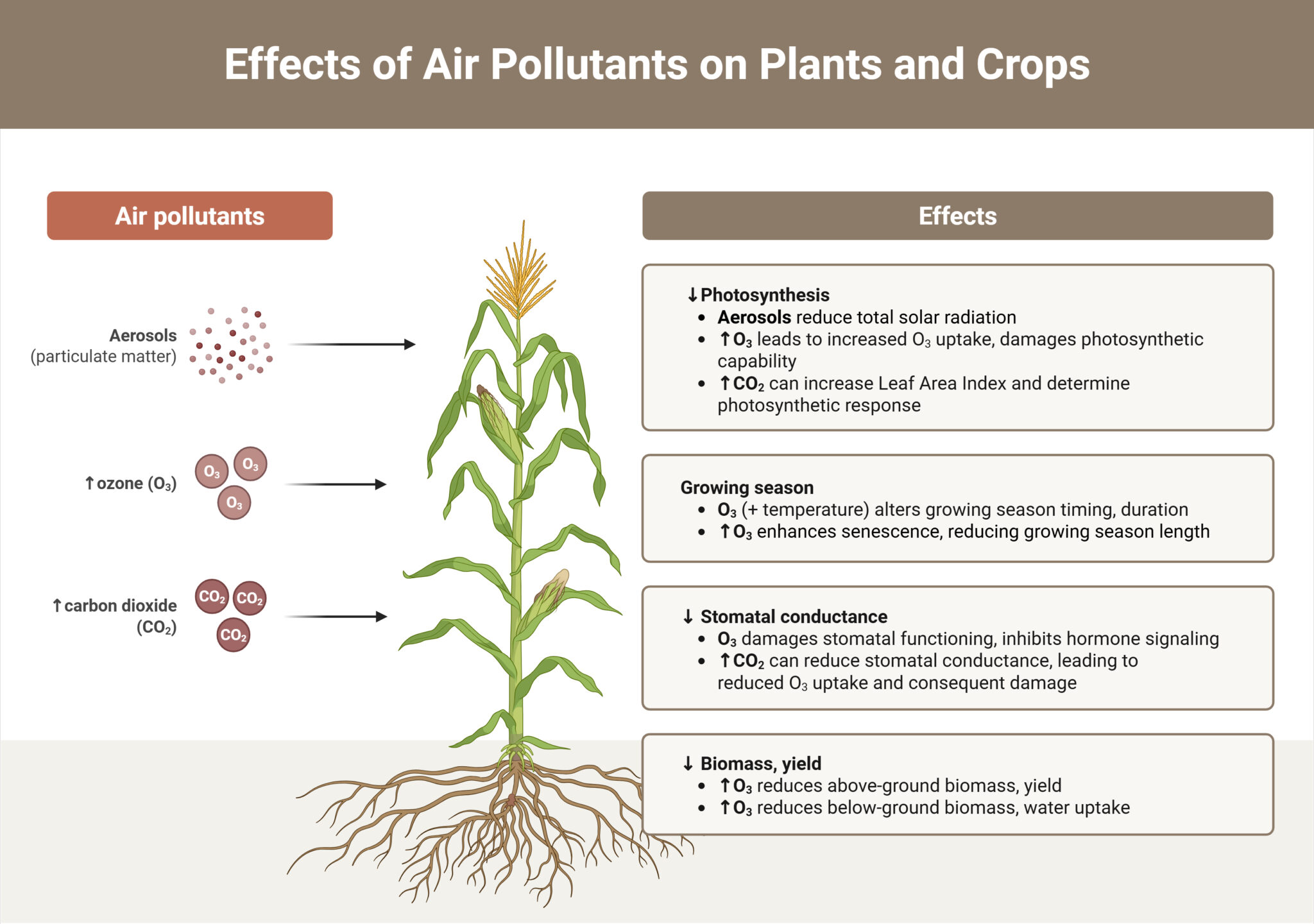
Plants absorb ozone through openings in their leaves called stomata, which are also where gas exchange and water regulation occur. Once inside the leaf, ozone damages plant tissues by disrupting normal cellular processes. This injury reduces the plant’s ability to photosynthesize efficiently, which decreases the growth and health of plants (Figure 2).
-
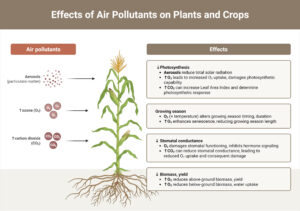
- Figure 2. Effects of air pollutants on plants. Created in BioRender. Daniel, K. M. (2026) https://BioRender.com/ pmpsm7e
The effects of ozone exposure can vary widely depending on plant species, environmental conditions, and the duration of exposure. Sensitive plants may show symptoms after only a few days of elevated ozone levels, while others may experience a gradual decline over time.
Diagnosing Ozone Injury
Ozone damage can sometimes be mistaken for disease, nutrient deficiencies, or pesticide injury. Common symptoms include:
- Tiny dark or light-colored spots on leaves (stippling)
- Bronzing, bleaching, or reddish discoloration
- Premature yellowing and leaf drop
- Reduced growth and overall plant health
- Early fall color in trees
- Increased susceptibility to insects, diseases, drought, and other environmental stresses
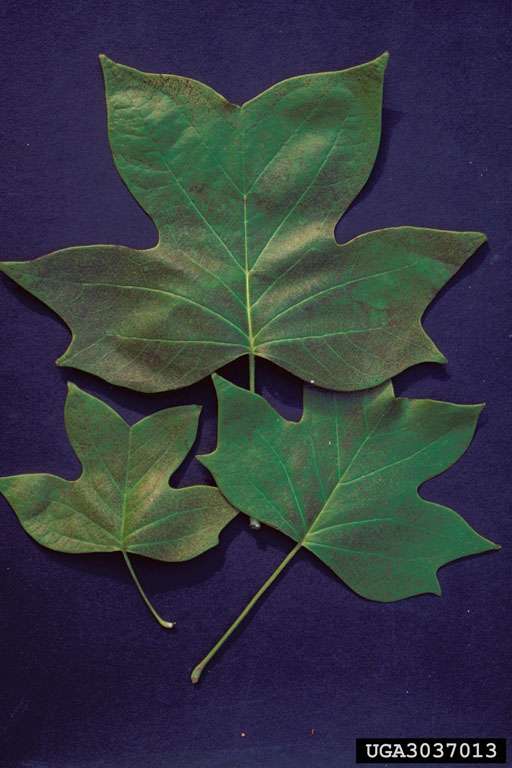
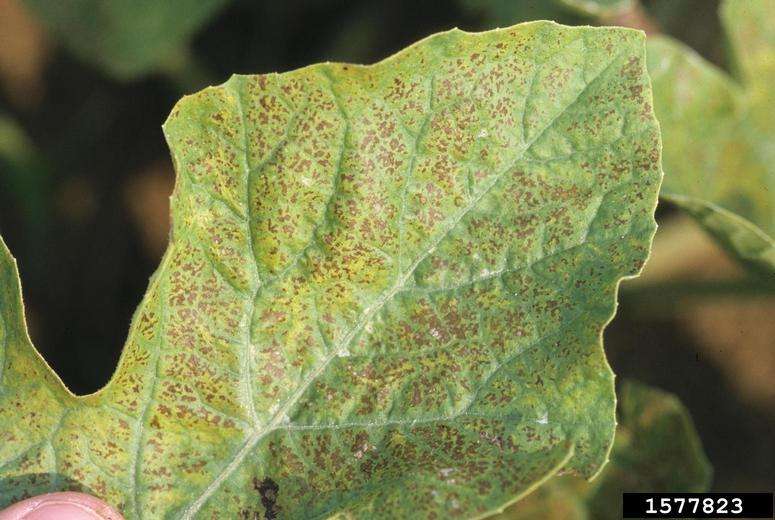
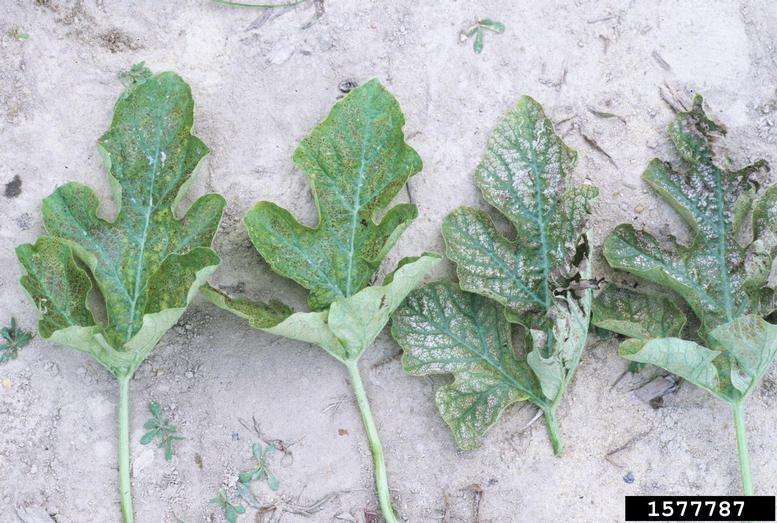
Symptoms are often most noticeable on older leaves and on plants growing in full sun, where ozone uptake tends to be greatest (Figure 3a, 3b, 3c, 3d)
-

- Figure 3a. Ozone damage to tulip tree shows bronzing and stippling. Photo: USDA Forest Service – Region 8 – Southern , USDA Forest Service, Bugwood.org
-
- Figure 3b. Stippling caused by ground level ozone. Photo: Gerald Holmes, Strawberry Center, Cal Poly San Luis Obispo, Bugwood.org.
-
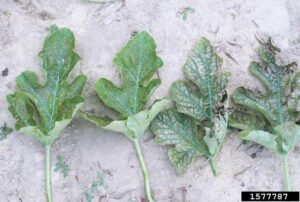
- Figure 3c. Various levels of damage from ground level ozone. Photo: Gerald Holmes, Strawberry Center, Cal Poly San Luis Obispo, Bugwood.org
-

- Figure 3d. Ozone damage to pine needles. Photo: USDA Forest Service – Region 8 – Southern , USDA Forest Service, Bugwood.org

Plants Commonly Affected
Not all landscape plants respond equally to ozone. Some species are highly sensitive, while others exhibit few visible symptoms. Plants known to be susceptible include (Kline et al., 2008) (Lee, et al., 2022):
- Black cherry
- Tulip trees
- Sycamores
- Black cherry
- Milkweed
- Willows
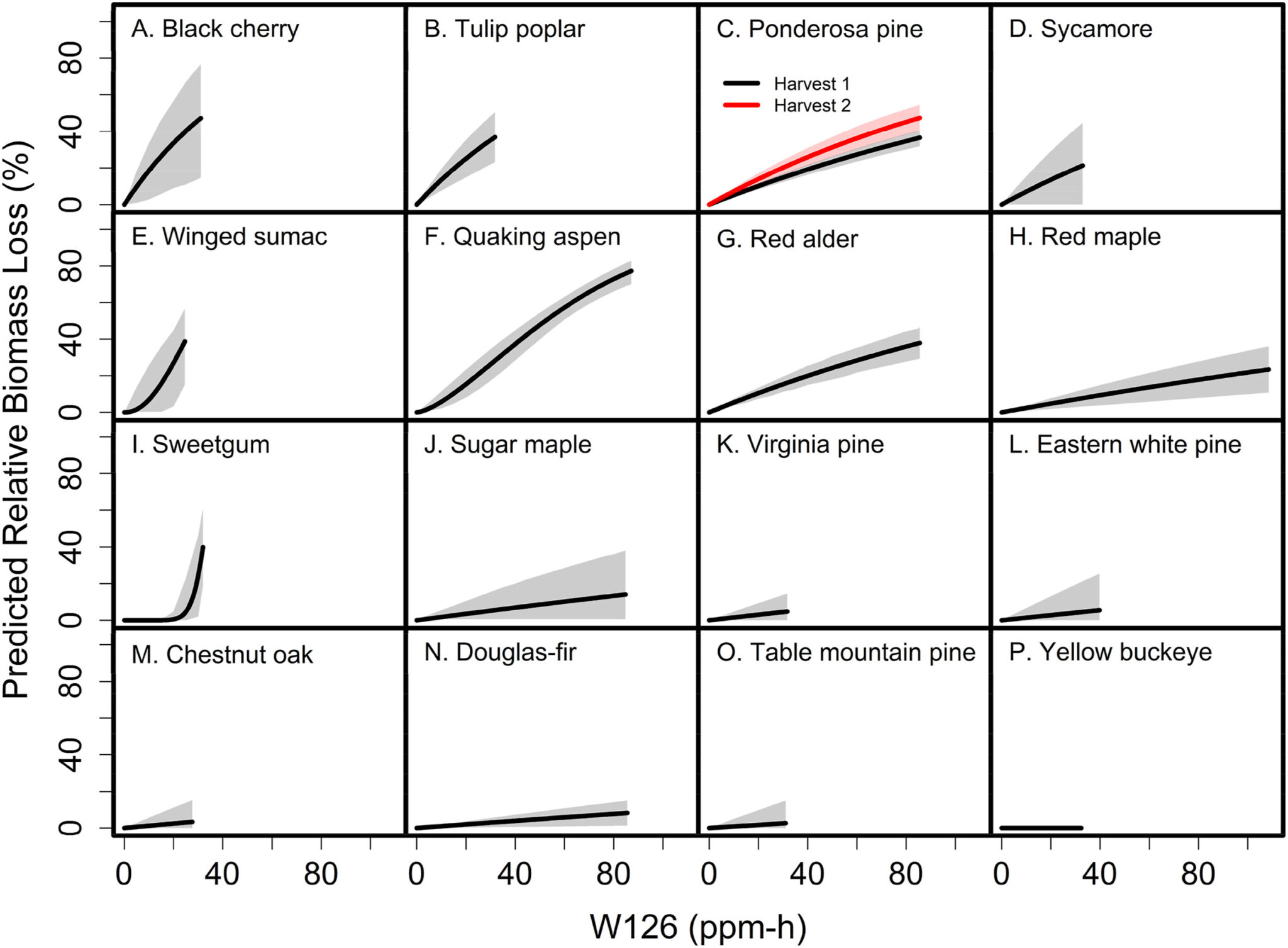
Because sensitivity varies among cultivars, neighboring plants of the same species may show different levels of injury (Figure 4).
-
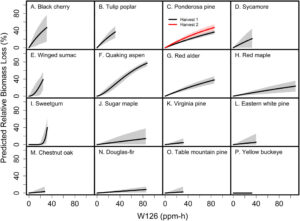
- Figure 4. Species-dependent predicted relative biomass loss (AKA loss of growth) for 16 tree species exposed to ozone for one or more growing seasons. The shaded region represents the 95% confidence interval when data are combined across studies and/or harvests for each species. Species are ordered from most sensitive to least sensitive. Modified from Lee, et.al. (1994). https://pmc.ncbi.nlm.nih.gov/articles/PMC9237886/
Environmental Factors
Weather conditions play a major role in ozone injury. High temperatures, bright sunlight, and adequate soil moisture encourage stomata to remain open for cooling, thus increasing ozone uptake. During drought, plants may partially close their stomata, reducing ozone entry but potentially creating other drought-related symptoms.
Urban and suburban landscapes often experience higher ozone concentrations, but elevated levels can also occur in rural areas because wind can transport ozone-forming pollutants many miles from their source.
Managing Ozone Damage
Unfortunately, there is no treatment that can reverse ozone injury once it has occurred. However, landscape managers can help plants better tolerate ozone stress by following good cultural practices:
- Water plants during extended dry periods.
- Apply mulch to conserve soil moisture and moderate soil temperatures.
- Maintain proper fertility based on soil test recommendations.
- Avoid unnecessary pruning during periods of environmental stress.
- Monitor plants regularly for signs of stress and pest problems.
Healthy plants are generally better equipped to withstand ozone exposure and recover from injury.
Going Forward
As temperatures rise and urban development continues, ground-level ozone remains a concern for plant health care managers. While the pollutant is invisible, its effects on plant health can be significant. Understanding how ozone damages plants and recognizing the symptoms can help plant health care managers make informed management decisions and maintain healthier, more resilient landscapes.
By paying attention to plant health and reducing other sources of stress, managers can lessen the impact of this unseen environmental challenge and keep landscapes healthy throughout the growing season.
Further Reading:
Identifying Air Pollution Damage on Melons
Ozone Injury on Vegetable Plants
References:
- EEA, 2024. What is the current state of the ozone layer? European Environment Agency. https://www.eea.europa.eu/en/topics/in-depth/climate-change-mitigation-reducing-emissions/current-state-of-the-ozone-layer. Last accessed 7/16/2026.
- Fahey, D.W. and Hegglin, M. I. 2010. Twenty questions and answers about the ozone layer: 2010 update. 2010 report of the Montreal Protocol Scientific Assessment Panel. https://csl.noaa.gov/assessments/ozone/2010/twentyquestions/authors.html. Last accessed 7/16/2026.
- Kline, L. J., Davis, D. D., Skelly, J. M., Savage, J. E. and Ferdinand, J. 2008. Ozone sensitivity of 28 plants selections exposed to ozone under controlled conditions. Northeastern Naturalist. 15 (1): 57-66.
- Lee, E. H., Andersen, C. P., Beedlow, P. A., Tingey, D. T., Koike, S., Dubois, J. J., Kaylor, S. D., Novak, K., Rice, R. B., Neufeld, H. S., Herrick, J. D. 2022. Ozone exposure-response relationships parametrized for sixteen tree species with varying sensitivity in the United States. Atmospheric Environment. Vol. 284.