It’s hot in Indiana, and the insects are out! We recommend scouting for many pests that become active in spring and early summer, such as scales and bagworms, because management is most effective when applied soon after they emerge. But the scouting season isn’t over yet—several pests become active throughout the late summer months. Here are a few to keep an eye out for as the season progresses.
Mimosa webworm
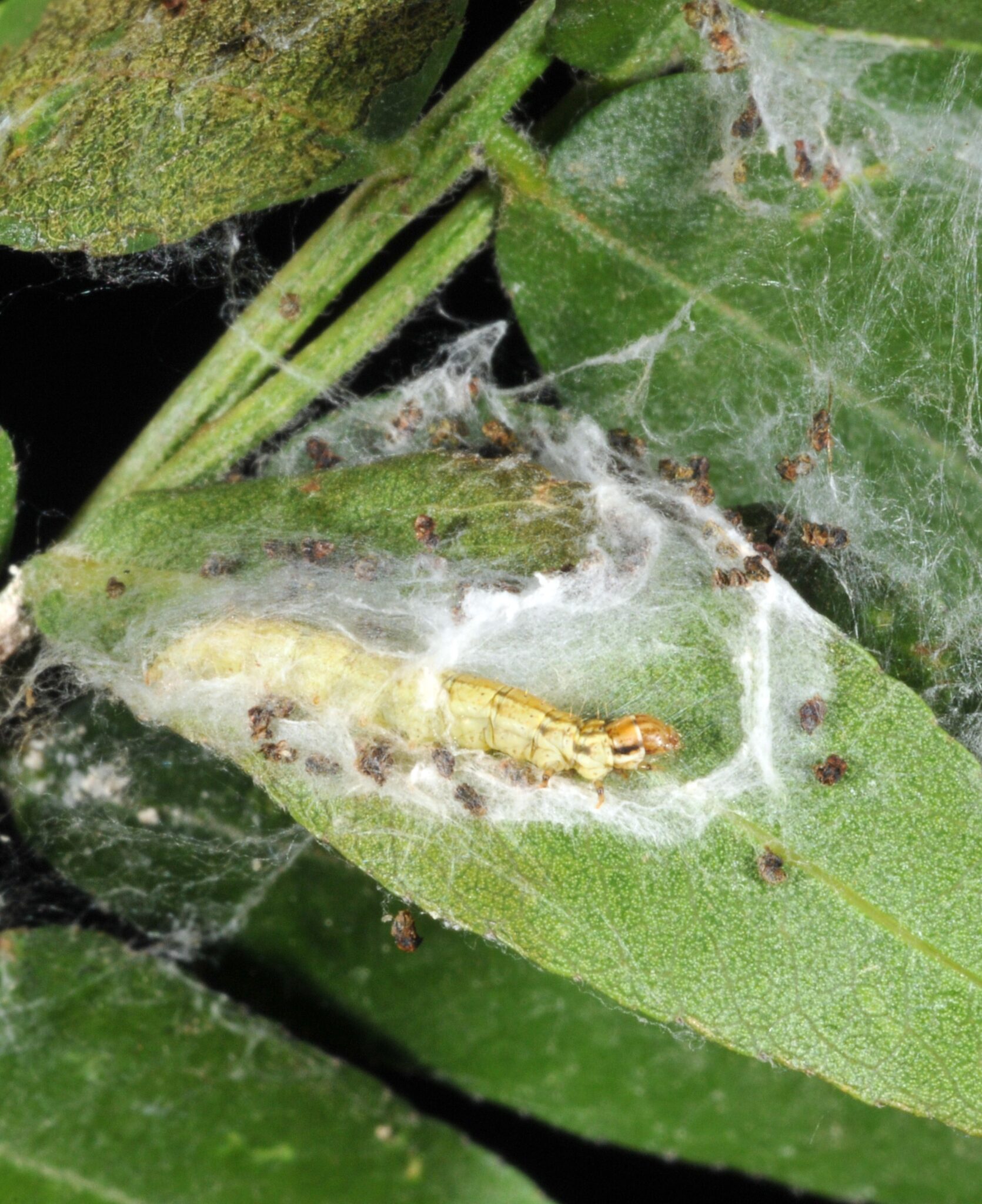
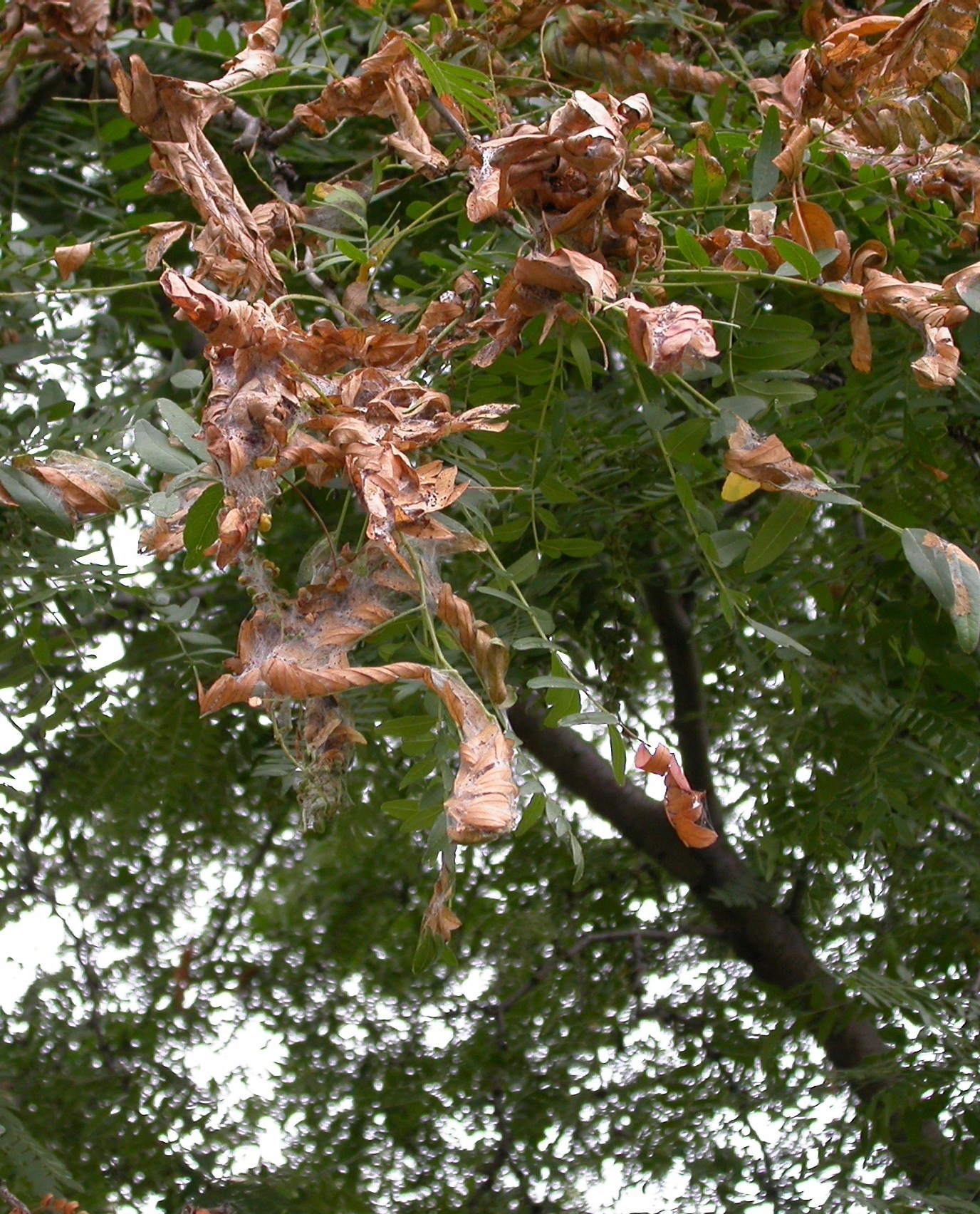
It’s about the time of year when second-generation adults begin flying and laying eggs. Watch for caterpillars in early August. Mimosa webworm caterpillars are green and hairless (Fig. 1), and they web together leaves at the ends of branches, causing the foliage to turn brown (Fig. 2). They are especially fond of mimosa and thornless honey locust trees.
-
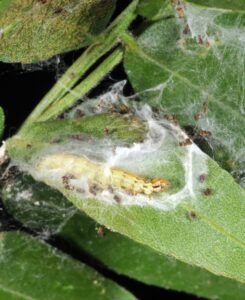
- Fig. 1. Mimosa webworm caterpillar. Image: Cliff Sadof.
-
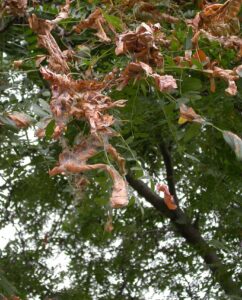
- Fig. 2. Damage on mimosa tree from mimosa webworm. Image: Cliff Sadof.
Mimosa webworms do not require management unless the infestation is severe. Check the Purdue Plant Doctor or the Purdue Extension article by Cliff Sadof and Tim Gibb for recommendations.
Fall webworm
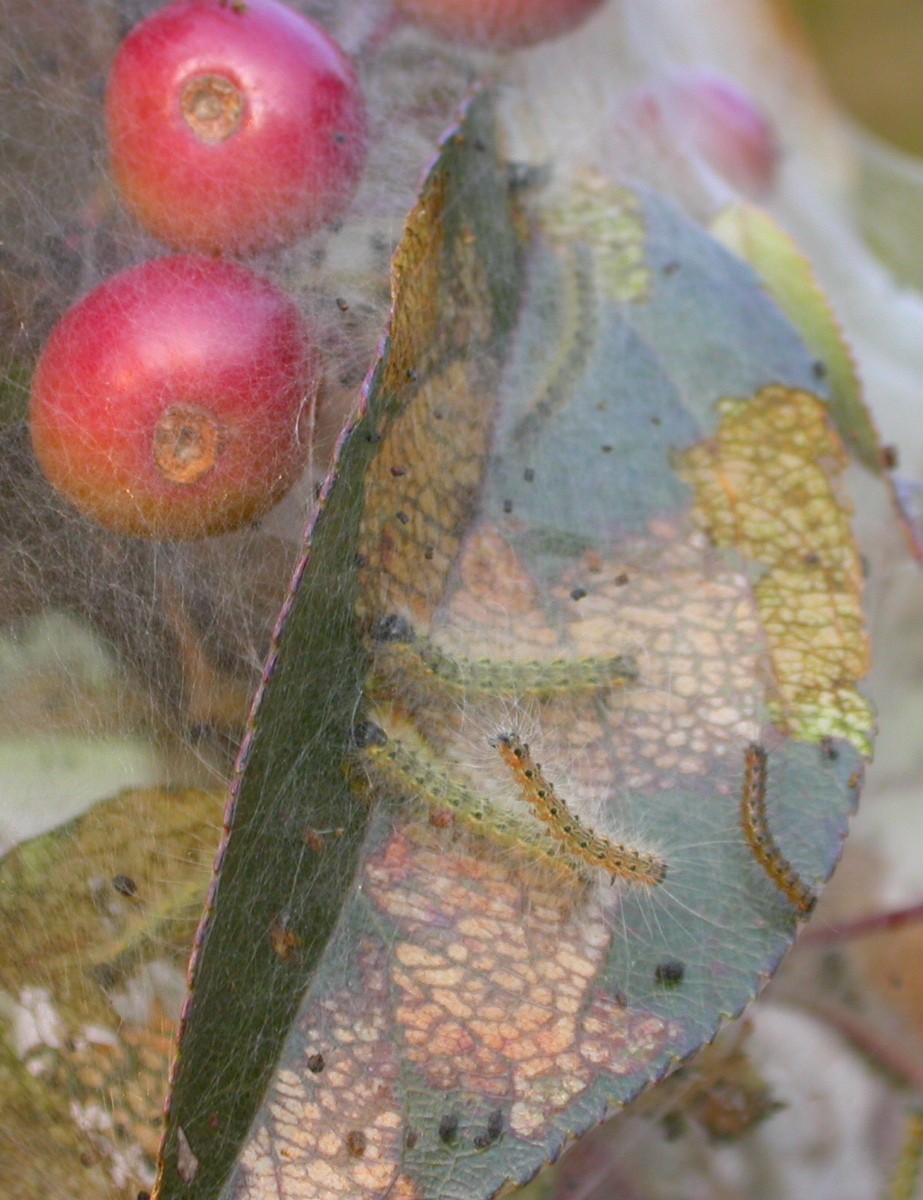
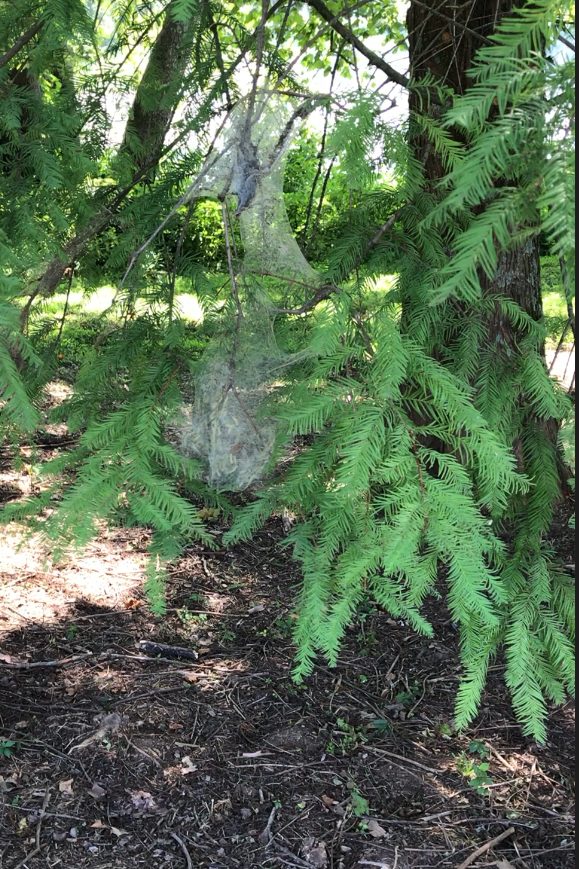
Fall webworms are another late-season caterpillar to watch for. Eggs hatch from late July through early August, so keep an eye out for caterpillars during this time. These caterpillars are yellow and very hairy (Fig. 3). Like mimosa webworms, they web together the ends of branches, often creating large nests, especially along forest edges (Fig. 4).
-
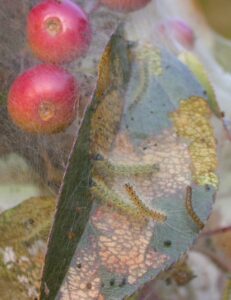
- Fig. 3. Fall webworm caterpillar. Image: Cliff Sadof.
-
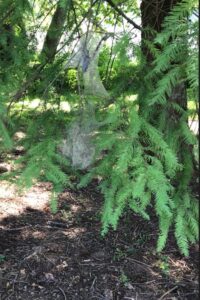
- Fig. 4. Fall webworm nest on larch. Image: Cliff Sadof.
Fall webworm doesn’t typically require management unless the owner is worried about aesthetics. You can find more information about the fall webworm on the Purdue Plant Doctor or the Purdue Extension article by Cliff Sadof.
Video instruction on managing mimosa and fall webworms is available on YouTube as well. Check out Managing Caterpillars in Butterfly Gardens and Landscapes with Purdue Plant Doctor.
Dog-day cicadas
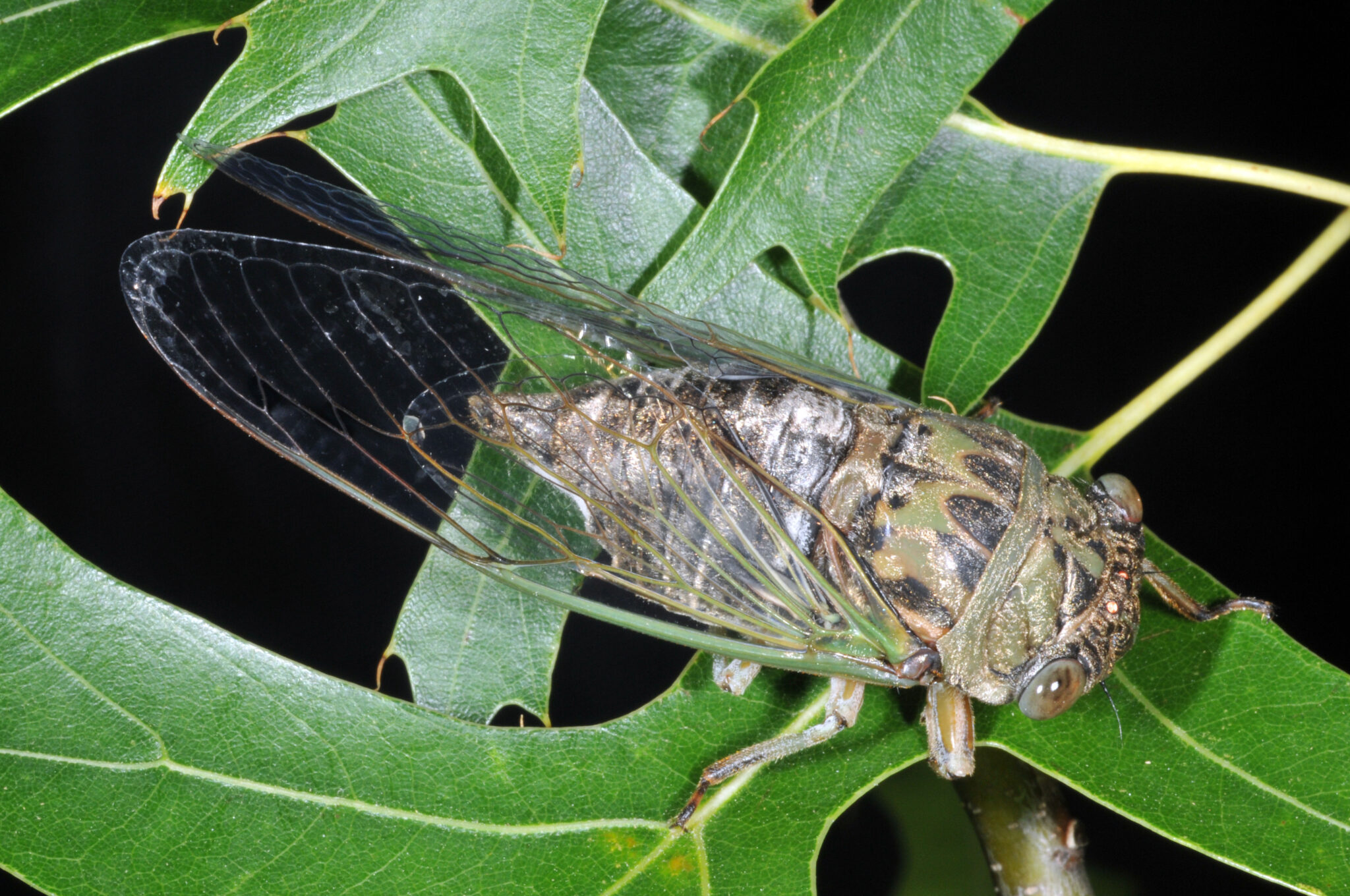
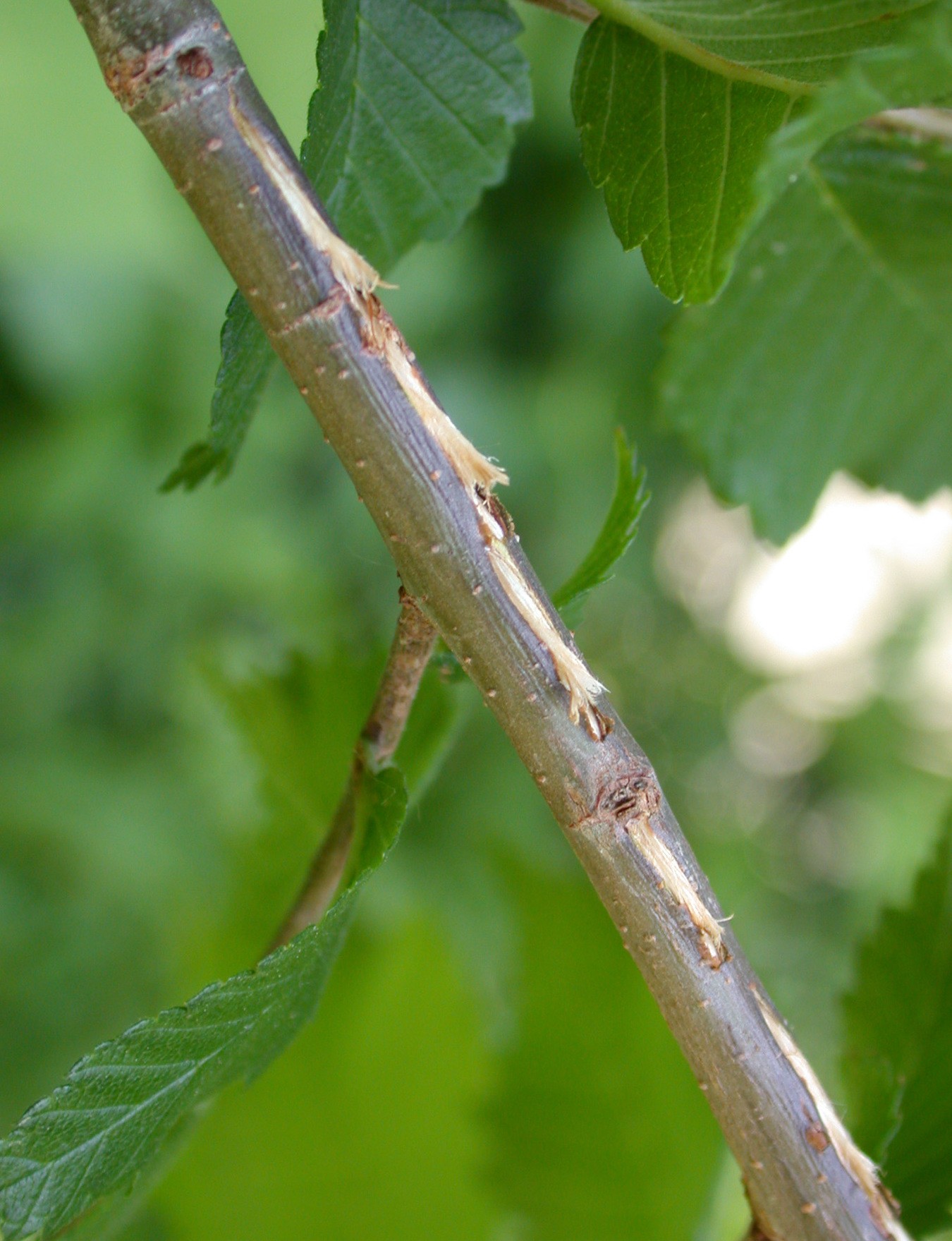
Is it really summer without the annual shrieking of cicadas? We are not expecting any periodical cicadas this year (Brood X is due to emerge again in 2038), but the annual dog-day cicadas will be emerging very soon! Dog-day cicadas are green with a silvery-white underside (Fig. 5). Females lay their eggs in pencil-sized twigs, causing the branches to split (Fig. 6). The ends of the affected branches eventually die, resulting in a symptom known as “flagging.” During mass emergences of periodical cicadas, this damage can become quite severe. In a typical year like this one, however, we do not expect significant damage.
-
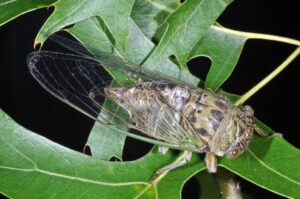
- Fig. 5. Adult annual dog-day cicada. Image: John Obermeyer.
-
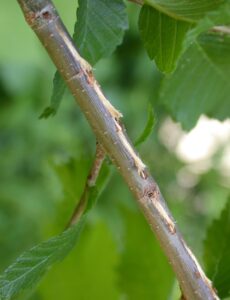
- Fig. 6. Splitting caused by oviposition of a periodical cicada. Dog-day cicadas cause similar damage. Image: John Obermeyer.
Invasive species scouting reminders
Are you still scouting for box tree moth and elm zigzag sawfly? I wrote about box tree moth again recently, but now that the season is in full swing, here is your friendly reminder to continue monitoring your boxwoods for this pest. Also, keep an eye out for the distinctive feeding damage on the leaves caused by elm zigzag sawfly. This pest was detected in Indiana last year and has already begun to spread. If you need a refresher, check out Bob Bruner’s article for more information.