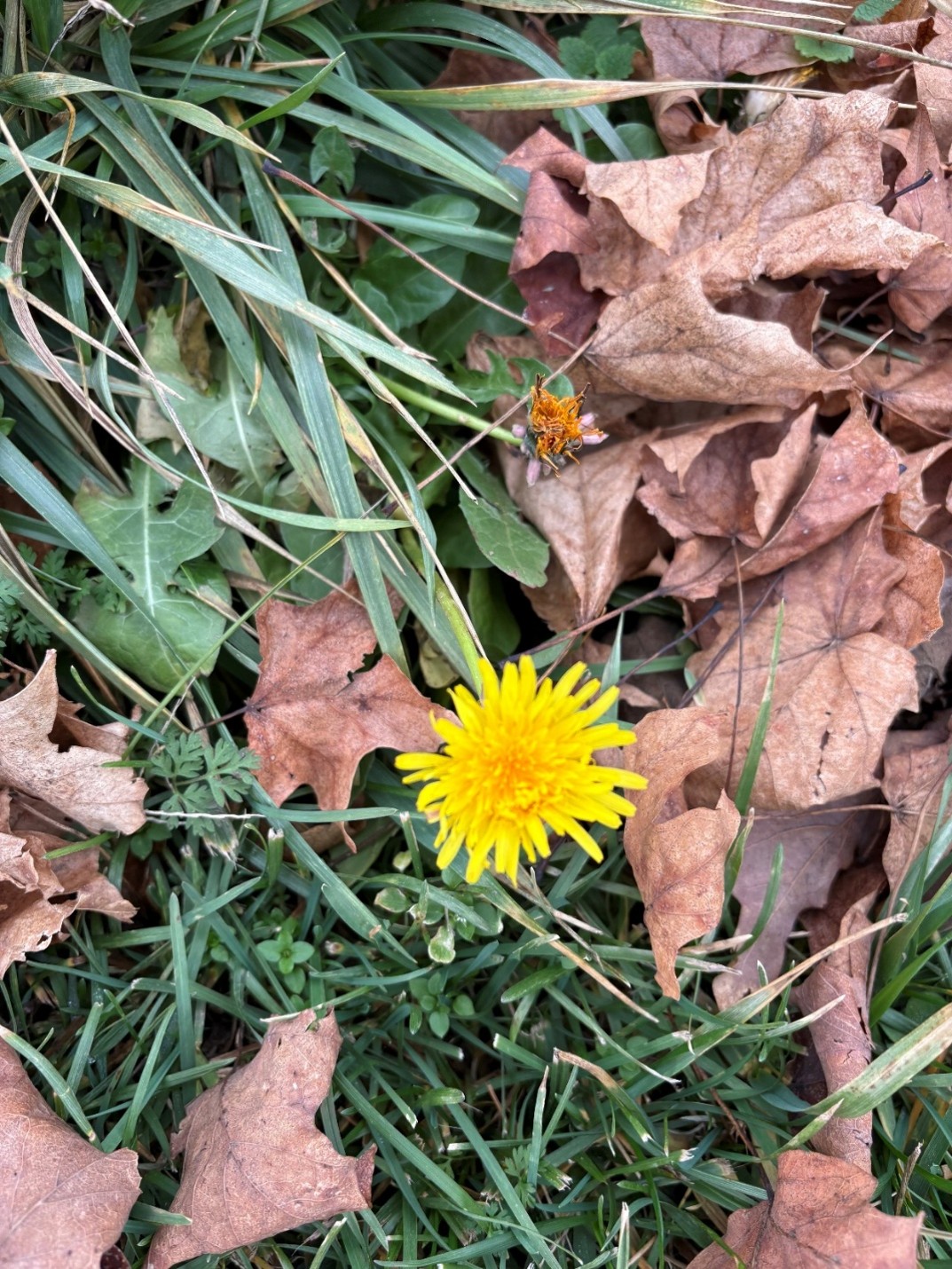
During my career at Purdue, I have found that the dandelion—best known for its bright yellow flower—elicits a wide range of opinions from homeowners, farmers, and the general public.
The dandelion (Taraxacum officinale) is a perennial plant with several unique characteristics. Its deeply lobed leaves grow in a low rosette pattern, allowing the plant to tolerate repeated mowing. Flowers typically appear after the first year of growth. Following pollination, the yellow flower head closes and develops into the familiar spherical seed head. As the seeds mature, they remain attached to the stem until wind carries them to new locations. Dandelions readily establish wherever bare soil and adequate moisture are available, making them highly successful colonizers.
-
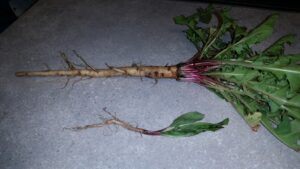
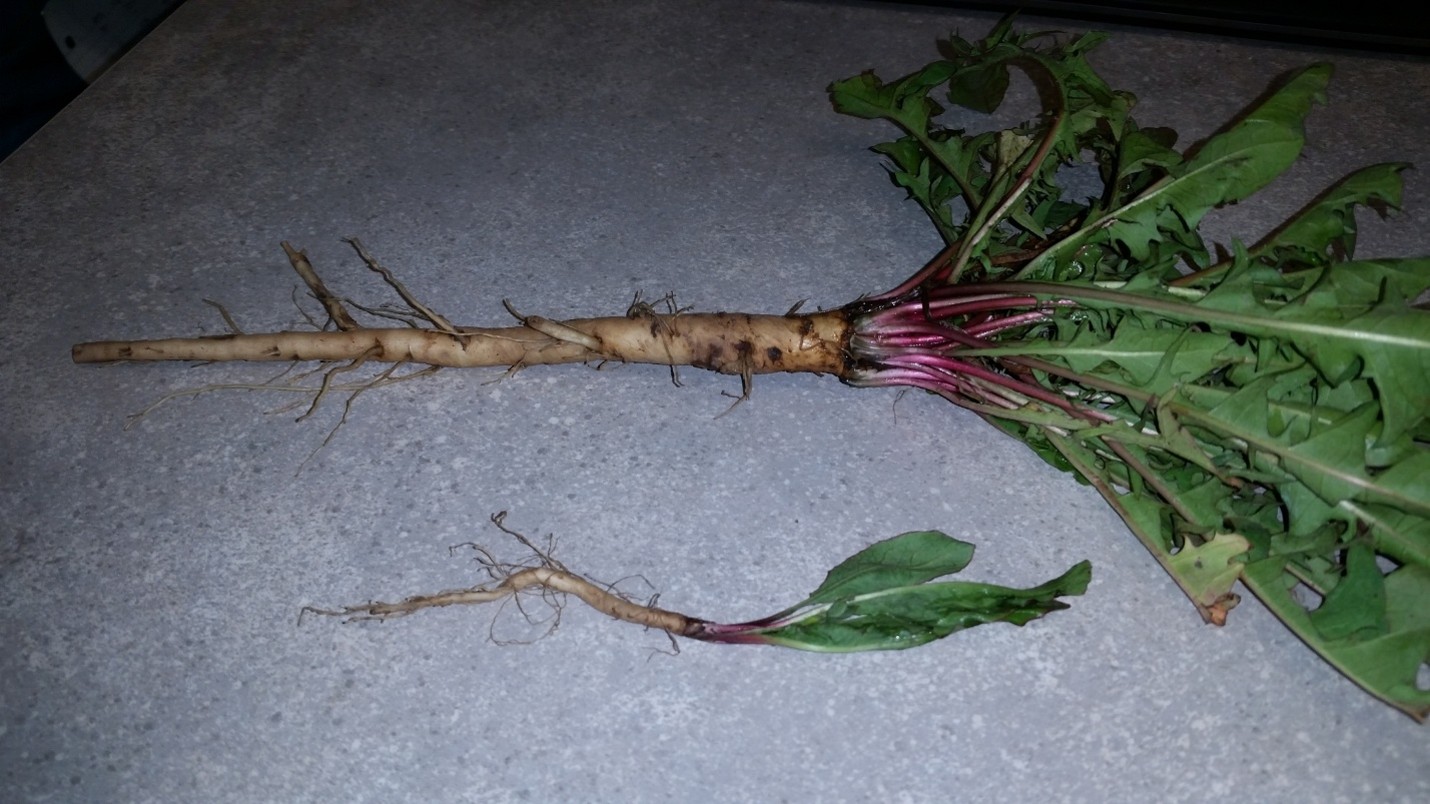
- Figure 1: The Taproot of the Dandelion.
Over the years, I have found that conversations about dandelions often reveal a broad spectrum of perspectives. Some people view them as troublesome weeds that should be controlled or eliminated from the landscape. For these individuals, we often recommend an application of a herbicide containing 2,4-D, always emphasizing the importance of following the product label. The most effective time to treat dandelions is in the fall, when the plant is actively transporting water and nutrients to its roots, allowing the herbicide to move to the growing point and provide better control.
-
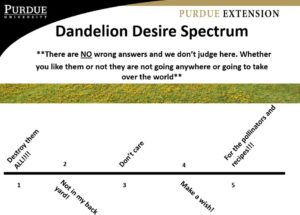
- Figure 2: Where do you land on the Dandelion Spectrum.
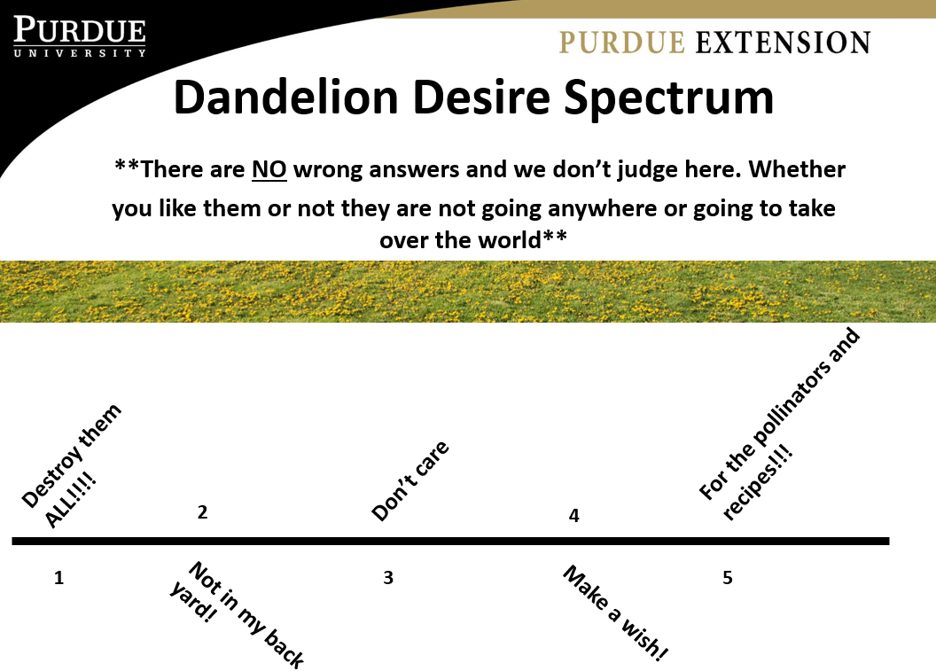
Others are more accepting of dandelions and may even encourage their presence because the flowers provide an early-season food source for pollinators. Whatever your opinion of dandelions may be, the most important thing is to be intentional in how you manage them—and respectful of the differing perspectives others may have.
-
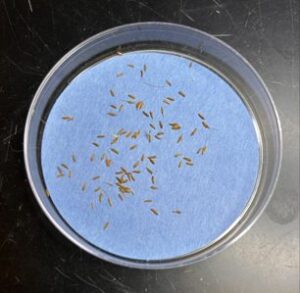
- Figure 3a: Dandelion seeds .
-
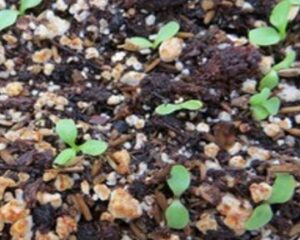
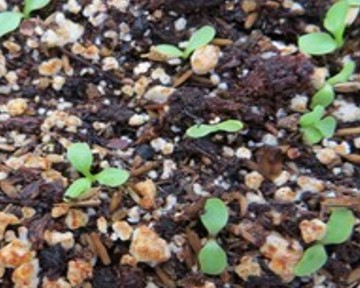
- Figure 3b. Dandelion seedlings
More information here: https://turf.purdue.edu/dandelion/
Video on the Dandelion: https://www.youtube.com/watch?v=i4tMMVD1Ehk&t=17s
-
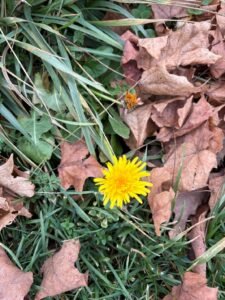
- Figure 4: Dandelions blooming in December.