Bacterial blight is a disease of peony caused by the bacterium Xanthomonas. The disease begins as angular necrotic lesions with a red-purple border that can expand over time to blight or kill large areas of leaf tissue (Fig 1, Fig 2). If the bacterium spreads to the stems, it can lead to entire stem dieback in the plant (Fig 3, Fig 4).
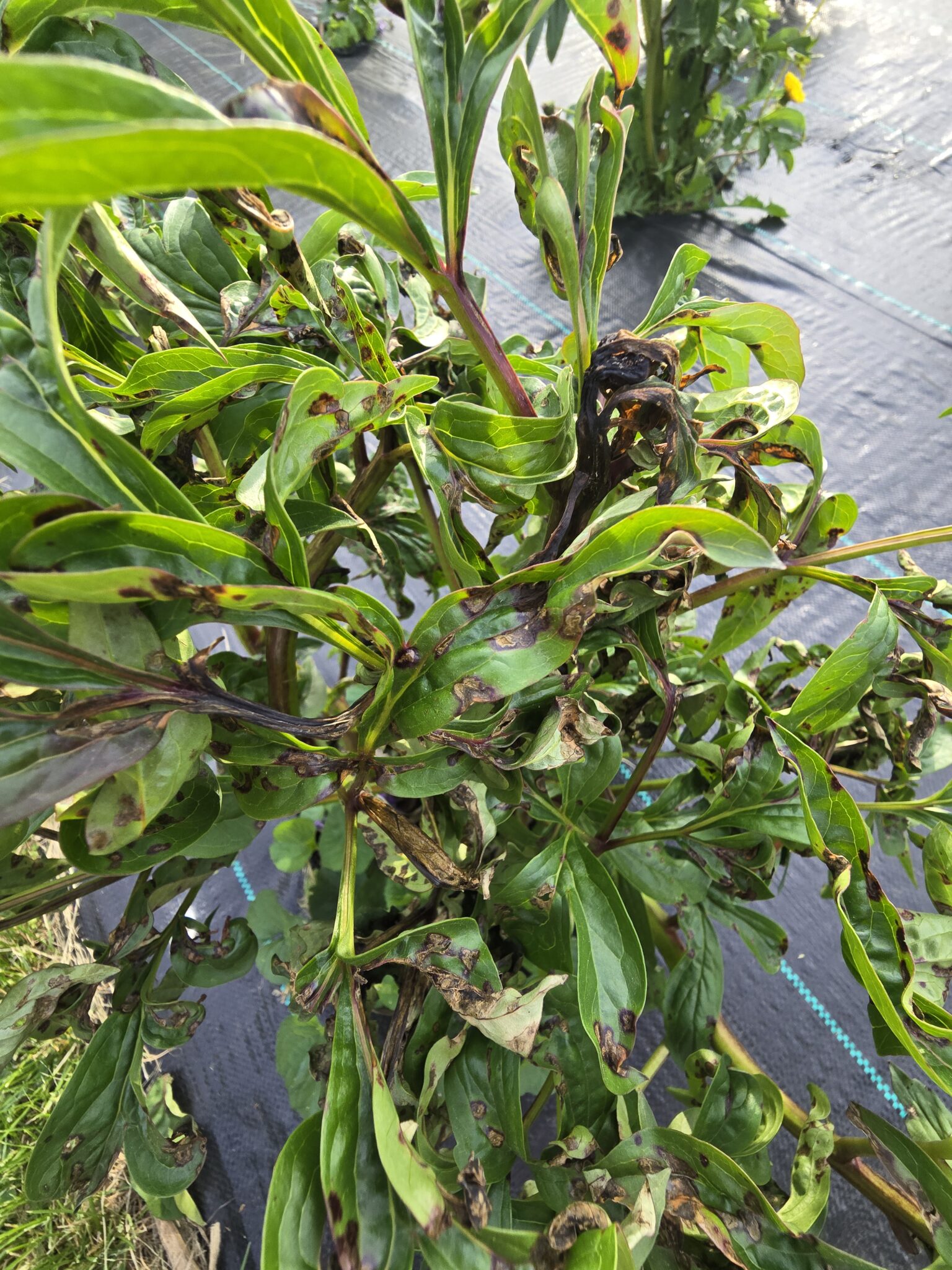
Fig 1 Photo Credit: PPDL
Field symptoms of bacterial blight on peony.
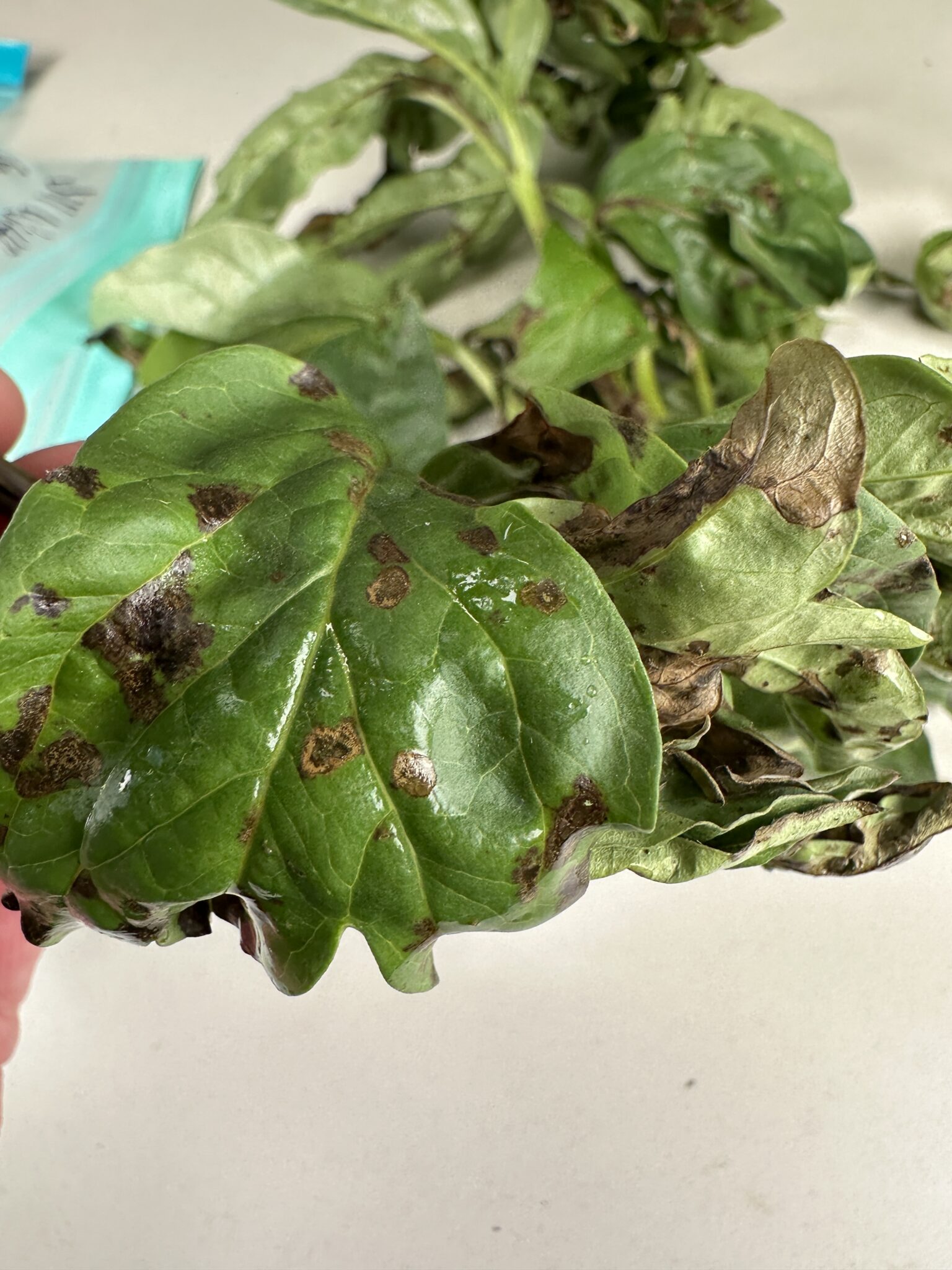
Fig 2 Photo Credit PPDL
Leaf symptoms of bacterial blight
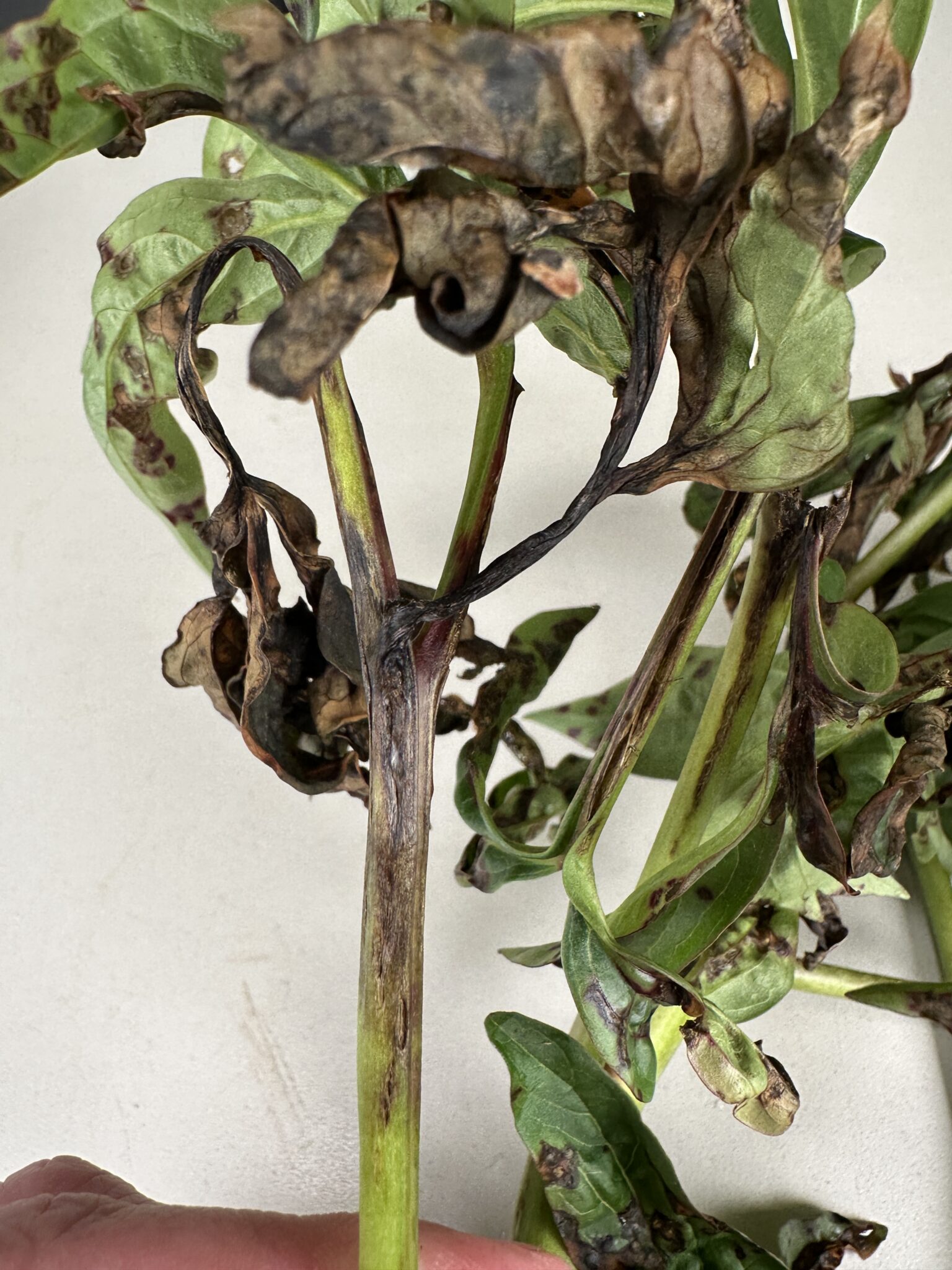
Fig 3 Photo Credit PPDL
Leaf blighting or whole leaf dead can occur as the bacterium spreads to the petiole/stem of the plant.
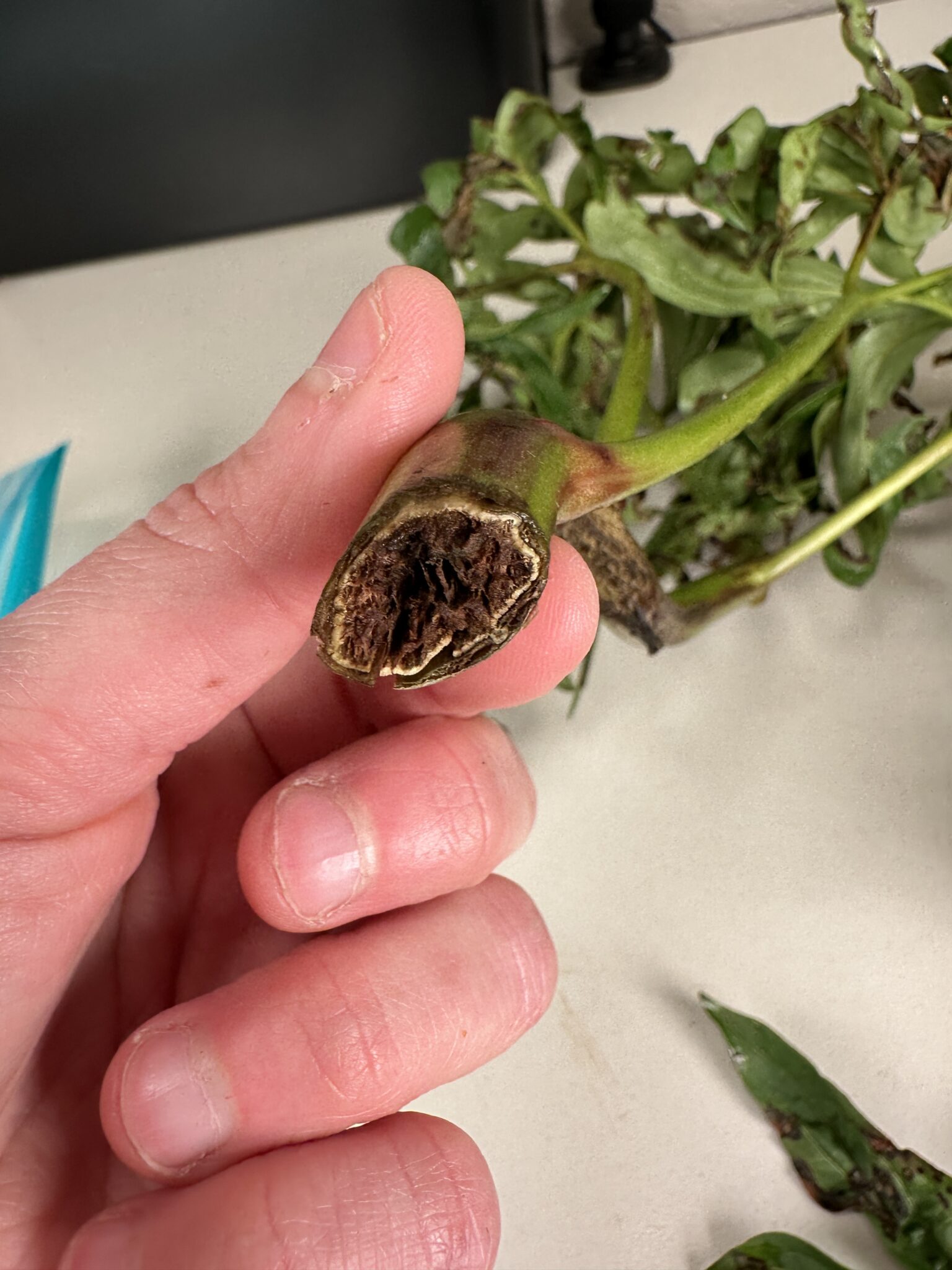
Fig 4 Photo Credit PPDL
Severe stem necrosis caused by Xanthomonas.
This season, we have seen an increased number of peony samples with this disease likely due to the wet spring. We normally see this issue slow down as the weather warms up and dries out in the summer, but with the extended wet period, we may continue to see blighting spread.
To manage this disease, you can implement cultural practices that help reduce leaf wetness (avoid overhead irrigation, increase plant spacing) since water is such an important factor for bacterial pathogens to survive, spread and infect plants. Bacteria can enter the plants at wounds, so avoid damaging the plant where possible or working with plants while foliage is wet. Copper products can help prevent new infections from occurring, but cannot cure those that are already present.
For more information on bacterial diseases and their management, please see the following links: