-
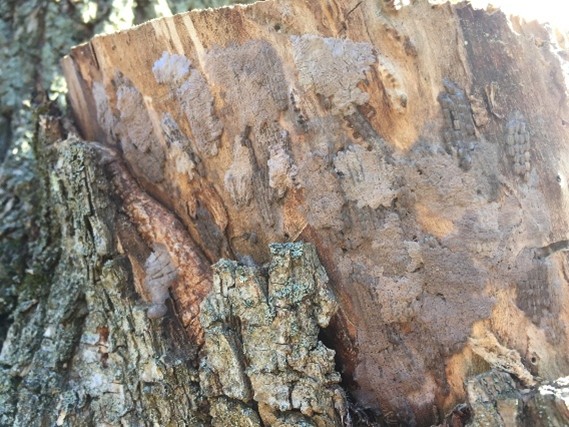
- SLF overwintering as egg masses Vince Burkle and Eric Biddinger, Indiana DNR
-
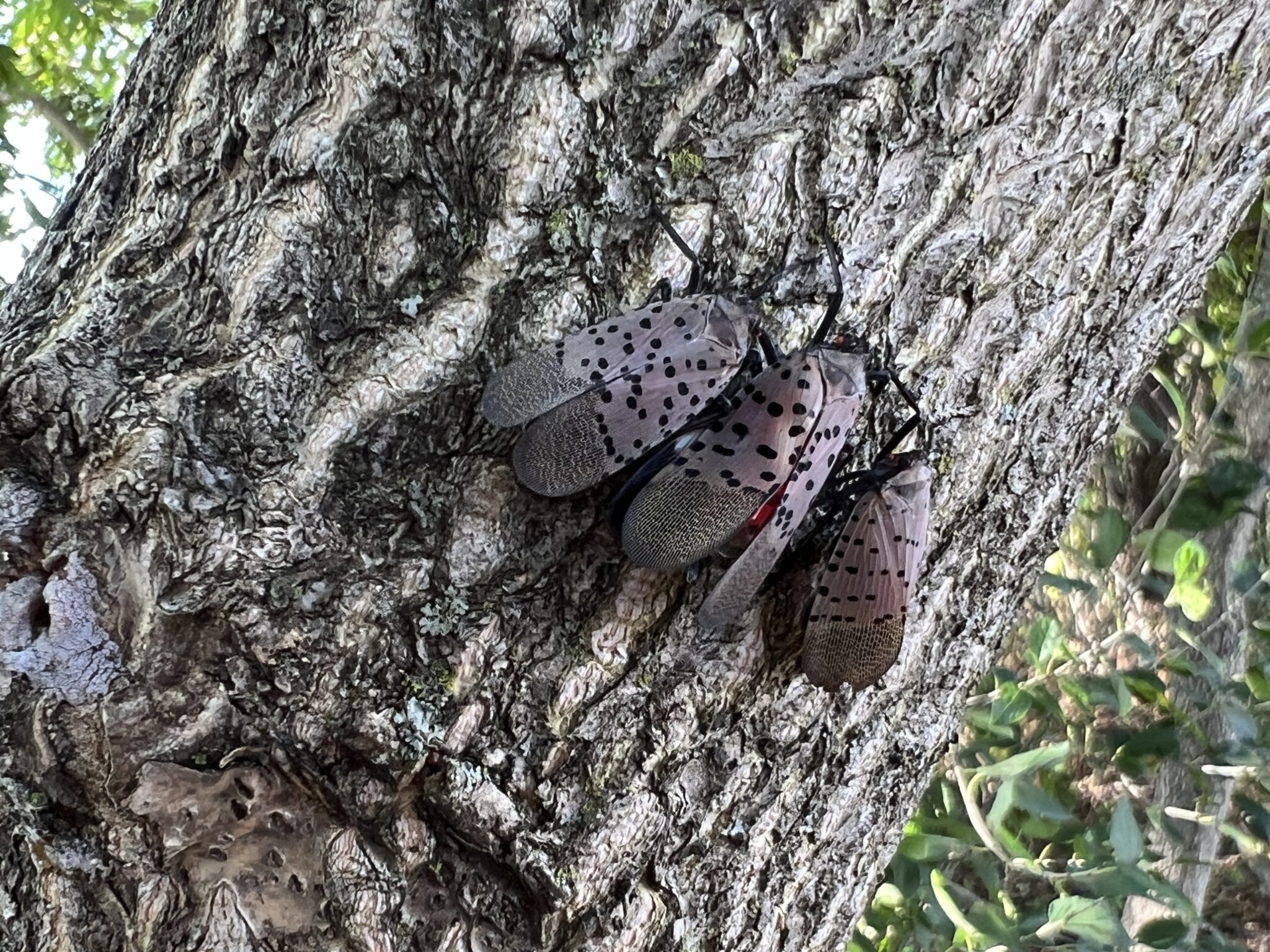
- Adult SLF feeding on tree-of-heaven; nymph Vince Burkle and Eric Biddinger, Indiana DNR
-
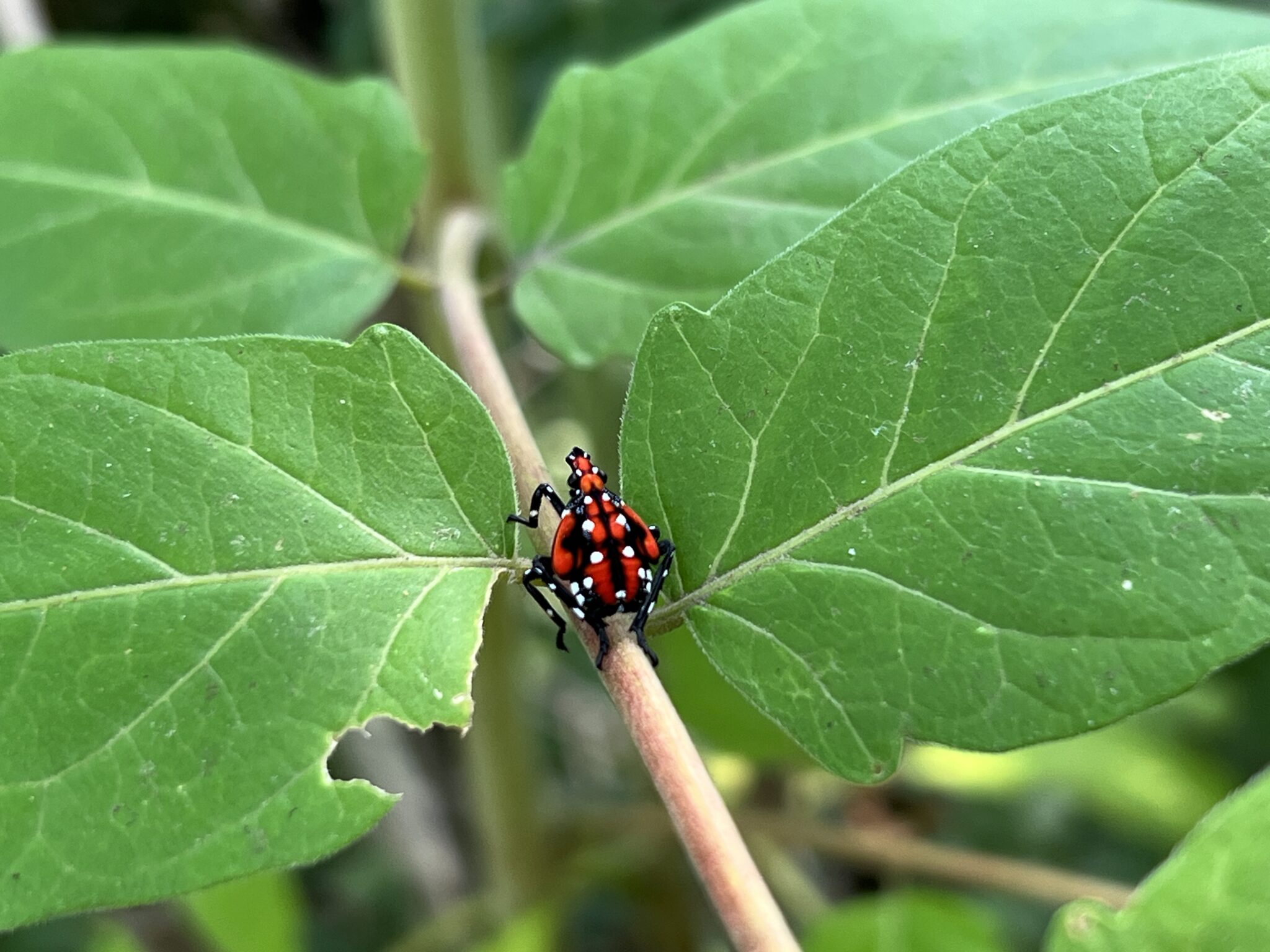
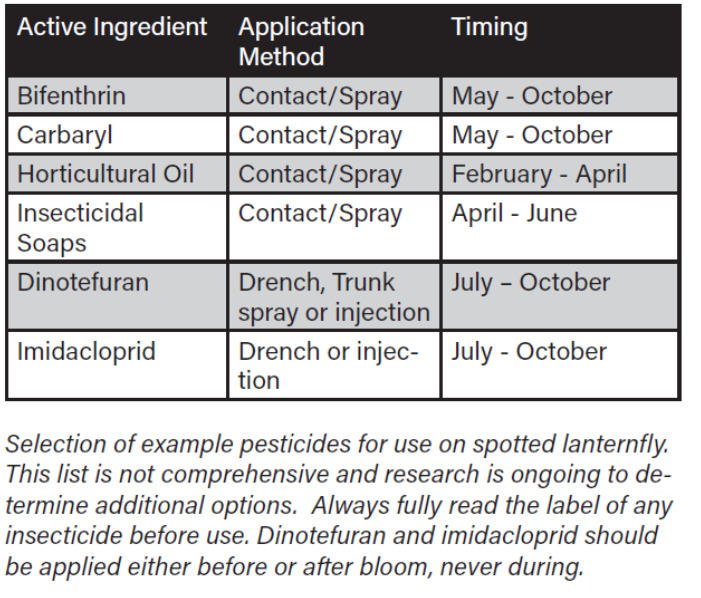
- late instar nymph on tree-of-heaven; table: Non-comprehensive list of pesticides for use on spotted lanternfly: Photo credit Vince Burkle and Eric Biddinger, Indiana DNR
Spotted lanternfly (SLF) is one of Indiana’s more recent invaders, and it has been steadily moving across the state. This insect, and its primary host, tree-of-heaven, are considered aggressive species easily able to enter new habitats. Most likely, preventing SLF from reaching your property may not be possible, but managing this insect can be done effectively. While there are several control methods, they must be timed appropriately with the season and the life stage of the insect to be effective.
Winter
SLF females lay eggs in the fall, and this stage persists through the winter. Eggs are covered in a protective secretion that protect them from the outside environment as well as offers them camoflague from would-be predators. Masses can be attached to a variety of surfaces, including trees, houses, vehicles, or any standing structure that’s convenient. Before considering any chemical control, egg masses that are in reach can be scraped off of whatever surface they are attached to, then dumped into soapy water or a water/alcohol solution. The protective secretion will offer good protection against pesticides, but horticultural oils, applied at a dormant rate, can reduce hatching.
Spring
Once the spring season begins, SLF will hatch and begin to move to host plants as nymphs. While not yet capable of flight, SLF nymphs are more than capable to travelling between trees to find suitable hosts. A few egg masses may still be present and can be scraped to prevent additional hatch. For the hatched nymphs, trapping becomes an option for management. One type of trap, the circle trap, is effective at capturing insects and reducing populations, and the you can purchase them or even build one using an assortment of guides. Sticky banding is also an option to capture nymphs as they move up and down a tree trunk, but this is not a recommended option as it will tend to capture many non-target species. As for chemical control, it is recommend to use contact insecticides. These insects have not yet shown any major resistance and respond fairly well to many active ingredients, but the best combination of impact and residual activity are seen in bifenthrin, beta-cyhalothrin, and carbaryl. These pesticides are widely available under many different brand names, just remember to follow the label directions.
Summer
As the summer months arrive, SLF nymphs will enter their final stages of development. Nymphs will become much larger, turning bright red, and eventually molt into their adult forms. Research has shown that adults respond the best to systemic insecticides, such as imidacloprid and dinotefuran. Trapping and contact insecticides can still be used late into summer while nymphs are still present, while research has shown that adults respond best to systemic insecticides such as imidacloprid and dinotefuran. Both pesticides are effective when used as soil drench or a trunk injection, however dinotefuran has been shown to elicit a lethal response as soon as 24 hours after application. It should be noted that a trunk injection of either pesticide will require specialized equipment and professional knowledge for application. Both pesticides can also be found formulated as a contact insecticide, though their efficacy and residual activity is fairly low and not ideal for management of this insect. As mentioned above, always follow label directions and check differences in rates of application, particularly in soil drenches and trunk injections.
Fall
Some adult SLF and nymphs may persist through a significant portion of the fall season. In Indiana, the latest reported sighting of adult SLF was in the last week of November, however, it’s unclear if they were reproductively capable that far into the season. This species isn’t capable of suriving Midwestern winters and will die off as temperatures cool. Any pesticide applications should taper off by October, possibly even earlier depending on the density of SLF in a given area. Trapping and other means of physical removal can continue, and egg scraping can resume as soon as egg masses begin appearing.
Additional Resources:
“Tree-of-Heaven is no so Heavenly” Lenny Farlee, Purdue Landscape Report 23-12
Indiana Department of Natural Resources Reporting Tool