Rosaceous plants are fairly disease prone and it can be fairly hard to keep them healthy and clean in the landscape, especially without applying large quantities of fungicide. One of the more common diseases we see on apple, crabapple, and ornamental pear is fire blight, caused by Erwinia amylovora, that causes significant damage to susceptible plants (Blossom and leaf blighting, stem cankers, and stem dieback). Another common pathogen of Rosaceous plants we see each year is Diplodia seriata (syn. Botryosphaeria obtusa). This fungus does not get nearly as much press or hype as fire blight for trees in the landscape, but it can infect all above ground plant parts, making this a serious pathogen. It does not cause rapid dieback like fire blight, but it can kill leaves, fruit, and stems, overwinters in the affected tissue, and cause more damage on stressed trees.
Leaf symptoms caused by Diplodia seriata occur early in the spring and first begin as almost perfect circle necrotic spots (Figure 1, 2, 3). As the leaf spots expand, they typically spread to generate concentric circles of different colored tissue. The initial spot will be a lighter brown color while the outer ring will be slightly darker, purple or black in color, creating what is called a frogeye leaf spot. Spots may develop slightly differently on different plant species. Instead of concentric circles, spots may expand as irregular blotches. While leaf spots may be severe in some cases, the foliar phase of the disease does not usually cause significant defoliation or stress to the tree.
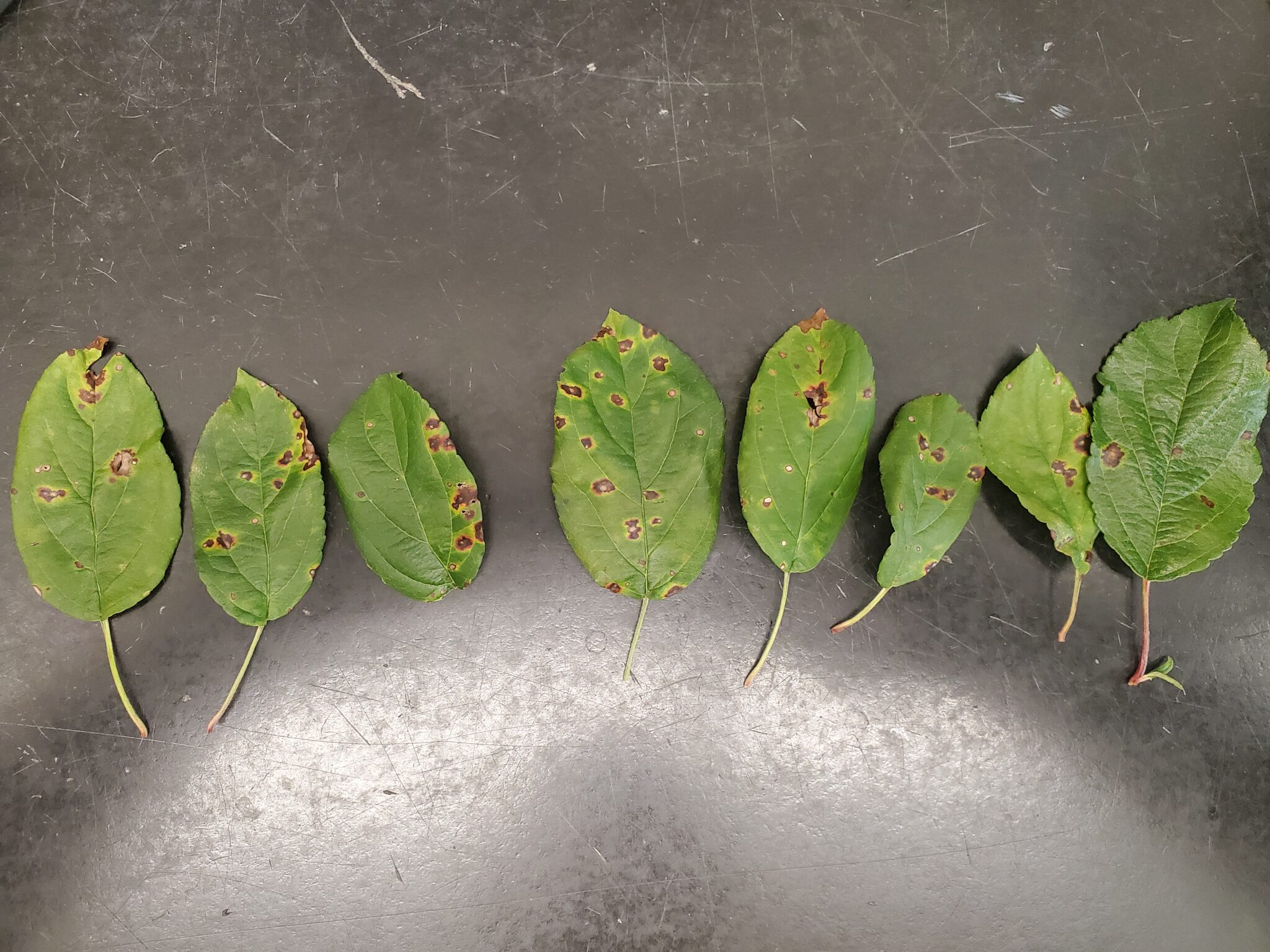
Figure 1 Crabapple leaves with frogeye leaf spot.
Photo Credit: PPDL
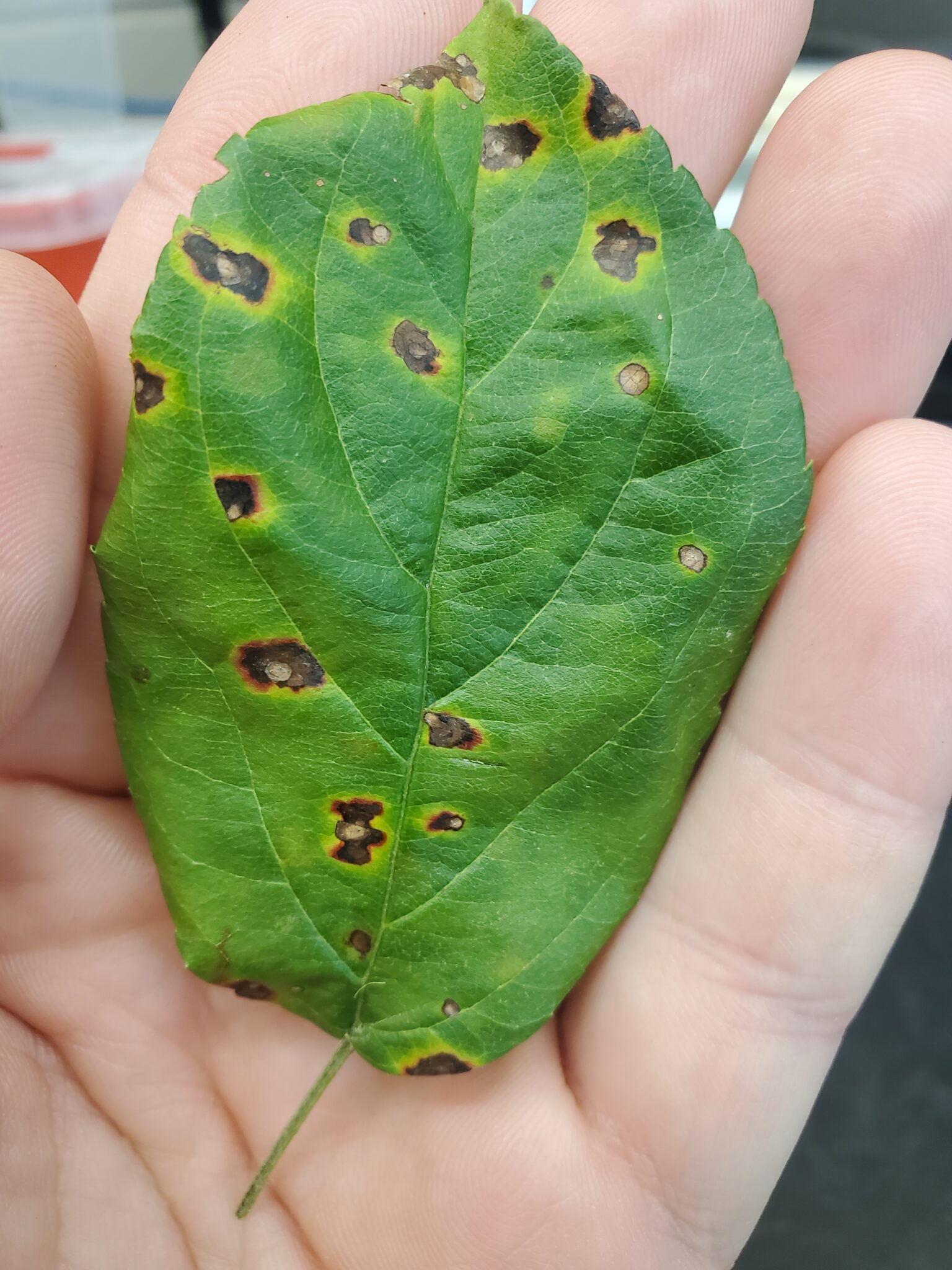
Figure 2 A single crabapple leaf with frogeye leaf spot. Initial points of infection first appear as nearly perfect circle spots that turn light color over. You can see the secondary spread of the lesion, creating the irregular blotch around the lighter tan spot.
Photo Credit: PPDL
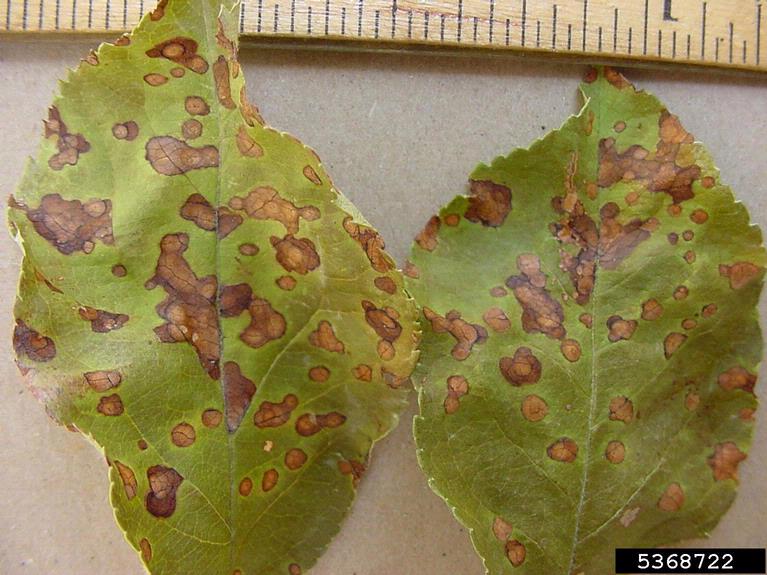
Figure 3 Here is an example of Frogeye leaf spot on apple.
Photo Credit: Paul Bachi, University of Kentucky Research and Education Center, Bugwood.org
Diplodia stem infections will cause more serious branch tip dieback that can spread into larger limbs, creating girdling cankers that can kill the main leader (Fig 4, 5). Stem infections can occur in stressed or damaged tissue, including mummified fruit, old fire blight damaged limbs, and through pruning wounds.
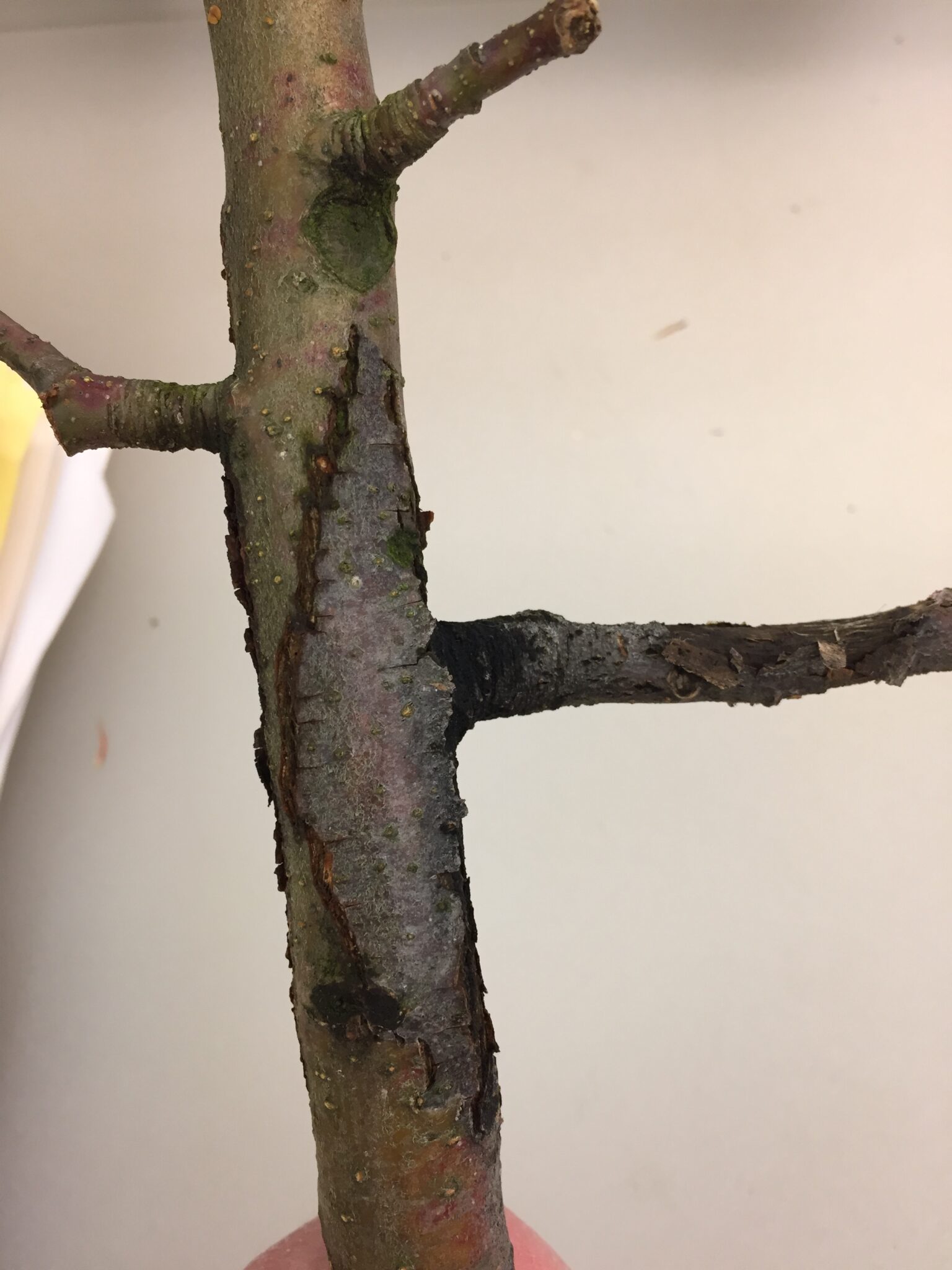
Figure 4 Here is a canker on a crabapple tree caused by Diplodia seriata. The infection started on a smaller twig and spread to a larger branch. Over time the canker will spread more and potentially girdle the branch entirely, killing it.
Photo Credit: PPDL
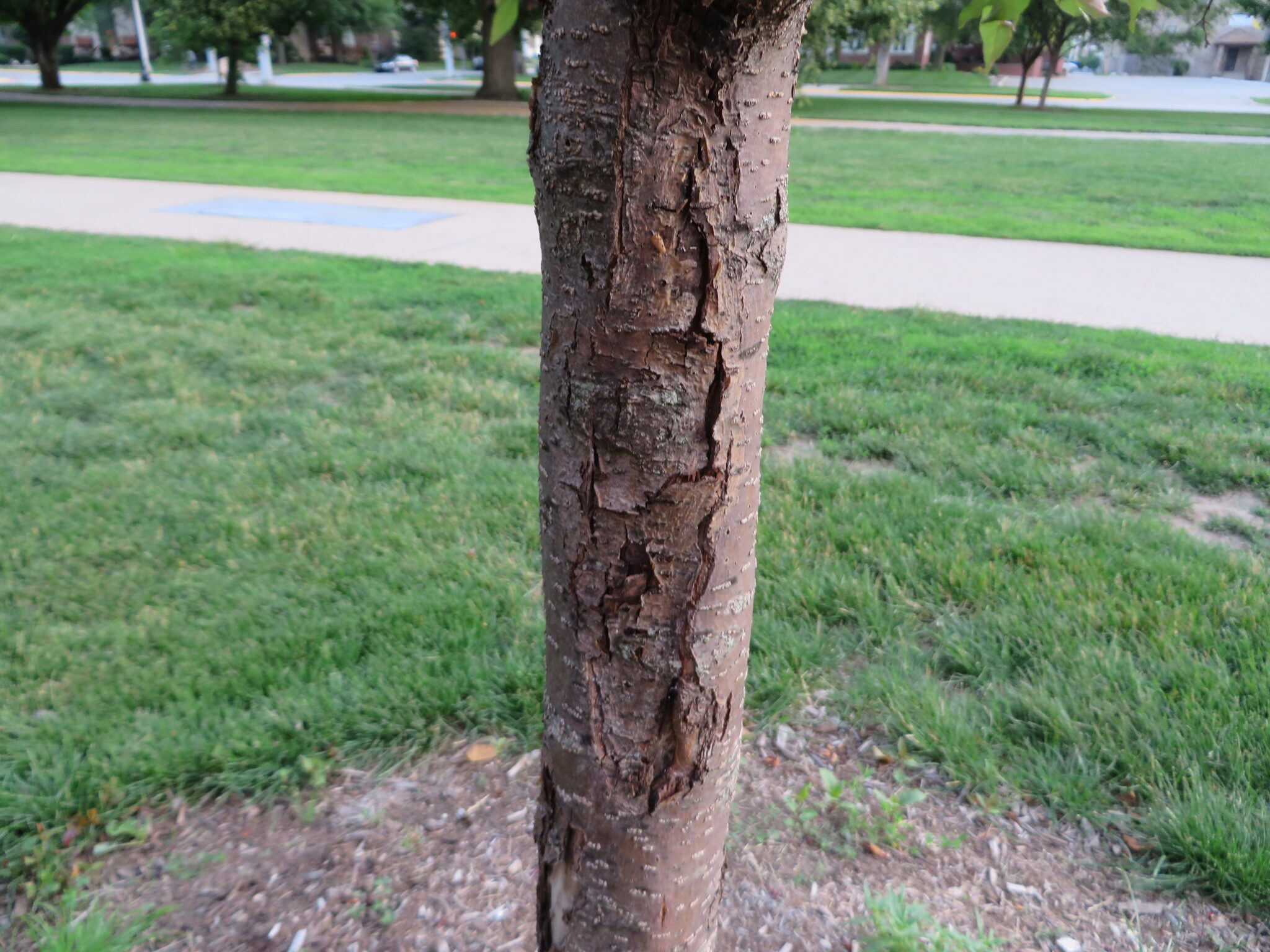
Figure 5 This canker developed on the main trunk of the tree which can contribute to tree decline.
Photo Credit: PPDL
Fruit may be directly infected by the fungus, and symptoms may take a long time to develop. Fruit of apple trees may develop small red flecks at first, but, as the fruit mature, the lesions will expand and can cause large brown-black lesions that extend to the inner fruit that remain relatively firm. Fruit of crabapples and ornamental pear will shrivel and die before producing large numbers of pycnidia that generate asexual spores (Fig 6). The common name for the disease in apple trees is black rot, due to the color of the fruit after it has begun to rot and mummify.
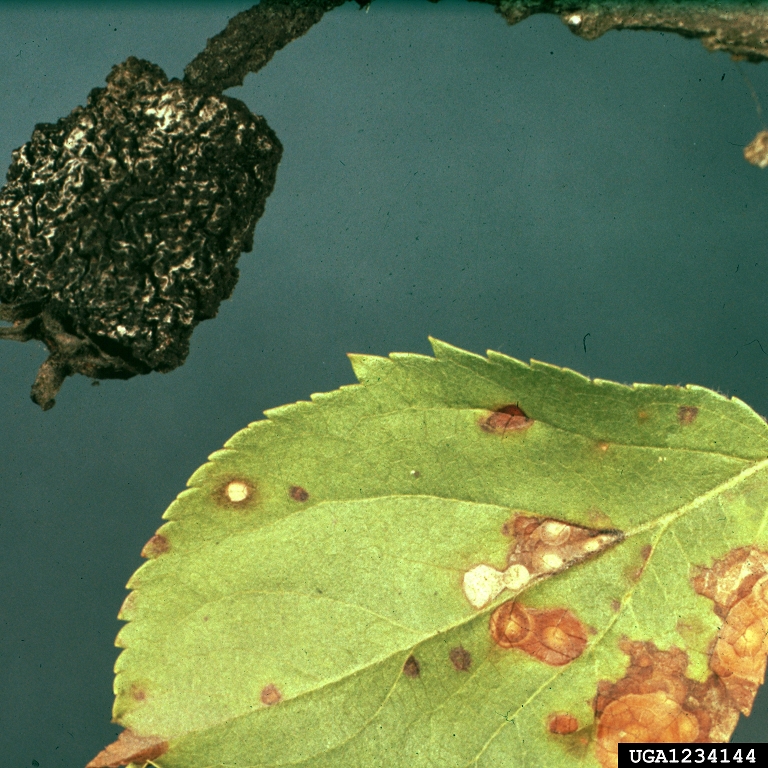
Figure 6 Fruit of Rosaceous plants may shrivel and become mummified after being infected by Diplodia seriata. They will hang on the tree and be an important source of inoculum.
Photo Credit: Clemson University – USDA Cooperative Extension Slide Series , Bugwood.org
Infected fruit and stem tissue can produce spores readily. According to the literature, Leaf spots rarely produce fungal structures, but we have found it in crabapple leaf lesions after they have developed into the frogeye symptom (Fig 7, 8). Spores spread by water splash dissemination, so the disease may spread or become more severe under warm, wet weather (above 60°F) (Fig 8, 9).
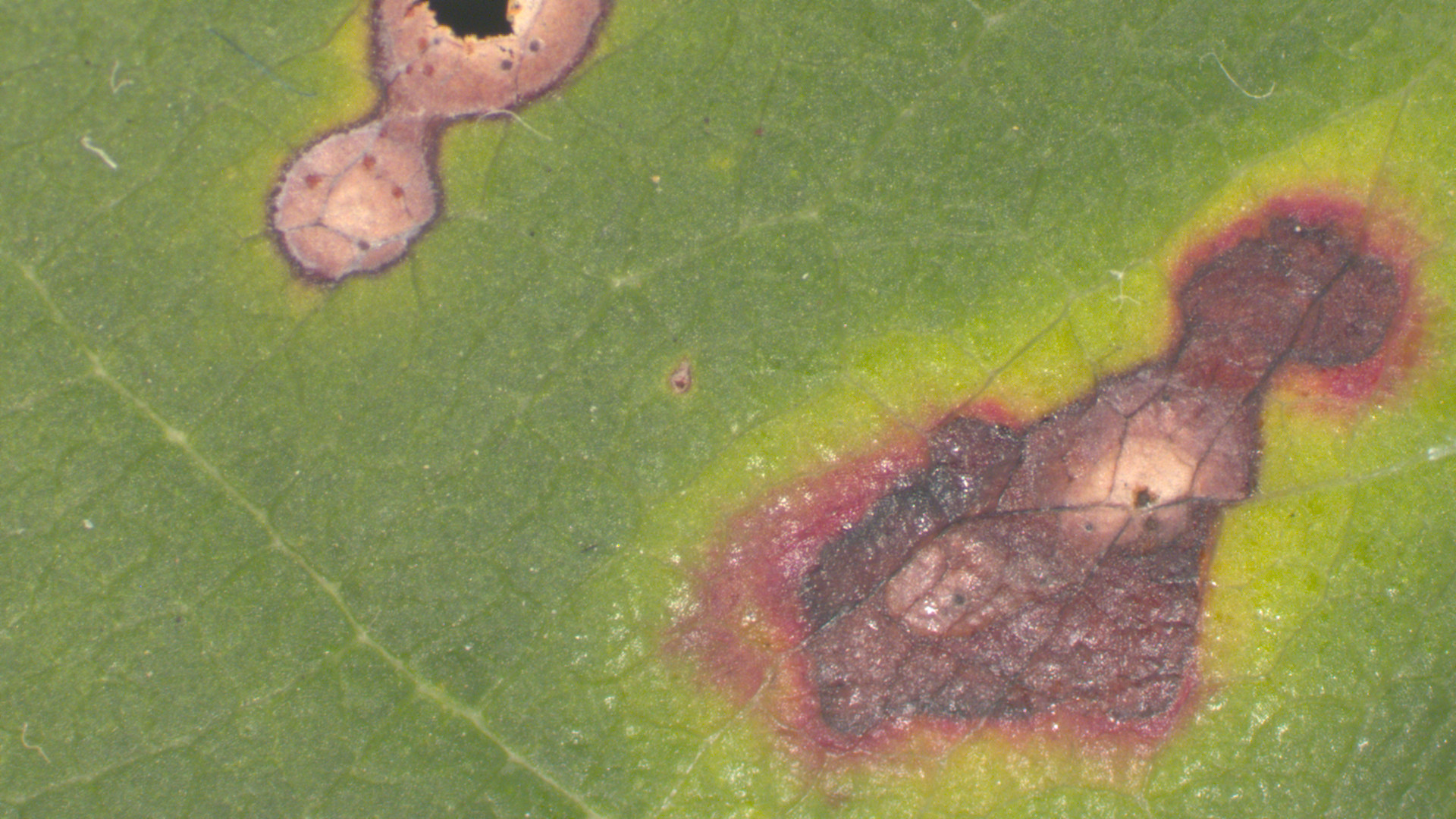
Figure 7 This is a close-up image of frogeye leaf spot where pycnidia (the black structures) of Diplodia seriata are growing within the infected tissue.
Photo Credit: PPDL
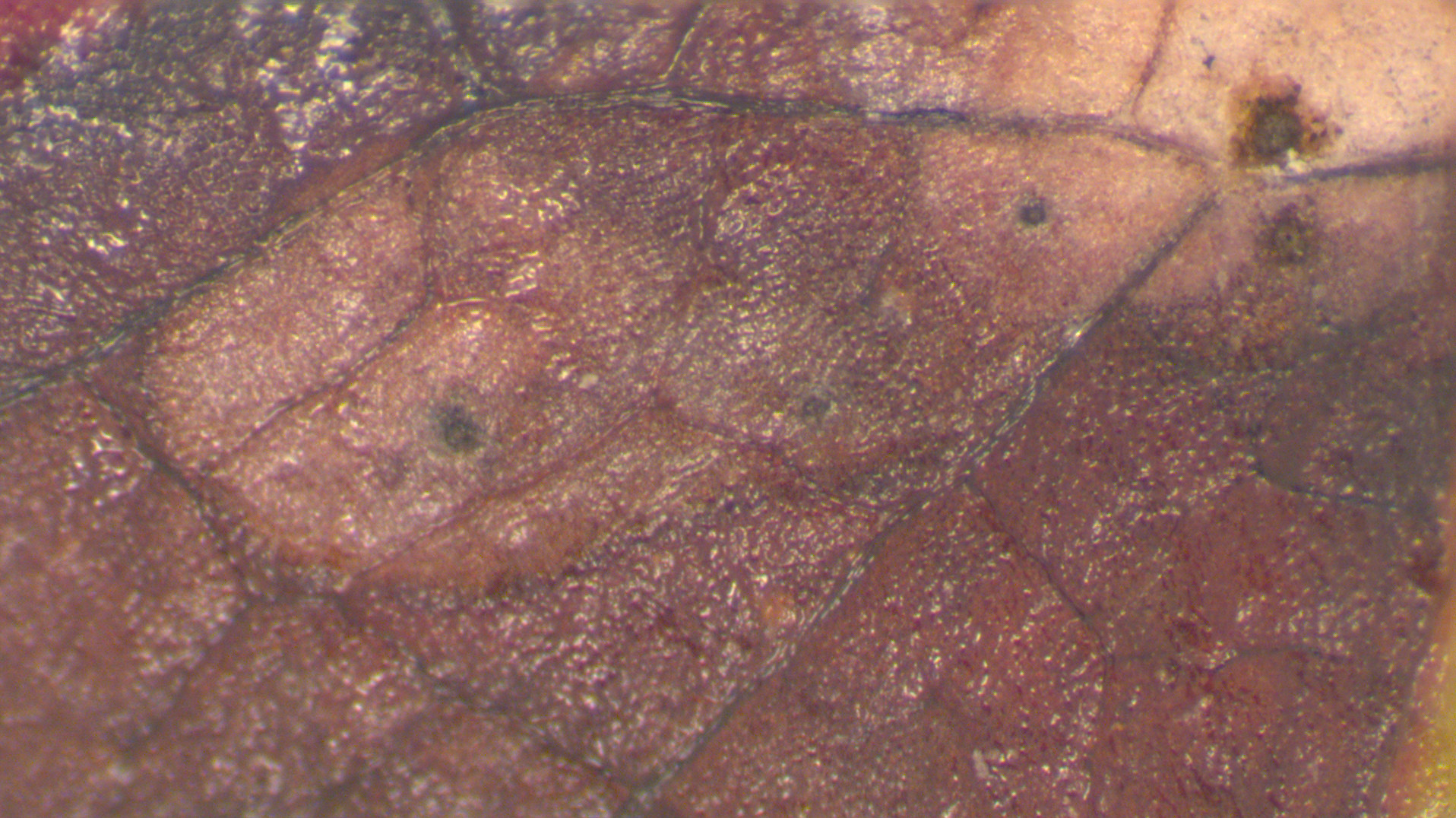
Figure 8 This is a close-up image of frogeye leaf spot where pycnidia (the black structures) of Diplodia seriata are growing within the infected tissue.
Photo Credit: PPDL
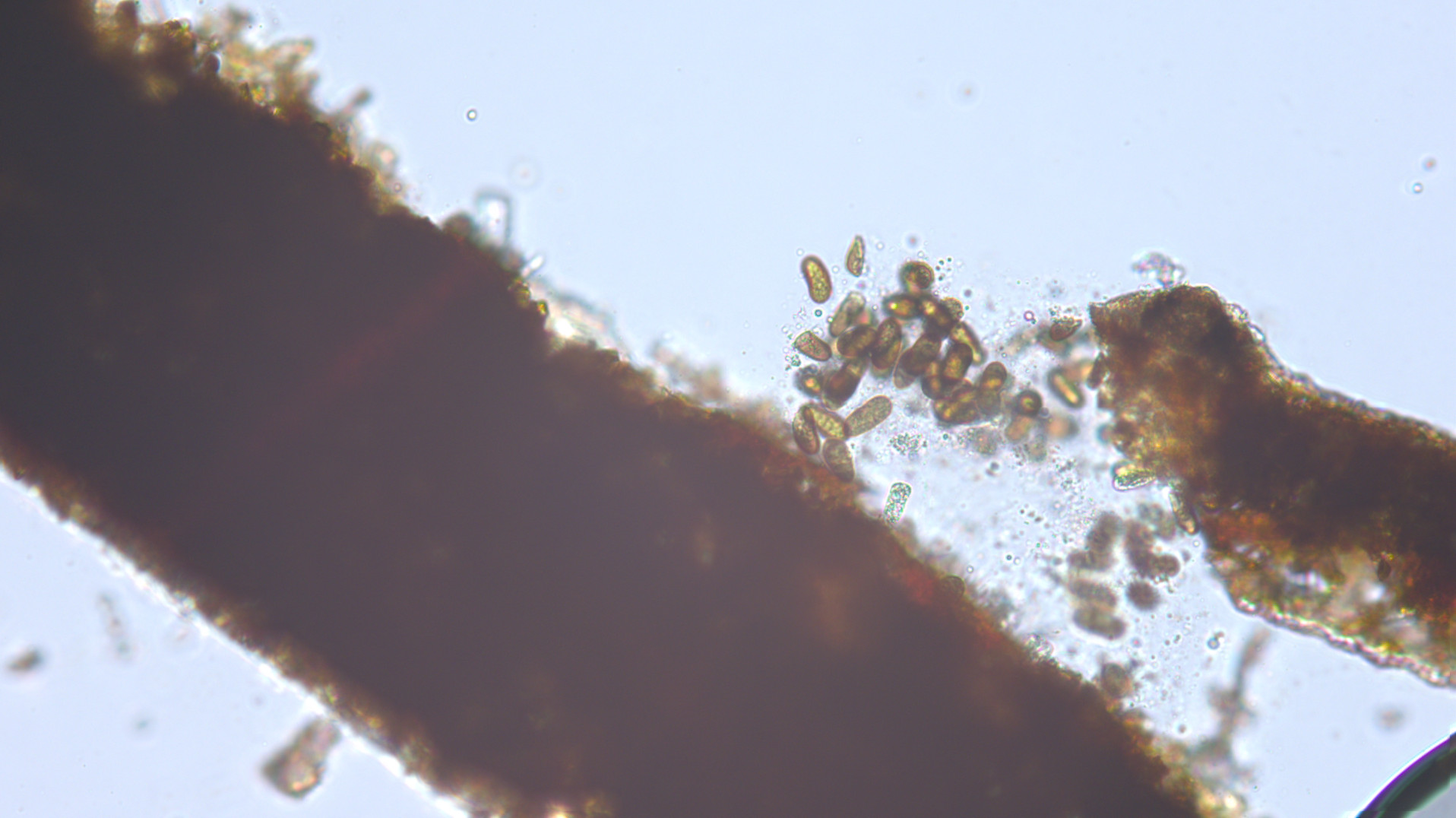
Figure 9 This is a leaf section of crabapple with frogeye leaf spot. The conidia shown here were observed after cutting a pycnidium of Diplodia seriata in half with a razor blade.
Photo Credit: PPDL
When evaluating an apple, crabapple, or ornamental pear for this disease, frogeye leaf spot typically is a harbinger for fruit infections and canker problems. Since this is a canker disease, pruning out affected stems and removing mummified fruit is important to prevent the spread of the fungus within the plant and to reduce the inoculum for the next season. Pruned material needs to be removed or destroyed, because if it is left on the ground, it can still produce spores that will infect susceptible plants. When pruning diseased tissue, be sure to use a sanitizing agent between cuts to reduce the chance of spreading the fungus. Aside from avoiding wounding the plant, stress mitigation is important to ensure the tree is healthy and vigorous – mulching, fertilizing, and irrigation (as needed). Fungicides can be used to help prevent foliar and fruit infections, but it can be difficult for home growers to find the right fungicides and make sure they are applying them correctly to get good coverage and at the right times to provide protection. Applications to stems are not effective for preventing stem infections, and so are not recommended. When planting new apple trees choosing a disease resistant cultivar that is well adapted to your region can go a long way toward preventing many of the most common disease problems.