As we step into a new year, the Purdue Landscape Report team is excited to welcome you to the first newsletter of 2026. Whether you are a long-time reader, a landscape professional, an arborist, a nursery grower, or a homeowner invested in the health and beauty of your landscape, we’re glad you’re here. Each year…Read more about Welcome to the 2026 Purdue Landscape Report[Read More]
Resources for landscapes and gardens in the Midwest
Landscape Report
Found 585 Articles
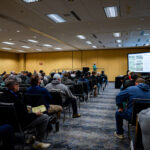
The 2026 Indiana Green Expo (IGE), held February 9–11 at the Indiana Convention Center, marked another highly successful year for one of the Midwest’s leading educational and networking events for turfgrass, landscape, nursery, and green industry professionals. The Expo drew 1,412 attendees and hosted 113 exhibiting companies, reinforcing its role as a premier regional hub…Read more about 2026 Indiana Green Expo Delivers Strong Educational Impact, Industry Engagement, and Measurable Value[Read More]
An unfortunate question I am sometimes asked is similar to this: “I lost my prized shade tree! What can I plant that will grow fast and give me shade?” While there is no instant fix to this scenario, let’s review a few trees that might be better choices here in northern Indiana. One obstacle to…Read more about Fast-Growing Trees for the Landscape[Read More]
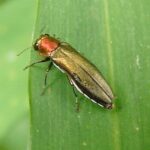
We are often the bearers of bad news when a new exotic insect species is discovered in Indiana. This time, however, we have some good news to share. Agrilus smaragdifrons, a beetle that feeds exclusively on Tree-of-Heaven (Ailanthus altissima), was detected in Indiana last year in Allen County. You might notice that this beetle belongs…Read more about Beetle that attacks Tree-of-Heaven found in Indiana[Read More]

The Indiana Green Expo is Indiana’s largest and most comprehensive Green Industry educational conference and trade show serving Indiana and the Midwest. The Indiana Nursery & Landscape Association and the Midwest Regional Turf Foundation sponsor the 2026 Indiana Green Expo (IGE). Unlike some for-profit trade shows, all proceeds from the IGE are used directly to better our…Read more about Indiana Green Expo February 9-11, 2026[Read More]
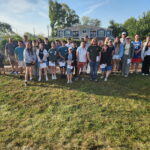
On September 20, 2025 students from Purdue University’s Field Production of Horticultural Crops and Landscape Contracting and Management classes participated in a day-long field trip exploring several key horticultural sites in central and southern Indiana. The courses, both part of Purdue’s Department of Horticulture and Landscape Architecture, provide students with practical exposure to commercial horticultural…Read more about Purdue Horticulture Students Tour Southern Indiana Green Industry Operations[Read More]
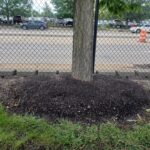
As the Midwest gardening season winds down, there’s still one task that can make a big difference come spring: mulching. Once the soil has cooled but before it freezes, a layer of mulch helps protect plant roots from the freeze-thaw cycles common in Midwestern winters. Mulch stabilizes soil temperatures, conserves moisture, and shields roots from…Read more about Mulching Matters: Autumn Application for Spring Success[Read More]
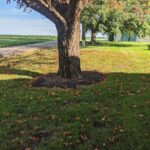
Fall has arrived! The beautiful foliage that we love to admire this time of year will soon become the yearly chore of managing fallen leaves. You have likely heard the adage “leave the leaves” many times by now. This practice is gaining traction along with many other pollinator-friendly landscape management tactics, such as saving dead…Read more about Leave the leaves – bugs are sleeping![Read More]
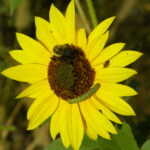
As you travel in rural Indiana this time of year, you may happen upon a field of sunflowers. It’s so beautiful that drivers will occasionally pull off on the side of the road and take pictures. Perhaps you grow sunflowers in a more limited capacity in your home garden. Today, we’ll review a few items…Read more about Amazing Sunflowers[Read More]
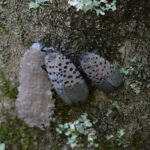
As emerald ash borer reached its highest populations throughout the landscape in Indiana, Purdue University, partnered with other organizations, helped to spread several messages intended to engage the public in helping limit the movement of the insect. Readers may recall one such message in the form of bumper stickers with the phrase, “Don’t Move the…Read more about October is Firewood Awareness Month![Read More]
Join the Purdue Turf and Landscape Seminar in Person or Virtual – November 19–20, 2025! Advance your expertise, earn pesticide credits, and connect with top Green Industry professionals at this two-day in-person and virtual, live event in West Lafayette, Indiana. Elevate Your Turf and Landscape Game The 2025 Turf and Landscape Seminar, hosted by the…Read more about Purdue Turf and Landscape Seminar: Don’t miss the opportunity to attend in-person or virtual![Read More]
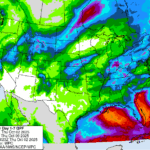
Fall and drought have been nearly synonymous in recent years; 2025 is no different. The September 30 US Drought Monitor, released on October 2, indicated that over 92 percent of the state was categorized as either abnormally dry (D0) or moderate drought (D1), with additional areas classified as severe drought (D2) or extreme drought (D3)…Read more about Drought Conditions Improve in Southern Indiana, Worsen in Northern Areas[Read More]
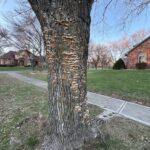
By now, the emerald ash borer (EAB) invasion is an old story for landscapes and forests in the Midwest. Since EAB was first found in North America in 2002 more millions of ash trees than we can know have died and this tiny insect continues to kill ash in an ever widening zone that currently…Read more about Fungal Decay of Ash Trees[Read More]
It’s finally October, and we should be enjoying lovely fall temps and colors. While some of the trees are changing, it’s not necessarily due to the change in seasons. As I write this, the temperature is 84 F (29 C). I look out my window and see mostly green leaves with some colors from the…Read more about Help Your Trees Transition into Autumn[Read More]
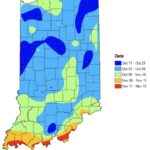
The last week has caused many to struggle with whether to turn the heat on inside. Mornings have been quite chilly, and I am guessing several readers may have also struggled with the decision to wear a jacket as they started their workday. These are tough decisions, no doubt. Several data sources have suggested we…Read more about A false sense of autumn[Read More]
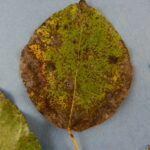
Aspen, cottonwood, and poplar are all names for the fast-growing Populus tree species. Used widely for building materials, these trees are often located around ponds, riverbanks, and sloping areas toward water bodies (especially cottonwood). Cottonwood flowers produce little white tufted seeds that float through the air which a lot of people love (my kids included),…Read more about Marssonina leaf spot and blotch of Poplar[Read More]
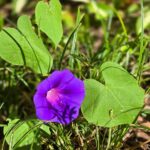
Untangling the Vines: Identifying Bindweed, Morning Glory, and Honeyvine Milkweed Few garden problems cause as much frustration as untangling vines. Sometimes the vines are beautiful climbers planted with intention. Other times, they creep in uninvited and smother everything in their path. Among the most common, and the most confusing, vines in Indiana are bindweed, morning…Read more about Untangling the Vines: Identifying Bindweed, Morning Glory, and Honeyvine Milkweed[Read More]
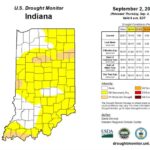
If you have any stakes in agriculture, you may have noticed a fairly rapid drying trend as summer has come to a close. According to the U.S. Drought Monitor on September 2, 76 percent of Indiana is considered abnormally dry—up from just 26 percent one week earlier. Moderate drought conditions have also expanded from less…Read more about Abnormally Dry and Drought Conditions Are On The Rise[Read More]
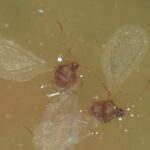
Christmas tree growers have been struggling with an invasive scale pest called Cryptomeria scale (Aspidiotus cryptomeriae), which is a serious pest of conifers. The scales infest the undersides of the needles and extract plant juices with their piercing-sucking mouthparts. Economic losses are due to the unsightly yellow discoloration and needle drop that occurs from the…Read more about Cryptomeria scale on Christmas trees[Read More]
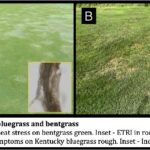
Summer patch hits hard in early August; fall rust outbreaks causing orange shoes; cool temperatures allowing a head start on recovery plans. August in the region started cool, got back to summer hot, and now dare I say it feels like fall. This “false fall” in Indiana certainly is convincing as a stagnant high-pressure dome…Read more about Purdue Turfgrass Disease Report: Cool Breeze Offers Some Ease[Read More]
It is the policy of the Purdue University that all persons have equal opportunity and access to its educational programs, services, activities, and facilities without regard to race, religion, color, sex, age, national origin or ancestry, marital status, parental status, sexual orientation, disability or status as a veteran. Purdue is an Affirmative Action Institution. This material may be available in alternative formats. 1-888-EXT-INFO Disclaimer: Reference to products in this publication is not intended to be an endorsement to the exclusion of others which may have similar uses. Any person using products listed in this publication assumes full responsibility for their use in accordance with current directions of the manufacturer.
Sign-up to receive email news and alerts from Purdue Landscape Working Group:

This is US

For More Information

Purdue Home Page

Purdue Extension

Find your county office