
Join the Women of the Green Industry for an expert-led hike through wetlands, oak savannas, and dunes on Lake Michigan. The hike will begin at 10:00 am (Central) on September 21st, 2025. Everyone is invited, and there is no cost to attend this educational and networking opportunity! If you have questions, email Pedra Sage at…Read more about Join the Women of the Green Industry for a Cowles Bog Trail Hike in the Beautiful Sand Dunes on Lake Michigan[Read More]
Resources for landscapes and gardens in the Midwest
Landscape Report
Found 585 Articles
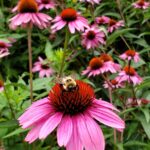
Fall is quickly approaching, bringing cooler temperatures, refreshing rains, and fewer pests. It’s a perfect time to tackle garden tasks, from pruning perennials to planting vegetables. Pruning Fall is a good time to prune out dead, damaged, or diseased plant material (Fig. 1). You can also tidy up perennials that have finished blooming and…Read more about Fall Pruning and Planting for Indiana Gardens[Read More]
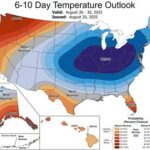
With brute and sudden force, the atmosphere is doing its job: acting like a fluid. Weather is not a precise science, which means the atmosphere is constantly shifting. There tends to be some sort of pattern shift come mid-late August, and it looks like it’s just about here. Temperatures are on their way down, as…Read more about Super cool & super dry for August’s end: How the weather tables have turned[Read More]
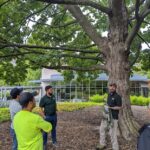
Having a healthy tree canopy around your home and throughout your community is something that benefits all. Ask most elementary students what trees do for us, and they will almost always come up with answers like clean air and shade, but they do so much more for us. Trees not only provide oxygen, but they…Read more about International Society of Arboriculture Find an Arborist Tool Update For Both Tree Owners/Managers and ISA Certified Arborists[Read More]
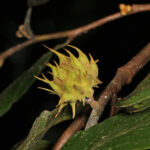
Aphids are some of the most common insect pests of herbaceous plants and broadleaf trees and shrubs. I have to admit, I do not always enjoy identifying aphids – but I find their shapes, colors, and biology fascinating. One species of aphid, which I first met myself this year, threatens plants in our landscapes on…Read more about This aphid is a double threat to the landscape[Read More]
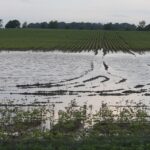
The Midwestern Regional Climate Center (MRCC), with support from the United Soybean Board, has launched the Ag Climate Dashboard — a centralized digital hub offering streamlined access to integrated climate and agricultural data and decision-support tools for producers, advisors and researchers in the Midwest. Designed to support on-farm decision-making, the Ag Climate Dashboard offers up-to-date weather data, National Weather Service…Read more about New Ag Climate Dashboard makes climate resources more accessible for Midwest farmers[Read More]

Purple coneflower, Echinacea purpurea, is an old native standby that can thrive even in some difficult landscapes. With beautiful purple flowers and the ability to reseed and fill an area, it has been used widely, especially in gardens comprised primarily of native plants; however, they are not without their problems. We sometimes see some fungal…Read more about When purple coneflowers are not purple: Aster Yellows and Eriophyid mites[Read More]
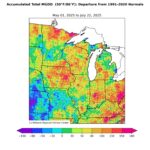
The heat and humidity have returned to the state, as heat indices soared above 100°F on Wednesday and Thursday (July 23-24) this week. The National Weather Service issued heat advisories that spanned from northeast Texas to northeast Ohio on July 24. Over the last 7-day period (July 16-22), average temperatures ranged from near normal in…Read more about Hot and humid weather persists, but a cool down is expected during the first week of August[Read More]
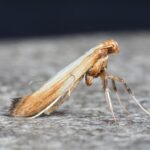
Many Hoosier landscapes include flowering plants known as beardtongue or simply by its scientific name, Penstemon. This is the largest genus of flowering plants that is endemic to North America, with some 280 species spread throughout the continent – at least 11 of which are native to Indiana. Many of the cultivars planted in gardens…Read more about Is your Penstemon stem swelling? It’s probably a moth![Read More]

Do your landscape plants have cankers, mosaics, galls, mummies, or witches’ brooms? These and other symptoms are often difficult for the average homeowner to understand, let alone visualize. Purdue Extension staff can often assist with diagnosing plant diseases. Additionally, Purdue Extension specialists Janna Beckerman (retired) and Tom Creswell authored the publication, “Symptoms and Signs for…Read more about Plant Disease Symptoms You Could Notice in Your Home Landscape[Read More]

Register now for the Indiana Invasive Species Conference! September 4-5 at the South Shore Indiana Welcome Center-Hammond, IN Early bird registration ends July 20th Registration fees: Early bird registration: $80 per person (until July 20th) General registration: $95 per person (July 21st – August 15th) Student research poster presenters: $50 (Interested in presenting a poster? Contact…Read more about Register now for the Indiana Invasive Species Conference[Read More]
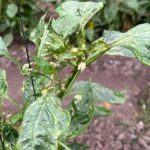
Nursery growers and landscapers should stay vigilant for an invasive thrips that is moving across the USA. Thrips parvispinus was first detected in Florida in 2020. It has since spread through Georgia and the Carolinas, and has been detected in Colorado, Ohio, Pennsylvania, and Delaware. It is not known to occur in Indiana, but growers…Read more about Invasive Thrips to Watch for in the Nursery and Landscape[Read More]

The 2025 Purdue Turf and Landscape Field Day took place on July 8 at the W.H. Daniel Turfgrass Research and Diagnostic Center in West Lafayette, drawing professionals from across Indiana and the Midwest. In addition to the 350 attendees, there were 30 exhibitors featured in the trade show. The event began in the morning with…Read more about Purdue Turf and Landscape Field Day Recap: Don’t miss this event in 2026![Read More]

One heat wave down, more to come. It is summer, though, so aside from expecting plenty of hot days, the things to be more concerned about is reference (or potential) evapotranspiration (ET) significantly exceeding precipitation that would ultimately cause drought-related impacts. The National Weather Service provides a 7-day forecasted reference ET product as well as…Read more about More heat on the way[Read More]

Cherry, plum, almond, peach and cherry laurel all get a common issue called shot hole leaf spot. At first, a chlorotic or necrotic spot develops on the foliage (Figure 1). When a tree has severe symptoms, the leaves may drop prematurely from the tree. If the leaves remain on the tree, the leaves produce a…Read more about Shot hole leaf spot of Prunus.[Read More]
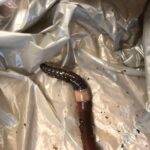
It’s that time again! With the arrival of warm temperatures and increased rainfall, many of us are getting to work on our lawns, gardens, and landscaping. Unfortunately, this often comes with discovering what new (or old) invasive species are here to haunt us. So far this year, the invasive I’ve gotten the most questions on…Read more about Asian Jumping Worms: How to ID this soil pest[Read More]
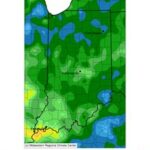
I couldn’t think of a better title this week, thanks to the hot weather we’ve been experiencing and the song by Arrow. While some people enjoy the heat and humidity, I must admit that I don’t find it overly pleasant. Over the past few days, average temperatures have ranged from 6 to 13°F above normal,…Read more about Feeling Hot, Hot, Hot[Read More]
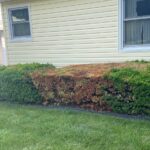
Yews are widely used as foundation plantings in many areas and are valued for their dark, evergreen foliage. The most widely used landscape yews are Japanese yew (Taxus cuspidata) and Taxus x media hybrids, such as Hicksii or Wardii Yew. While few diseases and insects attack yew, there are a few problems to watch for….Read more about What’s Killing My Yews? Top Problems and How to Prevent Them[Read More]
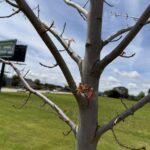
Diagnosing abiotic (non-living) problems in plants can be challenging due to the many interacting factors and varying levels of plant tolerance. In many cases, reviewing the recent weather history of a given area provides valuable insight into the possible causes of observed symptoms. Over the past few weeks, several samples submitted to the Purdue Plant…Read more about Delayed and Sporadic Budbreak in 2025: Could Spring Weather Be to Blame?[Read More]
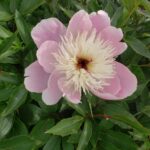
Peonies are a springtime showstopper in many Indiana gardens, and fall is the time to plant your own. This publication covers everything from selecting the right site and variety to proper installation and long-term care. Whether you’re starting fresh or adding to an established bed, these tips will help you grow healthy, beautiful peonies. With…Read more about Growing Peonies in the Indiana Landscape[Read More]
It is the policy of the Purdue University that all persons have equal opportunity and access to its educational programs, services, activities, and facilities without regard to race, religion, color, sex, age, national origin or ancestry, marital status, parental status, sexual orientation, disability or status as a veteran. Purdue is an Affirmative Action Institution. This material may be available in alternative formats. 1-888-EXT-INFO Disclaimer: Reference to products in this publication is not intended to be an endorsement to the exclusion of others which may have similar uses. Any person using products listed in this publication assumes full responsibility for their use in accordance with current directions of the manufacturer.
Sign-up to receive email news and alerts from Purdue Landscape Working Group:

This is US

For More Information

Purdue Home Page

Purdue Extension

Find your county office