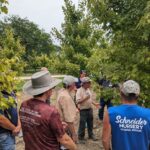
Schneider Nursery is hosting the “Women of the Green Industry” on Thursday, June 19th from 12pm-3 pm. Join the Schneider family and staff for a light lunch, tour of the greenhouse and retail center, and a tour of the growing fields. Hear a brief history of Schneider Nursery from family members while enjoying time with your…Read more about Women of the Green Industry Nursery Tour to Be Held at Schneider Nursery[Read More]
Resources for landscapes and gardens in the Midwest
Landscape Report
Found 530 Articles
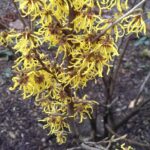
Spring is finally here! Everywhere you look, one can find some spring color around. Some of the first plants to peek out of the ground are spring-flowering bulbs like crocus, daffodil, and tulip. But there are some beautiful spring time shrubs you can add to your yard to be the first in the neighborhood with…Read more about Top 10 Spring Flowering Shrubs[Read More]
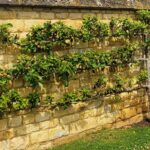
A perennial edible garden offers an opportunity to integrate beauty and utility. By incorporating fruit trees, berry bushes, and other long-lived edible plants, the home landscape can be both aesthetically pleasing and agriculturally productive. A perennial edible garden not only provides seasonal harvests but also supports local biodiversity. Plan(t) for Success Careful planning and site…Read more about Beauty and Bounty: The Perennial Edible Landscape[Read More]
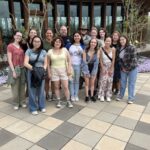
The Purdue Horticulture Society embarked on the annual spring trip on March 28-30. This year the club picked Louisville to explore a botanical garden and arboretum. This annual trip provided members with an opportunity to expand their knowledge of horticulture and appreciate the beauty of diverse plant collections. On March 29, the group visited the…Read more about Purdue Horticulture Society Explores Louisville’s Botanical Scene[Read More]
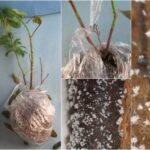
Plants that show little growth, are stunted, or are wilted and in active decline are all hallmarks of root stress. Some of the more prominent pathogens that cause root rot include Fusarium, Phytophthora, Pythium, and Rhizoctonia, but there is another fungus which can cause just as much damage in the right situation that does not…Read more about Cylindrocladium Root Rot[Read More]
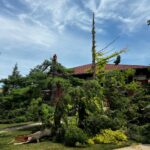
April showers bring May Flowers. Many of us were taught this little rhyme to describe the weather of Spring. April has arrived along with the beginning of the Spring storm season and damage to and from trees is a topic of concern on many minds. Depending on the intensity of the storms and the condition…Read more about Tips for Dealing with Storm-Damaged Trees[Read More]
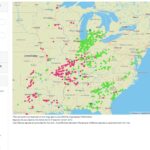
Indiana has already experienced several tornadoes this year with more certainly to come. Of course, this is not unusual since Indiana is often considered on the far northeastern edge of “Tornado Alley”. Tornadoes get their energy from the battle between the cooler, drier Canadian air moving southeastward and the warmer, more humid air coming north…Read more about Tracking Tornadoes Over Time[Read More]
Some of you may recall news in 2020 about unsolicited seeds being sent in the mail from overseas (https://www.purdue.edu/newsroom/archive/releases/2020/Q3/unsolicited-seeds-could-wreak-havoc-on-agriculture,-environment,-state-officials-warn.html). There have now been recent reports of this happening again. Ric Bessin, Entomology Extension Specialist, and Joe Collins, Deputy State Entomologist, from the University of Kentucky, wrote about reports of unsolicited seeds from the south,…Read more about More Reports of People Receiving Unsolicited Seeds[Read More]
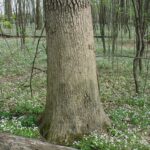
These oak trees are showing the symptoms of smooth patch (Figures 1, 2, 3). This condition is the result of a fungal infection that is restricted to the outer bark, causing it to slough off. The bark layer remaining is smoother and lighter in color than uninfected, normal bark. Patches can vary from a few…Read more about Smooth Patch of Oak[Read More]

Welcome to the 2025 Purdue Landscape Report! As we embark on a new growing season, our team is committed to providing you with timely, science-based information to support the health and beauty of landscapes across the Midwest. Throughout the season, we will deliver bi-weekly newsletters featuring articles from Purdue faculty and staff across many disciplines….Read more about Welcome to the 2025 Purdue Landscape Report[Read More]
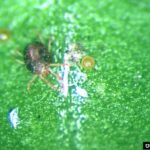
The bitter winter cold has finally passed us (or has it? It’s hard to tell in the Midwest)! The days are getting warmer and longer, and that means the insects are coming out of their overwintering stages. As you prepare for your landscaping and gardening this year, are you implementing preventative measures for pests? Now…Read more about Insects are waking up – are you prepared?[Read More]
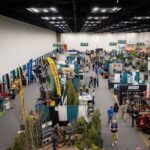
The Indiana Green Expo (IGE), held from February 10 to 12 at the Indiana Convention Center in Indianapolis, attracted 1,636 attendees and featured 108 exhibiting companies in the trade show. Organized by the Indiana Nursery and Landscape Association (INLA) and the Midwest Regional Turf Foundation (MRTF), the event offered a comprehensive blend of educational sessions…Read more about Another Successful Indiana Green Expo in the Books[Read More]
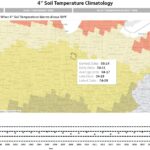
Spring field operations have already begun across the state, including tillage, anhydrous ammonia applications, and even some planting. Temperatures look up from here, but we cannot rule out periods of cooler conditions between now and May that could impact crop emergence. As of March 18, 2025, the 7-day average 4-inch soil temperature at the Purdue…Read more about A Look at the MRCC’s Soil Temperature Climatology[Read More]
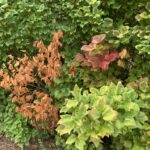
Dieback and canker diseases caused by Botryosphaeria, Sphaeropsis, Diplodia and other closely related fungal pathogens are exceptionally common on woody landscape plants. This group of diseases are often referred to collectively as Botryosphaeria diseases and this article will follow that convention to discuss them as a group. Examine any mature oak tree long enough and…Read more about Botryosphaeria Dieback and Canker[Read More]
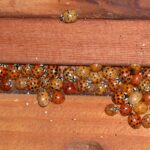
As the growing season winds down and cooler temperatures approach (despite today’s unseasonable 81 degrees F), many beneficial bugs begin searching for their winter hideaways. While many people see fallen leaves as just more plant waste to dispose of, some of our beneficial bugs see a cozy bed to bundle up in for the winter….Read more about Huddle Up and Hunker Down: The Winter Life of Beneficial Bugs[Read More]

The 2024 Purdue Turf and Landscape Seminar will be held on November 20th and 21st at the W.H. Daniel Turfgrass Research and Diagnostic Center in West Lafayette, IN. This event is designed for intermediate and advanced turf and landscape professionals, providing them with the latest technology for managing turf and landscape systems, and to…Read more about Don’t Miss the 2024 Purdue Turf and Landscape Seminar[Read More]
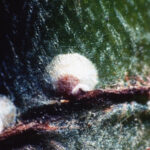
Recently, white prunicola scales (Pseudaulacaspis prunicola) were detected on Prunus during a DNR nursery inspection. This is a significant scale pest of woody ornamentals and fruit trees in eastern states, but it is currently not established in Indiana. It is primarily a pest of cherry, lilac, and privet species. Its total reported host range spans…Read more about Non-native armored scales[Read More]
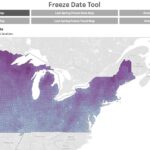
While our daytime highs across the state were in the upper 70s, our nighttime lows have been in the 30s (even into the upper 20s) in some places. This could get us thinking about the timing of the first frost and freeze events of the season, when the 7-day average 4-inch soil temperature falls before…Read more about A chill is in the air – online tools for monitoring and climatology[Read More]
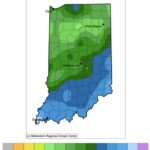
While our entire state did not receive the amount of rain from the remnants of Hurricane Helene compared to other states, most of Indiana did receive at least an inch of precipitation over the past few weeks with some southern counties receiving over five inches (Figure 1). General impacts have been greener lawns (don’t put…Read more about Remnants of Helene helped to improve drought conditions across Indiana[Read More]
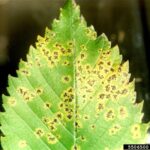
We have received a few elm tree samples this year with a disease we do not often see, but which is relatively common: black spot of elm. This disease, also called elm anthracnose, is caused by the fungus Stegophora ulmea and can affect most species of elm with American elm varieties being more susceptible. The…Read more about Black Spot of Elm[Read More]
It is the policy of the Purdue University that all persons have equal opportunity and access to its educational programs, services, activities, and facilities without regard to race, religion, color, sex, age, national origin or ancestry, marital status, parental status, sexual orientation, disability or status as a veteran. Purdue is an Affirmative Action Institution. This material may be available in alternative formats. 1-888-EXT-INFO Disclaimer: Reference to products in this publication is not intended to be an endorsement to the exclusion of others which may have similar uses. Any person using products listed in this publication assumes full responsibility for their use in accordance with current directions of the manufacturer.
Sign-up to receive email news and alerts from Purdue Landscape Working Group:

This is US

For More Information

Purdue Home Page

Purdue Extension

Find your county office