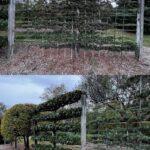
Espalier is a pruning and training technique that shapes a tree or shrub to grow in a flat, usually two-dimensional form, often against a wall, fence, or trellis. Rather than allowing branches to grow in every direction, espalier uses careful cutting and tying to guide stems into a planned pattern. The result can be both…Read more about Pruning Highlight; Espalier Pruning: Training Trees into Living Patterns[Read More]
Resources for landscapes and gardens in the Midwest
Landscape Report
Found 578 Articles
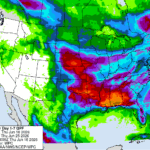
Indiana has seen several rounds of severe weather, and many are likely ready for a break. The good news is there does not seem to be more severe weather in our forecast for at least a week. Heavy rain is anticipated for northern Indiana at the end of this coming weekend, but otherwise, periodic showers…Read more about Calmer weather on its way[Read More]
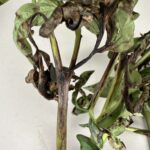
Bacterial blight is a disease of peony caused by the bacterium Xanthomonas. The disease begins as angular necrotic lesions with a red-purple border that can expand over time to blight or kill large areas of leaf tissue (Fig 1, Fig 2). If the bacterium spreads to the stems, it can lead to entire stem dieback…Read more about Bacterial Blight of Peony[Read More]
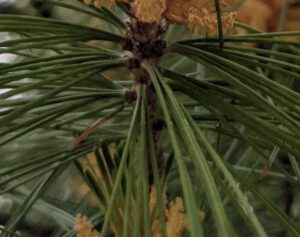
Many homeowners have evergreens in their home landscape. Evergreens provide a landscape service that other plants cannot – they add color to our landscapes in the winter, and provide some thermal protection for animals and birds. However, if you are researching potential evergreens for your landscape, you may be confused about species names and the…Read more about Identifying Evergreens[Read More]
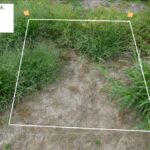
Managing weeds in commercial and residential landscapes is a constant battle. Landscape professionals have historically relied heavily on a combination of mulching, manual pulling, and preemergence (PRE) herbicides to maintain clean planting beds. However, a recent, multi-state study published in Agrosystems, Geosciences & Environment titled ‘Landscape weed control varies by preemergence herbicide, formulation, and geography’…Read more about Landscape Weed Management: How Geography and Formulation Impact Landscape Preemergence Herbicides[Read More]
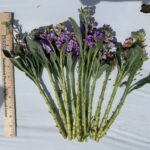
The Purdue cut flower team is currently conducting cut flower demonstrations at three locations in Indiana. In this article, we provide updates and observations on cool-season flowers from the three sites, including open-field and high-tunnel plantings in Vincennes, an open-field site in Indianapolis, and an open-field site in West Lafayette, representing southern, central, and northern…Read more about Spring Planted Cool-Season Cut Flower Update — Snapdragon, Stock, Ornamental Cabbage[Read More]
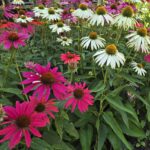
Indiana summers are often hot and dry, creating challenging conditions for many landscape plants. Fortunately, some flowers are naturally suited to these conditions. Once established, the following flowers continue to grow and bloom with little supplemental irrigation, making them excellent choices for low-maintenance landscapes. Coneflower – Echinacea spp. (Figure 1) Coneflower is an herbaceous perennial that grows 3 to 4 feet tall in full sun. This Indiana native blooms from early…Read more about Summer Flower Spotlight – Drought Resistant Edition[Read More]

The term “flash drought” has become popularized in recent years to describe a rapidly intensifying drought situation. It could occur within a prolonged drought period where conditions suddenly deteriorate at a much faster rate, or it could start without any preliminary dry condition. In northwestern Indiana, precipitation has been below normal over the past month. …Read more about Flash Drought Coming our Way?[Read More]
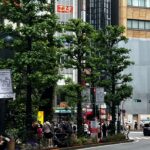
Pollarding is a tree pruning method in which the upper branches of a tree are cut back to the same points on a regular schedule, creating a framework of knobby growth points from which new shoots emerge. The practice has been used for centuries and is especially common in landscapes where trees must be kept…Read more about Pruning Highlight- Pollarding Trees: A Traditional Pruning Practice with Modern Uses[Read More]

Registration is open for the 2026 Purdue Turf and Landscape Field Day! The lineup for landscapers and arborists can’t be missed this year! In addition to morning and afternoon presentations, there is a trade show and a catered lunch that is included with your registration. The morning sessions for landscapers and arborists include: Mushrooms and…Read more about Field Day Registration Now Open![Read More]

Join Dean Ricci, owner of Ricci’s Landscape Management, Inc. of Hebron, IN, for a free webinar as he details his company’s vast library of SOP’s that have been developed over the years. This presentation focuses on how clear, well-designed procedures can improve efficiency, consistency, and team performance. This presentation guides participants through the process of creating practical…Read more about Building Strong Operations: Developing Standard Operating Procedures for Green Industry Businesses[Read More]

Scale Spotlight: Azalea Bark Scale Have you noticed crusty white flecks or cottony patches building up along the stems and branch forks of an azalea or rhododendron? The culprit is likely azalea bark scale, Acanthococcus azaleae (Comstock). We received a sample of this scale at the Purdue Plant & Pest Diagnostic Lab earlier this month,…Read more about Azalea Bark Scale[Read More]

Earlier this year, Ohio expanded its quarantine for box tree moth (Cydalima perspectalis) to include seven additional counties, bringing the total number of quarantined counties in the state to 14 (ODA, 2026). Michigan currently has 13 counties under quarantine as well. Although this invasive pest has not yet been detected in Indiana, populations close to…Read more about Box Tree Moth range is expanding[Read More]

Recent rounds of thunderstorms have brought highly variable rainfall totals across Indiana, continuing a familiar spring pattern of “haves and have-nots” when it comes to precipitation. While some areas have received multiple inches of rainfall over the past week, others have not, allowing dry conditions to redevelop. Heavy precipitation was concentrated primarily from Indianapolis southward,…Read more about Heavy Rainfall Divides Indiana: Some Areas Soak Inches While Others Miss Out[Read More]

Besides nursery inspections, our division assists with phytosanitary inspections in partnership with the USDA’s APHIS Plant Protection and Quarantine staff. In my area, I assist mainly with log inspections and ensure the commodities are relatively pest free before leaving the country or, if not, that they will be treated beforehand. Recently I found an interesting…Read more about Painted Hickory Borers[Read More]
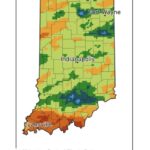
After another rainy start to the week, some of you may be ready for a few dry days to get out in the garden or field to start planting. Figure 1 shows how much rain has fallen over the past 30 days and Figure 2 shows how many inches above or below normal those amounts…Read more about Cooler temperatures and rain continues[Read More]

Have you ever touched a pine tree then picked something up – anything – and not be able to put it down? It is now semi-permanently glued to your hand from the sticky resin produced by the tree. If you manage to extricate the object from your hand, you will need industrial strength cleaner with…Read more about Help! My conifer is bleeding![Read More]

The Masters tournament is one of golf’s truest signs of spring. The iconic azaleas blooming and birds singing on the broadcast give golfers a lift after a long winter. Sharp-eyed viewers may have also noticed broadcasters this year commenting on how much water was being applied to the course, particularly on greens, and how it…Read more about Why Golf Courses Aren’t the Blueprint for Home Lawn Irrigation[Read More]

With tulips blooming and peonies emerging, plant sales and garden events are also in full swing across the Midwest. As more gardeners incorporate native perennials into their landscapes, it is important to set realistic expectations and understand how management differs during the first few years. Native gardens are often described as low-maintenance, but this does not mean no maintenance, particularly during establishment. In the first couple growing…Read more about Establishing a Native Perennial Garden: Understanding the “Sleep, Creep, Leap” Pattern[Read More]
It is the policy of the Purdue University that all persons have equal opportunity and access to its educational programs, services, activities, and facilities without regard to race, religion, color, sex, age, national origin or ancestry, marital status, parental status, sexual orientation, disability or status as a veteran. Purdue is an Affirmative Action Institution. This material may be available in alternative formats. 1-888-EXT-INFO Disclaimer: Reference to products in this publication is not intended to be an endorsement to the exclusion of others which may have similar uses. Any person using products listed in this publication assumes full responsibility for their use in accordance with current directions of the manufacturer.
Sign-up to receive email news and alerts from Purdue Landscape Working Group:

This is US

For More Information

Purdue Home Page

Purdue Extension

Find your county office