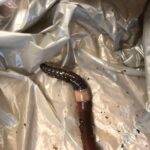
It’s that time again! With the arrival of warm temperatures and increased rainfall, many of us are getting to work on our lawns, gardens, and landscaping. Unfortunately, this often comes with discovering what new (or old) invasive species are here to haunt us. So far this year, the invasive I’ve gotten the most questions on…Read more about Asian Jumping Worms: How to ID this soil pest[Read More]
Resources for landscapes and gardens in the Midwest
Landscape Report
Found 530 Articles
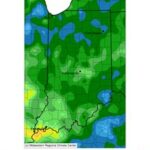
I couldn’t think of a better title this week, thanks to the hot weather we’ve been experiencing and the song by Arrow. While some people enjoy the heat and humidity, I must admit that I don’t find it overly pleasant. Over the past few days, average temperatures have ranged from 6 to 13°F above normal,…Read more about Feeling Hot, Hot, Hot[Read More]
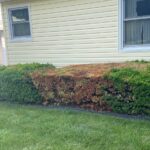
Yews are widely used as foundation plantings in many areas and are valued for their dark, evergreen foliage. The most widely used landscape yews are Japanese yew (Taxus cuspidata) and Taxus x media hybrids, such as Hicksii or Wardii Yew. While few diseases and insects attack yew, there are a few problems to watch for….Read more about What’s Killing My Yews? Top Problems and How to Prevent Them[Read More]
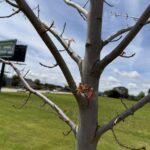
Diagnosing abiotic (non-living) problems in plants can be challenging due to the many interacting factors and varying levels of plant tolerance. In many cases, reviewing the recent weather history of a given area provides valuable insight into the possible causes of observed symptoms. Over the past few weeks, several samples submitted to the Purdue Plant…Read more about Delayed and Sporadic Budbreak in 2025: Could Spring Weather Be to Blame?[Read More]
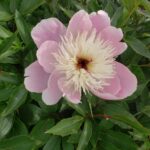
Peonies are a springtime showstopper in many Indiana gardens, and fall is the time to plant your own. This publication covers everything from selecting the right site and variety to proper installation and long-term care. Whether you’re starting fresh or adding to an established bed, these tips will help you grow healthy, beautiful peonies. With…Read more about Growing Peonies in the Indiana Landscape[Read More]
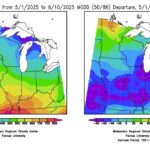
We’ve made it! Meteorological summer started on June 1, but the official start of summer isn’t until June 20. The days are longer, temperatures have risen, and my allergies are in full swing. I let the dogs out last night, and there was still quite a bit of light in the sky just before 10:00…Read more about Meteorological summer has arrived[Read More]
Welcome to the start of Hurricane Season that runs from June through November each year. Why would Indiana care about hurricane season? Certainly, by the time any hurricane might impact the state, it will have been greatly downgraded to what is called an extratropical (i.e., poleward of the Tropic of Cancer (23.5° north latitude)) storm…Read more about It’s a Hazy Shade of … June[Read More]
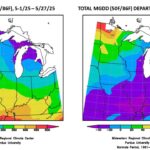
Precipitation in May has varied tremendously, but most of the state has generally been on the dry side. Areas from Vermillion and Parke Counties to Lake Michigan have received between 25% and 75% of the normal precipitation through May 27 (Figure 1). Conditions were dry enough that thunderstorm winds on May 16 prompted the National…Read more about Will May’s Mixed Precipitation and Temperatures Persist into June?[Read More]
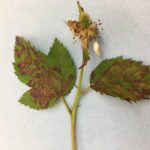
Cool, cloudy weather with frequent rainfall and high humidity provides ideal conditions for the development of several diseases, including downy mildew. The fungus-like pathogens that cause downy mildew are commonly known as ‘water molds’ and are classified as oomycetes. Many types of plants are susceptible to downy mildew diseases, including sunflowers, grapevines, impatiens, other ornamentals,…Read more about Watch for Downy Mildew on Roses and Brambles caused by Peronospora sparsa[Read More]
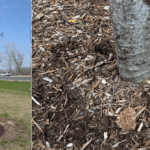
Tree care, in many cases, can be expensive if you require the assistance of an arborist for pruning or removals. Extreme weather events, characterized by extensive rain and wind, can cause damage to the canopy or, in worst-case scenarios, lead to tree failure. In cases of failures, weather is often the final push to already…Read more about Simple Steps to Care for Your Tree: Mulching[Read More]

Don’t miss the 2025 Purdue Turf and Landscape Field Day on Tuesday, July 8, at the William H. Daniel Turfgrass Research and Diagnostic Center in West Lafayette, Indiana. This annual event offers turf and landscape professionals an opportunity to engage with the latest research, technologies, and best practices in the industry. Click here to see…Read more about Purdue Turf and Landscape Field Day-July 8, 2025[Read More]
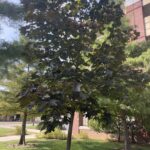
These three maples have somewhat similar-looking leaves. On the surface, you may think this is simply an academic exercise. But if you care about invasive plants and local ecology, this distinction is an important one. Norway maple is an invasive tree species, while sugar and black maples are native tree species (sometimes called hard maples)….Read more about Distinguishing Between Norway, Sugar, and Black Maples[Read More]
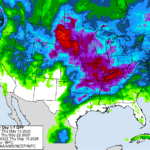
The last few weeks have been on the drier side, particularly for northwestern and west-central Indiana (Figure 1). While temperatures have been seasonal, they are still gradually increasing as we approach summer. Therefore, evapotranspiration rates are starting to increase. This has resulted in the U.S. Drought Monitor classifying much of northern Indiana as Abnormally Dry…Read more about A Bit of Rain Coming Our Way[Read More]
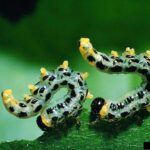
Sawflies are frequent pests in the landscape that attack a wide variety of plants, from ornamental flowers to large trees. You might start to see them damaging plants around this time of year as the first generations hatch and begin to feed on foliage. They are often mistaken for caterpillars, which are the larval stages…Read more about Sawflies: the caterpillar pests that are not caterpillars[Read More]
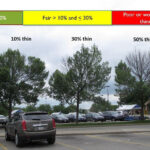
Recently, there has been an uptick in questions related to one of Indiana’s most notorious invasive pests: the emerald ash borer. Homeowners, businesses, even professionals have asked if ash trees are still present in Indiana, and if the insect is still a threat to our ecosystem. Emerald ash borer wreaked significant havoc among Indiana’s hardwoods,…Read more about Revisiting Ash Tree Protection[Read More]
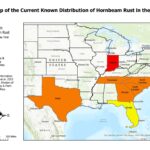
During a nursery inspection in Owen County in 2024, I noticed an unusual yellowing of the leaves on some American Hornbeam (Carpinus caroliniana) trees (Fig 1). A look at the underside of the leaves revealed yellow-orange pustules, suggesting a rust fungus. After help from the Purdue Plant & Pest Diagnostic Lab, this fungal pathogen was…Read more about Hornbeam Rust: An emerging rust disease in the US[Read More]
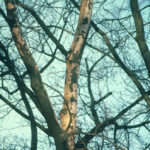
Hypoxylon canker is a common disease of mature hardwood trees both in landscapes and in natural wooded areas. The disease, caused by the wood decay fungus Biscogniauxia (formerly Hypoxylon), is most frequently observed in oak tree species, but can also cause dieback in pecan, hickory, golden rain tree, sycamore, maple, beech, birch, elm, willow, basswood,…Read more about Hypoxylon Canker of Hardwoods[Read More]
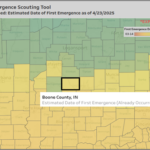
Midwestern farmers have faced a buildup of pesticide resistance in pigweeds (waterhemp and Palmer amaranth), highlighting the importance of scouting to detect weeds early in their growth stages. Otherwise, weed escapes are a common issue as herbicides lose their efficacy when weeds are allowed to grow long enough into their growth cycle. The Midwestern Regional…Read more about Midwestern Regional Climate Center Launches New Experimental Weed Emergence Scouting Tool[Read More]
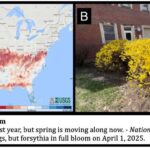
Excessive and in some cases, abusive rainfall amounts; keys to soggy turfgrass management; winter injury potential causes and recovery, red thread, spring golf disease prevention Weather Spring, which officially started on March 20, is rolling along, and into mid-April temperatures in the region are ahead of statistical normal, but lagging somewhat behind last year. I…Read more about Purdue Turfgrass Disease Report: Muddy Waters[Read More]
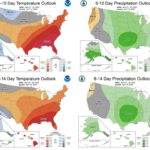
Despite the wet start to the month, the entire state saw less than 50 percent of normal rainfall from April 10 to 16, and in some cases, less than 10 percent of normal rainfall (Figure 1). This was helpful, especially as some locations still deal with river flood warnings and ponded and saturated fields. This…Read more about Wet Pattern to Return[Read More]
It is the policy of the Purdue University that all persons have equal opportunity and access to its educational programs, services, activities, and facilities without regard to race, religion, color, sex, age, national origin or ancestry, marital status, parental status, sexual orientation, disability or status as a veteran. Purdue is an Affirmative Action Institution. This material may be available in alternative formats. 1-888-EXT-INFO Disclaimer: Reference to products in this publication is not intended to be an endorsement to the exclusion of others which may have similar uses. Any person using products listed in this publication assumes full responsibility for their use in accordance with current directions of the manufacturer.
Sign-up to receive email news and alerts from Purdue Landscape Working Group:

This is US

For More Information

Purdue Home Page

Purdue Extension

Find your county office