Fall is quickly approaching, bringing cooler temperatures, refreshing rains, and fewer pests. It’s a perfect time to tackle garden tasks, from pruning perennials to planting vegetables. Pruning Fall is a good time to prune out dead, damaged, or diseased plant material (Fig. 1). You can also tidy up perennials that have finished blooming and…Read more about Fall Pruning and Planting for Indiana Gardens[Read More]
Resources for landscapes and gardens in the Midwest
Landscape Report
Trees, Shrubs, Vines
Having a healthy tree canopy around your home and throughout your community is something that benefits all. Ask most elementary students what trees do for us, and they will almost always come up with answers like clean air and shade, but they do so much more for us. Trees not only provide oxygen, but they…Read more about International Society of Arboriculture Find an Arborist Tool Update For Both Tree Owners/Managers and ISA Certified Arborists[Read More]
Aphids are some of the most common insect pests of herbaceous plants and broadleaf trees and shrubs. I have to admit, I do not always enjoy identifying aphids – but I find their shapes, colors, and biology fascinating. One species of aphid, which I first met myself this year, threatens plants in our landscapes on…Read more about This aphid is a double threat to the landscape[Read More]
Do your landscape plants have cankers, mosaics, galls, mummies, or witches’ brooms? These and other symptoms are often difficult for the average homeowner to understand, let alone visualize. Purdue Extension staff can often assist with diagnosing plant diseases. Additionally, Purdue Extension specialists Janna Beckerman (retired) and Tom Creswell authored the publication, “Symptoms and Signs for…Read more about Plant Disease Symptoms You Could Notice in Your Home Landscape[Read More]

Cherry, plum, almond, peach and cherry laurel all get a common issue called shot hole leaf spot. At first, a chlorotic or necrotic spot develops on the foliage (Figure 1). When a tree has severe symptoms, the leaves may drop prematurely from the tree. If the leaves remain on the tree, the leaves produce a…Read more about Shot hole leaf spot of Prunus.[Read More]
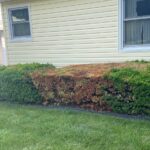
Yews are widely used as foundation plantings in many areas and are valued for their dark, evergreen foliage. The most widely used landscape yews are Japanese yew (Taxus cuspidata) and Taxus x media hybrids, such as Hicksii or Wardii Yew. While few diseases and insects attack yew, there are a few problems to watch for….Read more about What’s Killing My Yews? Top Problems and How to Prevent Them[Read More]
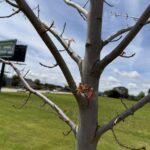
Diagnosing abiotic (non-living) problems in plants can be challenging due to the many interacting factors and varying levels of plant tolerance. In many cases, reviewing the recent weather history of a given area provides valuable insight into the possible causes of observed symptoms. Over the past few weeks, several samples submitted to the Purdue Plant…Read more about Delayed and Sporadic Budbreak in 2025: Could Spring Weather Be to Blame?[Read More]
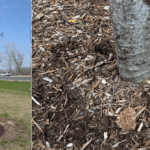
Tree care, in many cases, can be expensive if you require the assistance of an arborist for pruning or removals. Extreme weather events, characterized by extensive rain and wind, can cause damage to the canopy or, in worst-case scenarios, lead to tree failure. In cases of failures, weather is often the final push to already…Read more about Simple Steps to Care for Your Tree: Mulching[Read More]
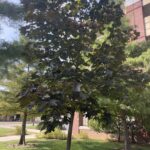
These three maples have somewhat similar-looking leaves. On the surface, you may think this is simply an academic exercise. But if you care about invasive plants and local ecology, this distinction is an important one. Norway maple is an invasive tree species, while sugar and black maples are native tree species (sometimes called hard maples)….Read more about Distinguishing Between Norway, Sugar, and Black Maples[Read More]
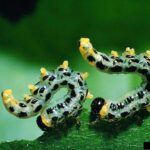
Sawflies are frequent pests in the landscape that attack a wide variety of plants, from ornamental flowers to large trees. You might start to see them damaging plants around this time of year as the first generations hatch and begin to feed on foliage. They are often mistaken for caterpillars, which are the larval stages…Read more about Sawflies: the caterpillar pests that are not caterpillars[Read More]
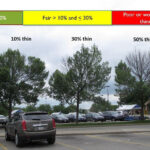
Recently, there has been an uptick in questions related to one of Indiana’s most notorious invasive pests: the emerald ash borer. Homeowners, businesses, even professionals have asked if ash trees are still present in Indiana, and if the insect is still a threat to our ecosystem. Emerald ash borer wreaked significant havoc among Indiana’s hardwoods,…Read more about Revisiting Ash Tree Protection[Read More]
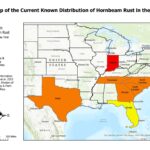
During a nursery inspection in Owen County in 2024, I noticed an unusual yellowing of the leaves on some American Hornbeam (Carpinus caroliniana) trees (Fig 1). A look at the underside of the leaves revealed yellow-orange pustules, suggesting a rust fungus. After help from the Purdue Plant & Pest Diagnostic Lab, this fungal pathogen was…Read more about Hornbeam Rust: An emerging rust disease in the US[Read More]
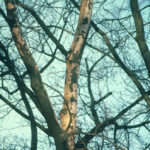
Hypoxylon canker is a common disease of mature hardwood trees both in landscapes and in natural wooded areas. The disease, caused by the wood decay fungus Biscogniauxia (formerly Hypoxylon), is most frequently observed in oak tree species, but can also cause dieback in pecan, hickory, golden rain tree, sycamore, maple, beech, birch, elm, willow, basswood,…Read more about Hypoxylon Canker of Hardwoods[Read More]
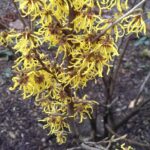
Spring is finally here! Everywhere you look, one can find some spring color around. Some of the first plants to peek out of the ground are spring-flowering bulbs like crocus, daffodil, and tulip. But there are some beautiful spring time shrubs you can add to your yard to be the first in the neighborhood with…Read more about Top 10 Spring Flowering Shrubs[Read More]
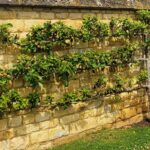
A perennial edible garden offers an opportunity to integrate beauty and utility. By incorporating fruit trees, berry bushes, and other long-lived edible plants, the home landscape can be both aesthetically pleasing and agriculturally productive. A perennial edible garden not only provides seasonal harvests but also supports local biodiversity. Plan(t) for Success Careful planning and site…Read more about Beauty and Bounty: The Perennial Edible Landscape[Read More]
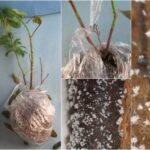
Plants that show little growth, are stunted, or are wilted and in active decline are all hallmarks of root stress. Some of the more prominent pathogens that cause root rot include Fusarium, Phytophthora, Pythium, and Rhizoctonia, but there is another fungus which can cause just as much damage in the right situation that does not…Read more about Cylindrocladium Root Rot[Read More]
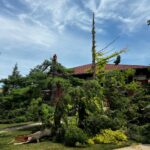
April showers bring May Flowers. Many of us were taught this little rhyme to describe the weather of Spring. April has arrived along with the beginning of the Spring storm season and damage to and from trees is a topic of concern on many minds. Depending on the intensity of the storms and the condition…Read more about Tips for Dealing with Storm-Damaged Trees[Read More]
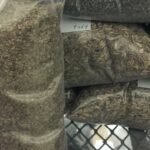
Some of you may recall news in 2020 about unsolicited seeds being sent in the mail from overseas (https://www.purdue.edu/newsroom/archive/releases/2020/Q3/unsolicited-seeds-could-wreak-havoc-on-agriculture,-environment,-state-officials-warn.html). There have now been recent reports of this happening again. Ric Bessin, Entomology Extension Specialist, and Joe Collins, Deputy State Entomologist, from the University of Kentucky, wrote about reports of unsolicited seeds from the south,…Read more about More Reports of People Receiving Unsolicited Seeds[Read More]
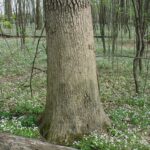
These oak trees are showing the symptoms of smooth patch (Figures 1, 2, 3). This condition is the result of a fungal infection that is restricted to the outer bark, causing it to slough off. The bark layer remaining is smoother and lighter in color than uninfected, normal bark. Patches can vary from a few…Read more about Smooth Patch of Oak[Read More]
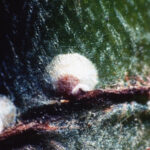
Recently, white prunicola scales (Pseudaulacaspis prunicola) were detected on Prunus during a DNR nursery inspection. This is a significant scale pest of woody ornamentals and fruit trees in eastern states, but it is currently not established in Indiana. It is primarily a pest of cherry, lilac, and privet species. Its total reported host range spans…Read more about Non-native armored scales[Read More]
Sign-up to receive email news and alerts from Purdue Landscape Working Group:

This is US

For More Information

Purdue Home Page

Purdue Extension

Find your county office