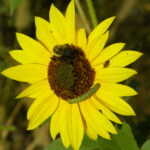
It sounds like the start of a bad joke, but what do a pine cone, a sunflower head, and a pineapple have in common? Your first thought may be an emphatic, “Nothing.” However, they all have a secret code in common – the Fibonacci sequence. While this may not be the typical “how-to” article for…Read more about Unlocking Nature’s Secret Code[Read More]
Resources for landscapes and gardens in the Midwest
Landscape Report
Trees, Shrubs, Vines
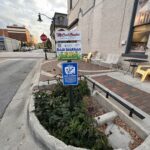
What is Rainscaping? Rainscaping is the practice of designing landscapes to capture, absorb, and use rainwater where it falls. Rather than sending water off-site through storm drains, the water slows down, spreads across the landscape, and soaks into the soil. In Indiana, spring often brings intense rain events that can quickly overwhelm drainage systems, soils, and rivers. Rainscaping offers a different approach. Instead of treating rainwater as…Read more about Rainscaping: Turning Water Problems into Sustainable Solutions[Read More]
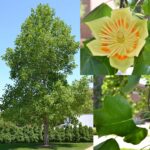
Spring is just around the corner, green spaces are beginning to wake from their winter slumber, Earth Day and Arbor Day are a little over a month away, and people are ready to get outside with planting on their minds. But before you go and get your tree(s) for planting, there is quite a lot…Read more about Urban Tree Spotlight – Planting Deciduous Shade Trees[Read More]
An unfortunate question I am sometimes asked is similar to this: “I lost my prized shade tree! What can I plant that will grow fast and give me shade?” While there is no instant fix to this scenario, let’s review a few trees that might be better choices here in northern Indiana. One obstacle to…Read more about Fast-Growing Trees for the Landscape[Read More]
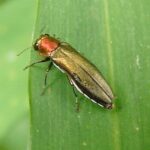
We are often the bearers of bad news when a new exotic insect species is discovered in Indiana. This time, however, we have some good news to share. Agrilus smaragdifrons, a beetle that feeds exclusively on Tree-of-Heaven (Ailanthus altissima), was detected in Indiana last year in Allen County. You might notice that this beetle belongs…Read more about Beetle that attacks Tree-of-Heaven found in Indiana[Read More]
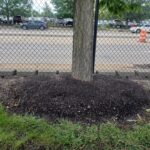
As the Midwest gardening season winds down, there’s still one task that can make a big difference come spring: mulching. Once the soil has cooled but before it freezes, a layer of mulch helps protect plant roots from the freeze-thaw cycles common in Midwestern winters. Mulch stabilizes soil temperatures, conserves moisture, and shields roots from…Read more about Mulching Matters: Autumn Application for Spring Success[Read More]
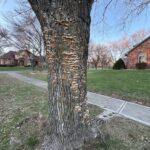
By now, the emerald ash borer (EAB) invasion is an old story for landscapes and forests in the Midwest. Since EAB was first found in North America in 2002 more millions of ash trees than we can know have died and this tiny insect continues to kill ash in an ever widening zone that currently…Read more about Fungal Decay of Ash Trees[Read More]
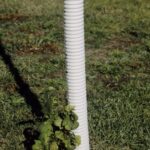
It’s finally October, and we should be enjoying lovely fall temps and colors. While some of the trees are changing, it’s not necessarily due to the change in seasons. As I write this, the temperature is 84 F (29 C). I look out my window and see mostly green leaves with some colors from the…Read more about Help Your Trees Transition into Autumn[Read More]
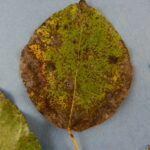
Aspen, cottonwood, and poplar are all names for the fast-growing Populus tree species. Used widely for building materials, these trees are often located around ponds, riverbanks, and sloping areas toward water bodies (especially cottonwood). Cottonwood flowers produce little white tufted seeds that float through the air which a lot of people love (my kids included),…Read more about Marssonina leaf spot and blotch of Poplar[Read More]
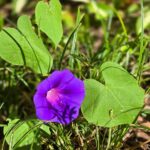
Untangling the Vines: Identifying Bindweed, Morning Glory, and Honeyvine Milkweed Few garden problems cause as much frustration as untangling vines. Sometimes the vines are beautiful climbers planted with intention. Other times, they creep in uninvited and smother everything in their path. Among the most common, and the most confusing, vines in Indiana are bindweed, morning…Read more about Untangling the Vines: Identifying Bindweed, Morning Glory, and Honeyvine Milkweed[Read More]
Christmas tree growers have been struggling with an invasive scale pest called Cryptomeria scale (Aspidiotus cryptomeriae), which is a serious pest of conifers. The scales infest the undersides of the needles and extract plant juices with their piercing-sucking mouthparts. Economic losses are due to the unsightly yellow discoloration and needle drop that occurs from the…Read more about Cryptomeria scale on Christmas trees[Read More]
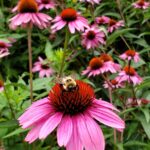
Fall is quickly approaching, bringing cooler temperatures, refreshing rains, and fewer pests. It’s a perfect time to tackle garden tasks, from pruning perennials to planting vegetables. Pruning Fall is a good time to prune out dead, damaged, or diseased plant material (Fig. 1). You can also tidy up perennials that have finished blooming and…Read more about Fall Pruning and Planting for Indiana Gardens[Read More]
Having a healthy tree canopy around your home and throughout your community is something that benefits all. Ask most elementary students what trees do for us, and they will almost always come up with answers like clean air and shade, but they do so much more for us. Trees not only provide oxygen, but they…Read more about International Society of Arboriculture Find an Arborist Tool Update For Both Tree Owners/Managers and ISA Certified Arborists[Read More]
Aphids are some of the most common insect pests of herbaceous plants and broadleaf trees and shrubs. I have to admit, I do not always enjoy identifying aphids – but I find their shapes, colors, and biology fascinating. One species of aphid, which I first met myself this year, threatens plants in our landscapes on…Read more about This aphid is a double threat to the landscape[Read More]
Do your landscape plants have cankers, mosaics, galls, mummies, or witches’ brooms? These and other symptoms are often difficult for the average homeowner to understand, let alone visualize. Purdue Extension staff can often assist with diagnosing plant diseases. Additionally, Purdue Extension specialists Janna Beckerman (retired) and Tom Creswell authored the publication, “Symptoms and Signs for…Read more about Plant Disease Symptoms You Could Notice in Your Home Landscape[Read More]

Cherry, plum, almond, peach and cherry laurel all get a common issue called shot hole leaf spot. At first, a chlorotic or necrotic spot develops on the foliage (Figure 1). When a tree has severe symptoms, the leaves may drop prematurely from the tree. If the leaves remain on the tree, the leaves produce a…Read more about Shot hole leaf spot of Prunus.[Read More]
Yews are widely used as foundation plantings in many areas and are valued for their dark, evergreen foliage. The most widely used landscape yews are Japanese yew (Taxus cuspidata) and Taxus x media hybrids, such as Hicksii or Wardii Yew. While few diseases and insects attack yew, there are a few problems to watch for….Read more about What’s Killing My Yews? Top Problems and How to Prevent Them[Read More]
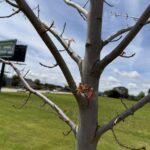
Diagnosing abiotic (non-living) problems in plants can be challenging due to the many interacting factors and varying levels of plant tolerance. In many cases, reviewing the recent weather history of a given area provides valuable insight into the possible causes of observed symptoms. Over the past few weeks, several samples submitted to the Purdue Plant…Read more about Delayed and Sporadic Budbreak in 2025: Could Spring Weather Be to Blame?[Read More]
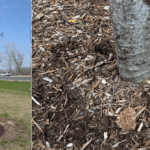
Tree care, in many cases, can be expensive if you require the assistance of an arborist for pruning or removals. Extreme weather events, characterized by extensive rain and wind, can cause damage to the canopy or, in worst-case scenarios, lead to tree failure. In cases of failures, weather is often the final push to already…Read more about Simple Steps to Care for Your Tree: Mulching[Read More]
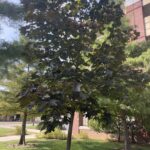
These three maples have somewhat similar-looking leaves. On the surface, you may think this is simply an academic exercise. But if you care about invasive plants and local ecology, this distinction is an important one. Norway maple is an invasive tree species, while sugar and black maples are native tree species (sometimes called hard maples)….Read more about Distinguishing Between Norway, Sugar, and Black Maples[Read More]
Sign-up to receive email news and alerts from Purdue Landscape Working Group:

This is US

For More Information

Purdue Home Page

Purdue Extension

Find your county office