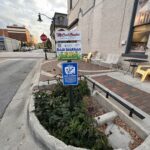
What is Rainscaping? Rainscaping is the practice of designing landscapes to capture, absorb, and use rainwater where it falls. Rather than sending water off-site through storm drains, the water slows down, spreads across the landscape, and soaks into the soil. In Indiana, spring often brings intense rain events that can quickly overwhelm drainage systems, soils, and rivers. Rainscaping offers a different approach. Instead of treating rainwater as…Read more about Rainscaping: Turning Water Problems into Sustainable Solutions[Read More]
Resources for landscapes and gardens in the Midwest
Landscape Report
landscape

As we step into a new year, the Purdue Landscape Report team is excited to welcome you to the first newsletter of 2026. Whether you are a long-time reader, a landscape professional, an arborist, a nursery grower, or a homeowner invested in the health and beauty of your landscape, we’re glad you’re here. Each year…Read more about Welcome to the 2026 Purdue Landscape Report[Read More]
An unfortunate question I am sometimes asked is similar to this: “I lost my prized shade tree! What can I plant that will grow fast and give me shade?” While there is no instant fix to this scenario, let’s review a few trees that might be better choices here in northern Indiana. One obstacle to…Read more about Fast-Growing Trees for the Landscape[Read More]
Fall is quickly approaching, bringing cooler temperatures, refreshing rains, and fewer pests. It’s a perfect time to tackle garden tasks, from pruning perennials to planting vegetables. Pruning Fall is a good time to prune out dead, damaged, or diseased plant material (Fig. 1). You can also tidy up perennials that have finished blooming and…Read more about Fall Pruning and Planting for Indiana Gardens[Read More]
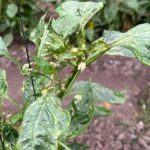
Nursery growers and landscapers should stay vigilant for an invasive thrips that is moving across the USA. Thrips parvispinus was first detected in Florida in 2020. It has since spread through Georgia and the Carolinas, and has been detected in Colorado, Ohio, Pennsylvania, and Delaware. It is not known to occur in Indiana, but growers…Read more about Invasive Thrips to Watch for in the Nursery and Landscape[Read More]
The 2025 Purdue Turf and Landscape Field Day took place on July 8 at the W.H. Daniel Turfgrass Research and Diagnostic Center in West Lafayette, drawing professionals from across Indiana and the Midwest. In addition to the 350 attendees, there were 30 exhibitors featured in the trade show. The event began in the morning with…Read more about Purdue Turf and Landscape Field Day Recap: Don’t miss this event in 2026![Read More]
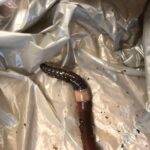
It’s that time again! With the arrival of warm temperatures and increased rainfall, many of us are getting to work on our lawns, gardens, and landscaping. Unfortunately, this often comes with discovering what new (or old) invasive species are here to haunt us. So far this year, the invasive I’ve gotten the most questions on…Read more about Asian Jumping Worms: How to ID this soil pest[Read More]

Don’t miss the 2025 Purdue Turf and Landscape Field Day on Tuesday, July 8, at the William H. Daniel Turfgrass Research and Diagnostic Center in West Lafayette, Indiana. This annual event offers turf and landscape professionals an opportunity to engage with the latest research, technologies, and best practices in the industry. Click here to see…Read more about Purdue Turf and Landscape Field Day-July 8, 2025[Read More]

In the last newsletter, an article on triclopyr (www.purduelandscapereport.org/article/the-summer-of-triclopyr-mounting-evidence-for-off-target-damage/) brought up much discussion on the Roundup brands now containing multiple active ingredients other than glyphosate. Professionals in the industry may encounter a client with herbicide damage symptoms that mimic growth-regulator injury instead of typical glyphosate damage symptoms. While the client may have used Roundup, they…Read more about When Roundup Isn’t Roundup: Clearing up the confusion between products[Read More]
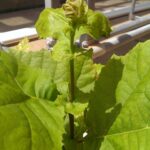
A recent conversation with a landscaper about tank mixing led to a brief discussion about glyphosate products with a contact herbicide included. I thought I would share my thoughts on the addition of contact herbicides and its effectiveness on weed control. We all know that we live in a microwave society. Most people want things…Read more about Does weed control improve with adding a contact herbicide to glyphosate?[Read More]

Gardeners are bombarded with sayings like save the stems, leave the leaves, and no mow May. These sayings are rooted in the same goal of protecting pollinators, but often leave gardeners with more questions. Let’s dig into each of the sayings. Save the stems: The first question that often arises from this saying is: “When…Read more about So, the saying goes… Save the Stems, Leave the Leaves, and No Mow May[Read More]

Blight, Leafminers, and Moths: The Plight of Boxwoods Boxwoods (Buxus spp.) were introduced into the United States during colonial times, and still today they are one of the most popular evergreen shrubs used in landscapes. They are frequently selected for hedges and topiaries because they are easily trimmed into geometric shapes. They were also easy…Read more about Blight, Leafminers, and Moths: The Plight of Boxwoods[Read More]

Vascular streak dieback is an emerging issue on woody ornamentals in the nursery industry. We have provided information on this topic as the situation has been unfolding (https://purduelandscapereport.org//article/vascular-streak-dieback-of-redbud-what-plant-pathologists-know-so-far/; https://indianagreenexpo.com/sessions/vascular-streak-dieback-an-emerging-issue-in-nursery-stock/). Researchers and Collaborators working on vascular streak dieback will be presenting up-to-date information during the tHRIve webinar hosted by Horticultural Research Institute on Thursday, April 11,…Read more about Webinar on Vascular Streak Dieback[Read More]

I think white pines are beautiful trees, especially at maturity, and they have the added advantage that they are one of the few conifers that don’t try to kill you with their needles. Besides working with the foliage, have you ever had to “rescue” a child who climbed too high in a spike-infested deathtrap of…Read more about Declining Pines of the White Variety[Read More]

The Women of the Green Industry will be offering two, free educational opportunities on November 7th and December 5th on Zoom: https://purdue-edu.zoom.us/j/95932197520?pwd=KysxUHFPSzZiOTlwcmFZU3hUSXFpZz09 November 7th will feature Karen Mitchell, Purdue Consumer Horticulture Specialist, to present ‘The Social Side of Seeds: Growing Your Community’ December 5th will feature Pedra Sage, owner of Sage Garden Designs, who…Read more about Join Women of the Green Industry on November 7th and December 5th[Read More]

Mites are eight-legged arthropods who pierce plant cells to feed on them. Plants that are attacked by mites lose their green color and appear somewhat bronzed. Spider mites will make webs to help them forage on leaves unencumbered by irregular leaf surfaces. The accumulation of webs, and old skins of mites can give heavily infested…Read more about Tune up Your Spider Mite Management This Fall[Read More]

Dead man’s fingers is an apt moniker for a gruesome-looking fungus (Xylaria polymorpha and related species) that produces club-shaped fungal fruiting bodies that appear as fingers growing around the base of dying or dead woody plants and even wooden objects in soil (Fig. 1). With more than 25 species of Xylaria, generalizations are difficult to…Read more about Dead Man’s Fingers[Read More]

Many trees are planted for their beautiful fall color, especially in locations where the climate provides reliable autumn weather. I have said this multiple times during extension talks and conversations with submitters to the PPDL, but I seem to have not experienced a ‘normal’ fall since moving to Indiana with how erratic the weather has…Read more about Early Fall Color – A Symptom of Stress[Read More]

When I was a kid, if you’d asked me what my favorite season was it would always immediately be summer. No school, time for playing outdoors, swimming, hiking, and late nights playing flashlight tag. Now, if I ranked the seasons from worst to best, they’d be Summer in last, followed by Winter (yes, I choose…Read more about Can I Plant Trees in the Fall?[Read More]

Wet summer weather always brings in a surplus of plant diseases, but few are as dramatic as clematis blight, caused by the fungus now called Calophoma clematidina (formerly Ascochyta or Phoma clematidina) (Fig. 1). The rest of us simply call it clematis blight or clematis wilt. Why the confusion with both the common and Latin…Read more about Blasted Clematis Blight[Read More]
Sign-up to receive email news and alerts from Purdue Landscape Working Group:

This is US

For More Information

Purdue Home Page

Purdue Extension

Find your county office