Dieback and canker diseases caused by Botryosphaeria, Sphaeropsis, Diplodia and other closely related fungal pathogens are exceptionally common on woody landscape plants. This group of diseases are often referred to collectively as Botryosphaeria diseases and this article will follow that convention to discuss them as a group. Examine any mature oak tree long enough and…Read more about Botryosphaeria Dieback and Canker[Read More]
Resources for landscapes and gardens in the Midwest
Landscape Report
IPM
As the growing season winds down and cooler temperatures approach (despite today’s unseasonable 81 degrees F), many beneficial bugs begin searching for their winter hideaways. While many people see fallen leaves as just more plant waste to dispose of, some of our beneficial bugs see a cozy bed to bundle up in for the winter….Read more about Huddle Up and Hunker Down: The Winter Life of Beneficial Bugs[Read More]
Recently, white prunicola scales (Pseudaulacaspis prunicola) were detected on Prunus during a DNR nursery inspection. This is a significant scale pest of woody ornamentals and fruit trees in eastern states, but it is currently not established in Indiana. It is primarily a pest of cherry, lilac, and privet species. Its total reported host range spans…Read more about Non-native armored scales[Read More]
We have received a few elm tree samples this year with a disease we do not often see, but which is relatively common: black spot of elm. This disease, also called elm anthracnose, is caused by the fungus Stegophora ulmea and can affect most species of elm with American elm varieties being more susceptible. The…Read more about Black Spot of Elm[Read More]
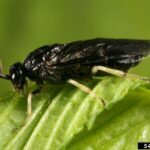
The elm zigzag sawfly (EZS), Aproceros leucopoda, is a non-native insect recently detected in several midwestern states. Originally from eastern Asia, this insect is rarely considered a problem in its native range, having several natural enemies and environmental factors able to keep it in check. However, when in new landscapes, aspects of this insect’s life…Read more about A New Threat to Elms in North America[Read More]
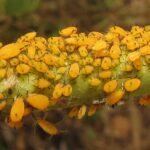
Milkweed is a popular choice in urban landscapes as more citizens engage with monarch conservation efforts and strive to maintain pollinator-friendly landscapes. This past month I have seen numerous images of aphids found on milkweed plants from all over the state. Homeowners are concerned that the infestation will negatively affect the monarch butterflies that rely…Read more about What are these small yellow bugs on my milkweed?[Read More]
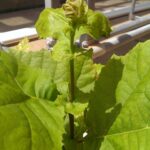
A recent conversation with a landscaper about tank mixing led to a brief discussion about glyphosate products with a contact herbicide included. I thought I would share my thoughts on the addition of contact herbicides and its effectiveness on weed control. We all know that we live in a microwave society. Most people want things…Read more about Does weed control improve with adding a contact herbicide to glyphosate?[Read More]

Identifying a plant problem is the first step to improve the health of plants in the landscape. We created a series of short (5 to 7 min) YouTube videos to help you learn or just brush up your plant diagnostic skills. Each video guides you through the diagnostic process in real landscapes, reviews pest biology…Read more about Learn to Diagnose Plant Problems with Quick Guide YouTube Videos[Read More]

Identificar qué problema tiene la planta es el primer paso para mejorar la salud de las plantas en el jardín. Hemos creado una serie de videos cortos (5 a 7 minutos de duración) en YouTube. Esto lo hemos hecho para ayudarlo a aprender o simplemente mejorar sus habilidades de diagnóstico de plantas. Cada video te…Read more about Aprenda a Diagnosticar Problemas de las Plantas con Videos en YouTube[Read More]

Hydrangea L. (family Hydrangeaceae Dumort) is an all-encompassing description of a group of herbaceous and woody flowering plants, composed of more than 80 species native to Asia (including Japan), Indonesia, the Americas. Popular hydrangea species include the bigleaf hydrangea (Hydrangea macrophylla), also known as French hydrangea, panicled (peegee) hydrangea (H. paniculata), oak-leaf hydrangea (H. quercifolia) and mountain hydrangea (H. serrata). Hydrangea…Read more about Viruses of Hydrangea[Read More]

An old saying predicts that March will go out “like a lamb”. Another saying predicts April’s wetness with “April showers bring May flowers”. A lot seems to have happened across Indiana since April began, but March finished the month with below-normal rainfall (except for the northern counties) and above-normal temperatures. Does this describe conditions that…Read more about As the sayings go… (Climate & Weather)[Read More]

Blight, Leafminers, and Moths: The Plight of Boxwoods Boxwoods (Buxus spp.) were introduced into the United States during colonial times, and still today they are one of the most popular evergreen shrubs used in landscapes. They are frequently selected for hedges and topiaries because they are easily trimmed into geometric shapes. They were also easy…Read more about Blight, Leafminers, and Moths: The Plight of Boxwoods[Read More]

Vascular streak dieback is an emerging issue on woody ornamentals in the nursery industry. We have provided information on this topic as the situation has been unfolding (https://purduelandscapereport.org//article/vascular-streak-dieback-of-redbud-what-plant-pathologists-know-so-far/; https://indianagreenexpo.com/sessions/vascular-streak-dieback-an-emerging-issue-in-nursery-stock/). Researchers and Collaborators working on vascular streak dieback will be presenting up-to-date information during the tHRIve webinar hosted by Horticultural Research Institute on Thursday, April 11,…Read more about Webinar on Vascular Streak Dieback[Read More]

I think white pines are beautiful trees, especially at maturity, and they have the added advantage that they are one of the few conifers that don’t try to kill you with their needles. Besides working with the foliage, have you ever had to “rescue” a child who climbed too high in a spike-infested deathtrap of…Read more about Declining Pines of the White Variety[Read More]

Dead man’s fingers is an apt moniker for a gruesome-looking fungus (Xylaria polymorpha and related species) that produces club-shaped fungal fruiting bodies that appear as fingers growing around the base of dying or dead woody plants and even wooden objects in soil (Fig. 1). With more than 25 species of Xylaria, generalizations are difficult to…Read more about Dead Man’s Fingers[Read More]

Later this week, fall finally brings the respite of cooler temperatures and a much-needed drink of rainfall. While the cool-season species such as tall fescue and Kentucky bluegrass that dominate most of the Indiana lawnscape revel in this well deserved breather from disease pressure and high temperature stress, the metabolism of warm season plant species…Read more about Fall Brings Football & A Lawn Policy Shift[Read More]

A new invasive insect of concern has been identified in the state of Georgia. In August of 2023, Georgia’s Department of Agriculture, along with the USDA, confirmed the presence of the yellow-legged hornet, Vespa velutina, outside of the city of Savannah. To date, this is the only confirmed identification of this insect in the United…Read more about New Invasive Predator of Honeybees[Read More]

Phytotoxicity is damage to plants caused by chemicals, fertilizers, or pesticides. Phytotoxicity can be a positive (killing weeds) or a negative (damage from pesticides on ornamental plants), depending on the intended results. Some of the common phytotoxic effects can show symptoms such as stunting of leaves and whole plant, necrosis (death), chlorosis (yellowing), abnormal growth…Read more about Diagnosing Phytotoxicity on Landscape Plants[Read More]

As bud break is currently occurring on early species in southern and central Indiana, remember to be on the lookout for callery pear (Pyrus calleryana) on properties that you manage for removal. Callery pear (multiple cultivars in the landscape from this species) has become a major invasive species of concern in wild and disturbed areas…Read more about Annual Reminder to Identify Callery Pear for Removal[Read More]

Biology: Ground ivy (Glechoma hederacea), also known as creeping Charlie, is a very difficult to control perennial broadleaf weed. It can often be seen growing in the shade and invading turfgrass and landscapes throughout the United States. Ground ivy thrives in moist, rich soils located in shaded areas, but will grow in full sun as well….Read more about Spotlight on Weeds: Ground Ivy/Creeping Charlie (Glechoma hederacea)[Read More]
Sign-up to receive email news and alerts from Purdue Landscape Working Group:

This is US

For More Information

Purdue Home Page

Purdue Extension

Find your county office