The 2025 Purdue Turf and Landscape Field Day took place on July 8 at the W.H. Daniel Turfgrass Research and Diagnostic Center in West Lafayette, drawing professionals from across Indiana and the Midwest. In addition to the 350 attendees, there were 30 exhibitors featured in the trade show. The event began in the morning with…Read more about Purdue Turf and Landscape Field Day Recap: Don’t miss this event in 2026![Read More]
Resources for landscapes and gardens in the Midwest
Landscape Report
horticulture
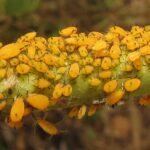
Milkweed is a popular choice in urban landscapes as more citizens engage with monarch conservation efforts and strive to maintain pollinator-friendly landscapes. This past month I have seen numerous images of aphids found on milkweed plants from all over the state. Homeowners are concerned that the infestation will negatively affect the monarch butterflies that rely…Read more about What are these small yellow bugs on my milkweed?[Read More]

Identifying a plant problem is the first step to improve the health of plants in the landscape. We created a series of short (5 to 7 min) YouTube videos to help you learn or just brush up your plant diagnostic skills. Each video guides you through the diagnostic process in real landscapes, reviews pest biology…Read more about Learn to Diagnose Plant Problems with Quick Guide YouTube Videos[Read More]

Gardeners are bombarded with sayings like save the stems, leave the leaves, and no mow May. These sayings are rooted in the same goal of protecting pollinators, but often leave gardeners with more questions. Let’s dig into each of the sayings. Save the stems: The first question that often arises from this saying is: “When…Read more about So, the saying goes… Save the Stems, Leave the Leaves, and No Mow May[Read More]

An old saying predicts that March will go out “like a lamb”. Another saying predicts April’s wetness with “April showers bring May flowers”. A lot seems to have happened across Indiana since April began, but March finished the month with below-normal rainfall (except for the northern counties) and above-normal temperatures. Does this describe conditions that…Read more about As the sayings go… (Climate & Weather)[Read More]

Blight, Leafminers, and Moths: The Plight of Boxwoods Boxwoods (Buxus spp.) were introduced into the United States during colonial times, and still today they are one of the most popular evergreen shrubs used in landscapes. They are frequently selected for hedges and topiaries because they are easily trimmed into geometric shapes. They were also easy…Read more about Blight, Leafminers, and Moths: The Plight of Boxwoods[Read More]

Vascular streak dieback is an emerging issue on woody ornamentals in the nursery industry. We have provided information on this topic as the situation has been unfolding (https://purduelandscapereport.org//article/vascular-streak-dieback-of-redbud-what-plant-pathologists-know-so-far/; https://indianagreenexpo.com/sessions/vascular-streak-dieback-an-emerging-issue-in-nursery-stock/). Researchers and Collaborators working on vascular streak dieback will be presenting up-to-date information during the tHRIve webinar hosted by Horticultural Research Institute on Thursday, April 11,…Read more about Webinar on Vascular Streak Dieback[Read More]

I think white pines are beautiful trees, especially at maturity, and they have the added advantage that they are one of the few conifers that don’t try to kill you with their needles. Besides working with the foliage, have you ever had to “rescue” a child who climbed too high in a spike-infested deathtrap of…Read more about Declining Pines of the White Variety[Read More]

This series will highlight unique and interesting landscape plants that are not as common in the landscape. Many of these plants aren’t readily available at your local nursery or garden center. If you are interested in purchasing one of these plants, I recommend contacting your local nursery or garden center about availability. Majestic Beauty Tuliptree…Read more about Plant Picks: Majestic Beauty Tuliptree[Read More]

Remember the pre-Christmas freeze? What about the extremely long fall? The Midwest experienced above-average temperatures through most of the winter, but those extremely cold temps in late December made for more than a few pipes to freeze in the southern part of the Midwest. The dichotomy in weather patterns over the last several years has…Read more about Cold Injury During a Very Mild Winter?[Read More]

When transplanting trees, it is important to consider the long-term viability. Since the typical life span of an urban tree is 7-20 years (USDA), proper establishment techniques are very important to decrease this mortality rate. When a tree becomes established, it is much more difficult to correct below ground problems. Root deformations can occur for…Read more about Using Pneumatic Digging Equipment to Correct Root Deformations, Deep Planting, and Compaction on Established Trees[Read More]


Phytotoxicity is damage to plants caused by chemicals, fertilizers, or pesticides. Phytotoxicity can be a positive (killing weeds) or a negative (damage from pesticides on ornamental plants), depending on the intended results. Some of the common phytotoxic effects can show symptoms such as stunting of leaves and whole plant, necrosis (death), chlorosis (yellowing), abnormal growth…Read more about Diagnosing Phytotoxicity on Landscape Plants[Read More]

Diagnosing herbicide injury on ornamental plants can be difficult due to the sheer number of cultivated plants and the number of active ingredients used around ornamentals. Modern cultivars of ornamental plants include characteristics much different from the species, so it’s important to know ‘normal’ to properly diagnose a problem. There are several reasons that herbicide…Read more about Diagnosing Herbicide Injury on Ornamentals[Read More]

Finally, spring has sprung and summer is on its way. The hot days and warm nights are welcome for us, but summer isn’t always so kind to our trees, especially in our urban forest and landscapes. Trees are dynamic living organisms that respond to external stimuli in very strategic ways and each season presents its…Read more about Summer Tree Care[Read More]

The Purdue Turf and Landscape Field Day will be back July 13th! Join us at the Daniel Turfgrass Research and Diagnostic Center on the Purdue University West Lafayette campus. The Purdue Turf and Landscape Field Day is an annual one-day event with the objective of providing professional turf and landscape managers exposure and educational opportunities…Read more about Field Day Returns![Read More]

There are many age-old, philosophical questions that people have been arguing over for many years. What is the meaning of life? Nature or nurture? Do aliens exist? Should I remove the wire and burlap from B&B plant material? The last question has been debated for many years, with almost everyone having a different opinion. There…Read more about Wire Baskets: Leave them or remove them?[Read More]
Sign-up to receive email news and alerts from Purdue Landscape Working Group:

This is US

For More Information

Purdue Home Page

Purdue Extension

Find your county office