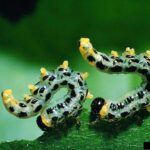
Sawflies are frequent pests in the landscape that attack a wide variety of plants, from ornamental flowers to large trees. You might start to see them damaging plants around this time of year as the first generations hatch and begin to feed on foliage. They are often mistaken for caterpillars, which are the larval stages…Read more about Sawflies: the caterpillar pests that are not caterpillars[Read More]
Resources for landscapes and gardens in the Midwest
Landscape Report
Trees, Shrubs, Vines
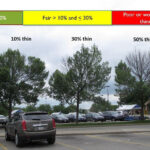
Recently, there has been an uptick in questions related to one of Indiana’s most notorious invasive pests: the emerald ash borer. Homeowners, businesses, even professionals have asked if ash trees are still present in Indiana, and if the insect is still a threat to our ecosystem. Emerald ash borer wreaked significant havoc among Indiana’s hardwoods,…Read more about Revisiting Ash Tree Protection[Read More]
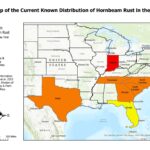
During a nursery inspection in Owen County in 2024, I noticed an unusual yellowing of the leaves on some American Hornbeam (Carpinus caroliniana) trees (Fig 1). A look at the underside of the leaves revealed yellow-orange pustules, suggesting a rust fungus. After help from the Purdue Plant & Pest Diagnostic Lab, this fungal pathogen was…Read more about Hornbeam Rust: An emerging rust disease in the US[Read More]
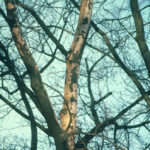
Hypoxylon canker is a common disease of mature hardwood trees both in landscapes and in natural wooded areas. The disease, caused by the wood decay fungus Biscogniauxia (formerly Hypoxylon), is most frequently observed in oak tree species, but can also cause dieback in pecan, hickory, golden rain tree, sycamore, maple, beech, birch, elm, willow, basswood,…Read more about Hypoxylon Canker of Hardwoods[Read More]
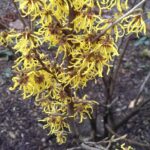
Spring is finally here! Everywhere you look, one can find some spring color around. Some of the first plants to peek out of the ground are spring-flowering bulbs like crocus, daffodil, and tulip. But there are some beautiful spring time shrubs you can add to your yard to be the first in the neighborhood with…Read more about Top 10 Spring Flowering Shrubs[Read More]
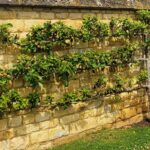
A perennial edible garden offers an opportunity to integrate beauty and utility. By incorporating fruit trees, berry bushes, and other long-lived edible plants, the home landscape can be both aesthetically pleasing and agriculturally productive. A perennial edible garden not only provides seasonal harvests but also supports local biodiversity. Plan(t) for Success Careful planning and site…Read more about Beauty and Bounty: The Perennial Edible Landscape[Read More]
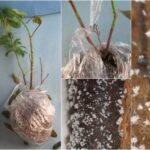
Plants that show little growth, are stunted, or are wilted and in active decline are all hallmarks of root stress. Some of the more prominent pathogens that cause root rot include Fusarium, Phytophthora, Pythium, and Rhizoctonia, but there is another fungus which can cause just as much damage in the right situation that does not…Read more about Cylindrocladium Root Rot[Read More]
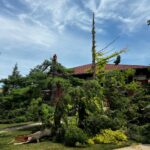
April showers bring May Flowers. Many of us were taught this little rhyme to describe the weather of Spring. April has arrived along with the beginning of the Spring storm season and damage to and from trees is a topic of concern on many minds. Depending on the intensity of the storms and the condition…Read more about Tips for Dealing with Storm-Damaged Trees[Read More]
Some of you may recall news in 2020 about unsolicited seeds being sent in the mail from overseas (https://www.purdue.edu/newsroom/archive/releases/2020/Q3/unsolicited-seeds-could-wreak-havoc-on-agriculture,-environment,-state-officials-warn.html). There have now been recent reports of this happening again. Ric Bessin, Entomology Extension Specialist, and Joe Collins, Deputy State Entomologist, from the University of Kentucky, wrote about reports of unsolicited seeds from the south,…Read more about More Reports of People Receiving Unsolicited Seeds[Read More]
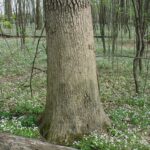
These oak trees are showing the symptoms of smooth patch (Figures 1, 2, 3). This condition is the result of a fungal infection that is restricted to the outer bark, causing it to slough off. The bark layer remaining is smoother and lighter in color than uninfected, normal bark. Patches can vary from a few…Read more about Smooth Patch of Oak[Read More]
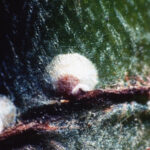
Recently, white prunicola scales (Pseudaulacaspis prunicola) were detected on Prunus during a DNR nursery inspection. This is a significant scale pest of woody ornamentals and fruit trees in eastern states, but it is currently not established in Indiana. It is primarily a pest of cherry, lilac, and privet species. Its total reported host range spans…Read more about Non-native armored scales[Read More]
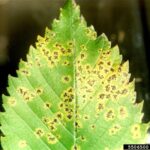
We have received a few elm tree samples this year with a disease we do not often see, but which is relatively common: black spot of elm. This disease, also called elm anthracnose, is caused by the fungus Stegophora ulmea and can affect most species of elm with American elm varieties being more susceptible. The…Read more about Black Spot of Elm[Read More]
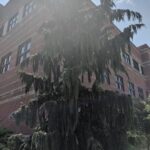
August was National Check Your Tree Month, but this is something that every tree owner/manager should be doing year-round. As the last hot days of summer are finishing up and we look forward to cooler fall days, we can look to our trees for different signs of trouble. Most people tend to look up at…Read more about Enjoy Your Trees While Checking Them[Read More]
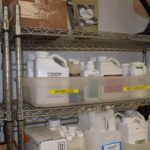
In the last newsletter, an article on triclopyr (www.purduelandscapereport.org/article/the-summer-of-triclopyr-mounting-evidence-for-off-target-damage/) brought up much discussion on the Roundup brands now containing multiple active ingredients other than glyphosate. Professionals in the industry may encounter a client with herbicide damage symptoms that mimic growth-regulator injury instead of typical glyphosate damage symptoms. While the client may have used Roundup, they…Read more about When Roundup Isn’t Roundup: Clearing up the confusion between products[Read More]
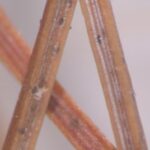
Early June, we received a white pine sample at the Purdue University Plant and Pest Diagnostic Lab that showed early season needle loss lower in the tree canopy (Figure 1, 2). The majority of conifers hold onto their needles for multiple years, so loss of needles, even in the fall, can come as a shock…Read more about Septorioides Needle Blight of Pine[Read More]
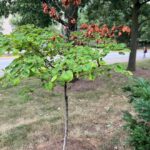
With recent rain storms across the state, watering may not be at the forefront of everyone’s minds. But as we head deeper into summer it is food to remember most of Indiana is in a state of abnormal dryness to moderate drought, continuing similar conditions from previous years. With that in mind, we should be…Read more about Summer Tree Care: Watering Your Trees[Read More]
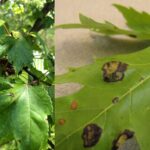
The past two months have been relatively wet and cool to warm. This prolonged period of overcast conditions, high humidity, and light to moderate rainfall is perfect for some of our foliar disease issues. “April flowers bring May Leaf spots” doesn’t have the right ring to it, but we are seeing quite a bit of…Read more about Leaf Curl and Leaf Blister Brought By Wet Weather[Read More]

Most people these days have, at the very least, heard of Callery and Bradford pear trees and know something about the invasiveness of this ornamental street tree. But I still get questions about what it is and why it’s so bad. So, I’d like to offer a little history of this infamous tree. Where did…Read more about Invasive Bradford/Callery Pear: Why it is so detrimental and what to plant instead.[Read More]

Identifying a plant problem is the first step to improve the health of plants in the landscape. We created a series of short (5 to 7 min) YouTube videos to help you learn or just brush up your plant diagnostic skills. Each video guides you through the diagnostic process in real landscapes, reviews pest biology…Read more about Learn to Diagnose Plant Problems with Quick Guide YouTube Videos[Read More]

Identificar qué problema tiene la planta es el primer paso para mejorar la salud de las plantas en el jardín. Hemos creado una serie de videos cortos (5 a 7 minutos de duración) en YouTube. Esto lo hemos hecho para ayudarlo a aprender o simplemente mejorar sus habilidades de diagnóstico de plantas. Cada video te…Read more about Aprenda a Diagnosticar Problemas de las Plantas con Videos en YouTube[Read More]
Sign-up to receive email news and alerts from Purdue Landscape Working Group:

This is US

For More Information

Purdue Home Page

Purdue Extension

Find your county office