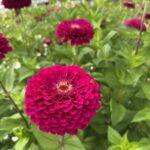
Cut flower production continues to expand rapidly across Indiana, with many farms adding flowers as a high-value crop, an agritourism attraction, or a way to diversify their operations. To better support growers in this emerging sector, Purdue Extension launched a new project to better serve Indiana Cut Flower Farmers, funded by Purdue’s AgSEED program. One…Read more about Free Diagnostic for Cut Flower Samples[Read More]
Resources for landscapes and gardens in the Midwest
Landscape Report
Plant Diseases
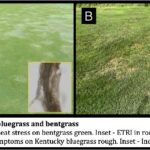
Summer patch hits hard in early August; fall rust outbreaks causing orange shoes; cool temperatures allowing a head start on recovery plans. August in the region started cool, got back to summer hot, and now dare I say it feels like fall. This “false fall” in Indiana certainly is convincing as a stagnant high-pressure dome…Read more about Purdue Turfgrass Disease Report: Cool Breeze Offers Some Ease[Read More]

Purple coneflower, Echinacea purpurea, is an old native standby that can thrive even in some difficult landscapes. With beautiful purple flowers and the ability to reseed and fill an area, it has been used widely, especially in gardens comprised primarily of native plants; however, they are not without their problems. We sometimes see some fungal…Read more about When purple coneflowers are not purple: Aster Yellows and Eriophyid mites[Read More]
Do your landscape plants have cankers, mosaics, galls, mummies, or witches’ brooms? These and other symptoms are often difficult for the average homeowner to understand, let alone visualize. Purdue Extension staff can often assist with diagnosing plant diseases. Additionally, Purdue Extension specialists Janna Beckerman (retired) and Tom Creswell authored the publication, “Symptoms and Signs for…Read more about Plant Disease Symptoms You Could Notice in Your Home Landscape[Read More]

Cherry, plum, almond, peach and cherry laurel all get a common issue called shot hole leaf spot. At first, a chlorotic or necrotic spot develops on the foliage (Figure 1). When a tree has severe symptoms, the leaves may drop prematurely from the tree. If the leaves remain on the tree, the leaves produce a…Read more about Shot hole leaf spot of Prunus.[Read More]
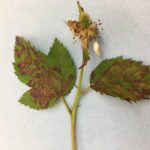
Cool, cloudy weather with frequent rainfall and high humidity provides ideal conditions for the development of several diseases, including downy mildew. The fungus-like pathogens that cause downy mildew are commonly known as ‘water molds’ and are classified as oomycetes. Many types of plants are susceptible to downy mildew diseases, including sunflowers, grapevines, impatiens, other ornamentals,…Read more about Watch for Downy Mildew on Roses and Brambles caused by Peronospora sparsa[Read More]
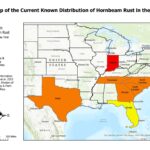
During a nursery inspection in Owen County in 2024, I noticed an unusual yellowing of the leaves on some American Hornbeam (Carpinus caroliniana) trees (Fig 1). A look at the underside of the leaves revealed yellow-orange pustules, suggesting a rust fungus. After help from the Purdue Plant & Pest Diagnostic Lab, this fungal pathogen was…Read more about Hornbeam Rust: An emerging rust disease in the US[Read More]
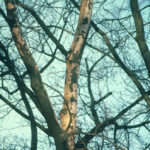
Hypoxylon canker is a common disease of mature hardwood trees both in landscapes and in natural wooded areas. The disease, caused by the wood decay fungus Biscogniauxia (formerly Hypoxylon), is most frequently observed in oak tree species, but can also cause dieback in pecan, hickory, golden rain tree, sycamore, maple, beech, birch, elm, willow, basswood,…Read more about Hypoxylon Canker of Hardwoods[Read More]
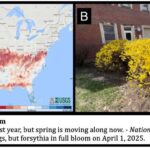
Excessive and in some cases, abusive rainfall amounts; keys to soggy turfgrass management; winter injury potential causes and recovery, red thread, spring golf disease prevention Weather Spring, which officially started on March 20, is rolling along, and into mid-April temperatures in the region are ahead of statistical normal, but lagging somewhat behind last year. I…Read more about Purdue Turfgrass Disease Report: Muddy Waters[Read More]
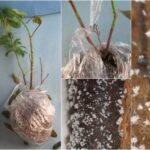
Plants that show little growth, are stunted, or are wilted and in active decline are all hallmarks of root stress. Some of the more prominent pathogens that cause root rot include Fusarium, Phytophthora, Pythium, and Rhizoctonia, but there is another fungus which can cause just as much damage in the right situation that does not…Read more about Cylindrocladium Root Rot[Read More]
Some of you may recall news in 2020 about unsolicited seeds being sent in the mail from overseas (https://www.purdue.edu/newsroom/archive/releases/2020/Q3/unsolicited-seeds-could-wreak-havoc-on-agriculture,-environment,-state-officials-warn.html). There have now been recent reports of this happening again. Ric Bessin, Entomology Extension Specialist, and Joe Collins, Deputy State Entomologist, from the University of Kentucky, wrote about reports of unsolicited seeds from the south,…Read more about More Reports of People Receiving Unsolicited Seeds[Read More]
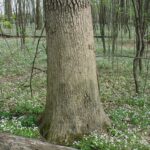
These oak trees are showing the symptoms of smooth patch (Figures 1, 2, 3). This condition is the result of a fungal infection that is restricted to the outer bark, causing it to slough off. The bark layer remaining is smoother and lighter in color than uninfected, normal bark. Patches can vary from a few…Read more about Smooth Patch of Oak[Read More]
Dieback and canker diseases caused by Botryosphaeria, Sphaeropsis, Diplodia and other closely related fungal pathogens are exceptionally common on woody landscape plants. This group of diseases are often referred to collectively as Botryosphaeria diseases and this article will follow that convention to discuss them as a group. Examine any mature oak tree long enough and…Read more about Botryosphaeria Dieback and Canker[Read More]
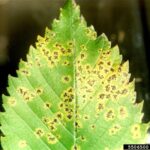
We have received a few elm tree samples this year with a disease we do not often see, but which is relatively common: black spot of elm. This disease, also called elm anthracnose, is caused by the fungus Stegophora ulmea and can affect most species of elm with American elm varieties being more susceptible. The…Read more about Black Spot of Elm[Read More]
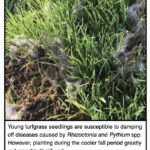
Summer 2024 was a stressful season for lawns in Indiana and throughout the region. Temperatures often spiked to uncomfortable levels, particularly towards the end of August, and were accompanied by either sweltering humidity or an abrupt halt to rainfall. Diseases such as brown patch on tall fescue were prevalent and leaf spot/melting out diseases on…Read more about Disease Worries on Lawn Seed and Seedlings?[Read More]
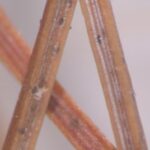
Early June, we received a white pine sample at the Purdue University Plant and Pest Diagnostic Lab that showed early season needle loss lower in the tree canopy (Figure 1, 2). The majority of conifers hold onto their needles for multiple years, so loss of needles, even in the fall, can come as a shock…Read more about Septorioides Needle Blight of Pine[Read More]
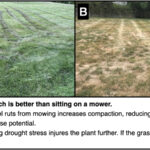
Bill Walton, the legendary basketball player, sports announcer and perhaps the most outspoken and famous Grateful Dead fan, passed away in May leaving behind enough quirky quotes and euphemisms to make Yogi Berra proud. In a now viral clip since his passing, Mr. Walton reflects on teachings from his legendary coach and former Purdue basketball…Read more about Don’t Mistake Activity for Achievement[Read More]
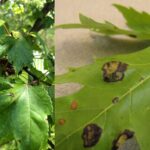
The past two months have been relatively wet and cool to warm. This prolonged period of overcast conditions, high humidity, and light to moderate rainfall is perfect for some of our foliar disease issues. “April flowers bring May Leaf spots” doesn’t have the right ring to it, but we are seeing quite a bit of…Read more about Leaf Curl and Leaf Blister Brought By Wet Weather[Read More]

Rocky Mountain juniper, Juniperus scopulorum, has gained some popularity in Midwest landscapes due to cold and drought tolerance, and to the availability of several upright columnar varieties with attractive blue color, including ‘Skyrocket’ and ‘Wichita Blue’. Like many other junipers, J. scopulorum may suffer dieback of small branches and twigs caused by the fungal pathogens…Read more about A Triple Threat to Rocky Mountain Juniper: Cytospora, Diplodia and Botryosphaeria[Read More]

Identifying a plant problem is the first step to improve the health of plants in the landscape. We created a series of short (5 to 7 min) YouTube videos to help you learn or just brush up your plant diagnostic skills. Each video guides you through the diagnostic process in real landscapes, reviews pest biology…Read more about Learn to Diagnose Plant Problems with Quick Guide YouTube Videos[Read More]
Sign-up to receive email news and alerts from Purdue Landscape Working Group:

This is US

For More Information

Purdue Home Page

Purdue Extension

Find your county office