Having a healthy tree canopy around your home and throughout your community is something that benefits all. Ask most elementary students what trees do for us, and they will almost always come up with answers like clean air and shade, but they do so much more for us. Trees not only provide oxygen, but they…Read more about International Society of Arboriculture Find an Arborist Tool Update For Both Tree Owners/Managers and ISA Certified Arborists[Read More]
Resources for landscapes and gardens in the Midwest
Landscape Report
trees
Hypoxylon canker is a common disease of mature hardwood trees both in landscapes and in natural wooded areas. The disease, caused by the wood decay fungus Biscogniauxia (formerly Hypoxylon), is most frequently observed in oak tree species, but can also cause dieback in pecan, hickory, golden rain tree, sycamore, maple, beech, birch, elm, willow, basswood,…Read more about Hypoxylon Canker of Hardwoods[Read More]
April showers bring May Flowers. Many of us were taught this little rhyme to describe the weather of Spring. April has arrived along with the beginning of the Spring storm season and damage to and from trees is a topic of concern on many minds. Depending on the intensity of the storms and the condition…Read more about Tips for Dealing with Storm-Damaged Trees[Read More]
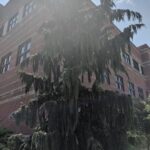
August was National Check Your Tree Month, but this is something that every tree owner/manager should be doing year-round. As the last hot days of summer are finishing up and we look forward to cooler fall days, we can look to our trees for different signs of trouble. Most people tend to look up at…Read more about Enjoy Your Trees While Checking Them[Read More]
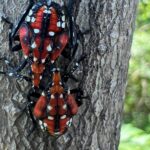
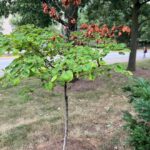
With recent rain storms across the state, watering may not be at the forefront of everyone’s minds. But as we head deeper into summer it is food to remember most of Indiana is in a state of abnormal dryness to moderate drought, continuing similar conditions from previous years. With that in mind, we should be…Read more about Summer Tree Care: Watering Your Trees[Read More]

Temperatures are finally dropping and leaves are changing color. Autumn is progressing well in my opinion. Before you know it winter will be here, and some people will be wondering is there anything to be done to better protect the trees around you? The answer is yes, and I applaud you for your initiative to…Read more about Autumn Tree Care: “What Can I Do?”[Read More]

Dead man’s fingers is an apt moniker for a gruesome-looking fungus (Xylaria polymorpha and related species) that produces club-shaped fungal fruiting bodies that appear as fingers growing around the base of dying or dead woody plants and even wooden objects in soil (Fig. 1). With more than 25 species of Xylaria, generalizations are difficult to…Read more about Dead Man’s Fingers[Read More]

Many trees are planted for their beautiful fall color, especially in locations where the climate provides reliable autumn weather. I have said this multiple times during extension talks and conversations with submitters to the PPDL, but I seem to have not experienced a ‘normal’ fall since moving to Indiana with how erratic the weather has…Read more about Early Fall Color – A Symptom of Stress[Read More]

The 2022 Indiana Arborist Association Annual Conference will be held in Indianapolis at the Indianapolis Marriott East, January 24-26th, 2023. The IAA and our partners will be offering a full 3-day program with educational opportunities and trade show for anyone involved in planning, planting or managing trees in the built environment. Speakers from all over the country…Read more about 2023 Indiana Arborist Association Annual Conference[Read More]

After you have decided on the best species and cultivar (right plant, right place!) for a location, it’s time to inspect the plants from the nursery or garden center. What should you be looking for when inspecting trees prior to transplanting into the landscape? Here are a few: Look for structural defects (Fig. 1). Ensure…Read more about Selecting High Quality Plants[Read More]


Let’s get this out of the way….Plants and their ecosystems are amazing. To survive in so many environments with abundant or minimal resources without capabilities to migrate, plants are one of the most amazing organisms on the planet. Though research is abundant in above ground plant systems, below ground ecology is starting to show the…Read more about Zombie Tree Needs Close Friends to Survive[Read More]

Biology: Purple deadnettle (Lamium purpureum) is a common winter annual broadleaf weed found throughout the US. It is closely related to another winter annual broadleaf, henbit (Lamium amplexicaule). Both have vibrant purple flowers that can been seen now in lawns, landscapes, and fields. To see more about henbit, refer to this article from last spring: https://purduelandscapereport.org///article/spotlight-on-weeds-henbit-lamium-amplexicaule/…Read more about Spotlight on Weeds: Purple deadnettle[Read More]
Sign-up to receive email news and alerts from Purdue Landscape Working Group:

This is US

For More Information

Purdue Home Page
Purdue Extension

Find your county office