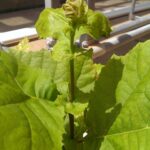
A recent conversation with a landscaper about tank mixing led to a brief discussion about glyphosate products with a contact herbicide included. I thought I would share my thoughts on the addition of contact herbicides and its effectiveness on weed control. We all know that we live in a microwave society. Most people want things…Read more about Does weed control improve with adding a contact herbicide to glyphosate?[Read More]
Resources for landscapes and gardens in the Midwest
Landscape Report
maintenance

Identifying a plant problem is the first step to improve the health of plants in the landscape. We created a series of short (5 to 7 min) YouTube videos to help you learn or just brush up your plant diagnostic skills. Each video guides you through the diagnostic process in real landscapes, reviews pest biology…Read more about Learn to Diagnose Plant Problems with Quick Guide YouTube Videos[Read More]

Identificar qué problema tiene la planta es el primer paso para mejorar la salud de las plantas en el jardín. Hemos creado una serie de videos cortos (5 a 7 minutos de duración) en YouTube. Esto lo hemos hecho para ayudarlo a aprender o simplemente mejorar sus habilidades de diagnóstico de plantas. Cada video te…Read more about Aprenda a Diagnosticar Problemas de las Plantas con Videos en YouTube[Read More]

I think white pines are beautiful trees, especially at maturity, and they have the added advantage that they are one of the few conifers that don’t try to kill you with their needles. Besides working with the foliage, have you ever had to “rescue” a child who climbed too high in a spike-infested deathtrap of…Read more about Declining Pines of the White Variety[Read More]

Many trees are planted for their beautiful fall color, especially in locations where the climate provides reliable autumn weather. I have said this multiple times during extension talks and conversations with submitters to the PPDL, but I seem to have not experienced a ‘normal’ fall since moving to Indiana with how erratic the weather has…Read more about Early Fall Color – A Symptom of Stress[Read More]

When transplanting trees, it is important to consider the long-term viability. Since the typical life span of an urban tree is 7-20 years (USDA), proper establishment techniques are very important to decrease this mortality rate. When a tree becomes established, it is much more difficult to correct below ground problems. Root deformations can occur for…Read more about Using Pneumatic Digging Equipment to Correct Root Deformations, Deep Planting, and Compaction on Established Trees[Read More]

Phytotoxicity is damage to plants caused by chemicals, fertilizers, or pesticides. Phytotoxicity can be a positive (killing weeds) or a negative (damage from pesticides on ornamental plants), depending on the intended results. Some of the common phytotoxic effects can show symptoms such as stunting of leaves and whole plant, necrosis (death), chlorosis (yellowing), abnormal growth…Read more about Diagnosing Phytotoxicity on Landscape Plants[Read More]

Diagnosing herbicide injury on ornamental plants can be difficult due to the sheer number of cultivated plants and the number of active ingredients used around ornamentals. Modern cultivars of ornamental plants include characteristics much different from the species, so it’s important to know ‘normal’ to properly diagnose a problem. There are several reasons that herbicide…Read more about Diagnosing Herbicide Injury on Ornamentals[Read More]

There are many age-old, philosophical questions that people have been arguing over for many years. What is the meaning of life? Nature or nurture? Do aliens exist? Should I remove the wire and burlap from B&B plant material? The last question has been debated for many years, with almost everyone having a different opinion. There…Read more about Wire Baskets: Leave them or remove them?[Read More]

After you have decided on the best species and cultivar (right plant, right place!) for a location, it’s time to inspect the plants from the nursery or garden center. What should you be looking for when inspecting trees prior to transplanting into the landscape? Here are a few: Look for structural defects (Fig. 1). Ensure…Read more about Selecting High Quality Plants[Read More]

That “chill-out” time for our landscape is nearing the end and it’s time to think about tree maintenance. An important maintenance task is supplemental fertilization during early spring weather, especially if there wasn’t any type of fall fertilization. Let’s take a look at how a tree uses and gains energy during the year to understand why and when trees need nutrition.
Sign-up to receive email news and alerts from Purdue Landscape Working Group:

This is US

For More Information

Purdue Home Page

Purdue Extension

Find your county office