In the last newsletter, an article on triclopyr (www.purduelandscapereport.org/article/the-summer-of-triclopyr-mounting-evidence-for-off-target-damage/) brought up much discussion on the Roundup brands now containing multiple active ingredients other than glyphosate. Professionals in the industry may encounter a client with herbicide damage symptoms that mimic growth-regulator injury instead of typical glyphosate damage symptoms. While the client may have used Roundup, they…Read more about When Roundup Isn’t Roundup: Clearing up the confusion between products[Read More]
Resources for landscapes and gardens in the Midwest
Landscape Report
Integrated pest management
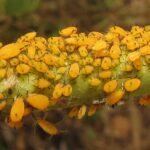
Milkweed is a popular choice in urban landscapes as more citizens engage with monarch conservation efforts and strive to maintain pollinator-friendly landscapes. This past month I have seen numerous images of aphids found on milkweed plants from all over the state. Homeowners are concerned that the infestation will negatively affect the monarch butterflies that rely…Read more about What are these small yellow bugs on my milkweed?[Read More]
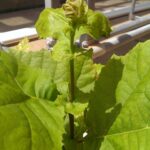
A recent conversation with a landscaper about tank mixing led to a brief discussion about glyphosate products with a contact herbicide included. I thought I would share my thoughts on the addition of contact herbicides and its effectiveness on weed control. We all know that we live in a microwave society. Most people want things…Read more about Does weed control improve with adding a contact herbicide to glyphosate?[Read More]

Identifying a plant problem is the first step to improve the health of plants in the landscape. We created a series of short (5 to 7 min) YouTube videos to help you learn or just brush up your plant diagnostic skills. Each video guides you through the diagnostic process in real landscapes, reviews pest biology…Read more about Learn to Diagnose Plant Problems with Quick Guide YouTube Videos[Read More]

Identificar qué problema tiene la planta es el primer paso para mejorar la salud de las plantas en el jardín. Hemos creado una serie de videos cortos (5 a 7 minutos de duración) en YouTube. Esto lo hemos hecho para ayudarlo a aprender o simplemente mejorar sus habilidades de diagnóstico de plantas. Cada video te…Read more about Aprenda a Diagnosticar Problemas de las Plantas con Videos en YouTube[Read More]

Gardeners are bombarded with sayings like save the stems, leave the leaves, and no mow May. These sayings are rooted in the same goal of protecting pollinators, but often leave gardeners with more questions. Let’s dig into each of the sayings. Save the stems: The first question that often arises from this saying is: “When…Read more about So, the saying goes… Save the Stems, Leave the Leaves, and No Mow May[Read More]

Hydrangea L. (family Hydrangeaceae Dumort) is an all-encompassing description of a group of herbaceous and woody flowering plants, composed of more than 80 species native to Asia (including Japan), Indonesia, the Americas. Popular hydrangea species include the bigleaf hydrangea (Hydrangea macrophylla), also known as French hydrangea, panicled (peegee) hydrangea (H. paniculata), oak-leaf hydrangea (H. quercifolia) and mountain hydrangea (H. serrata). Hydrangea…Read more about Viruses of Hydrangea[Read More]

Blight, Leafminers, and Moths: The Plight of Boxwoods Boxwoods (Buxus spp.) were introduced into the United States during colonial times, and still today they are one of the most popular evergreen shrubs used in landscapes. They are frequently selected for hedges and topiaries because they are easily trimmed into geometric shapes. They were also easy…Read more about Blight, Leafminers, and Moths: The Plight of Boxwoods[Read More]

Mites are eight-legged arthropods who pierce plant cells to feed on them. Plants that are attacked by mites lose their green color and appear somewhat bronzed. Spider mites will make webs to help them forage on leaves unencumbered by irregular leaf surfaces. The accumulation of webs, and old skins of mites can give heavily infested…Read more about Tune up Your Spider Mite Management This Fall[Read More]

A new invasive insect of concern has been identified in the state of Georgia. In August of 2023, Georgia’s Department of Agriculture, along with the USDA, confirmed the presence of the yellow-legged hornet, Vespa velutina, outside of the city of Savannah. To date, this is the only confirmed identification of this insect in the United…Read more about New Invasive Predator of Honeybees[Read More]

Trees stressed by prolonged drought are more subject to attack by boring insects. This article provides tips and a video link on how to manage pines for borers. Record breaking heat and sporadic rainfall during July of 2023 took their toll on landscape trees. Cone bearing evergreens, like white pines, are especially susceptible to drought…Read more about Beat Back Borers Attacking Pines and other Cone Bearing Trees[Read More]

Phytotoxicity is damage to plants caused by chemicals, fertilizers, or pesticides. Phytotoxicity can be a positive (killing weeds) or a negative (damage from pesticides on ornamental plants), depending on the intended results. Some of the common phytotoxic effects can show symptoms such as stunting of leaves and whole plant, necrosis (death), chlorosis (yellowing), abnormal growth…Read more about Diagnosing Phytotoxicity on Landscape Plants[Read More]

Biology: Ground ivy (Glechoma hederacea), also known as creeping Charlie, is a very difficult to control perennial broadleaf weed. It can often be seen growing in the shade and invading turfgrass and landscapes throughout the United States. Ground ivy thrives in moist, rich soils located in shaded areas, but will grow in full sun as well….Read more about Spotlight on Weeds: Ground Ivy/Creeping Charlie (Glechoma hederacea)[Read More]

Sign-up to receive email news and alerts from Purdue Landscape Working Group:

This is US

For More Information

Purdue Home Page

Purdue Extension

Find your county office