
Do your landscape plants have cankers, mosaics, galls, mummies, or witches’ brooms? These and other symptoms are often difficult for the average homeowner to understand, let alone visualize. Purdue Extension staff can often assist with diagnosing plant diseases. Additionally, Purdue Extension specialists Janna Beckerman (retired) and Tom Creswell authored the publication, “Symptoms and Signs for…Read more about Plant Disease Symptoms You Could Notice in Your Home Landscape[Read More]
Resources for landscapes and gardens in the Midwest
Landscape Report
Abiotic Damage

Cherry, plum, almond, peach and cherry laurel all get a common issue called shot hole leaf spot. At first, a chlorotic or necrotic spot develops on the foliage (Figure 1). When a tree has severe symptoms, the leaves may drop prematurely from the tree. If the leaves remain on the tree, the leaves produce a…Read more about Shot hole leaf spot of Prunus.[Read More]
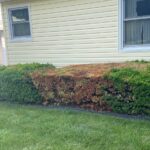
Yews are widely used as foundation plantings in many areas and are valued for their dark, evergreen foliage. The most widely used landscape yews are Japanese yew (Taxus cuspidata) and Taxus x media hybrids, such as Hicksii or Wardii Yew. While few diseases and insects attack yew, there are a few problems to watch for….Read more about What’s Killing My Yews? Top Problems and How to Prevent Them[Read More]
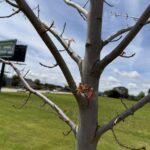
Diagnosing abiotic (non-living) problems in plants can be challenging due to the many interacting factors and varying levels of plant tolerance. In many cases, reviewing the recent weather history of a given area provides valuable insight into the possible causes of observed symptoms. Over the past few weeks, several samples submitted to the Purdue Plant…Read more about Delayed and Sporadic Budbreak in 2025: Could Spring Weather Be to Blame?[Read More]

In the last newsletter, an article on triclopyr (www.purduelandscapereport.org/article/the-summer-of-triclopyr-mounting-evidence-for-off-target-damage/) brought up much discussion on the Roundup brands now containing multiple active ingredients other than glyphosate. Professionals in the industry may encounter a client with herbicide damage symptoms that mimic growth-regulator injury instead of typical glyphosate damage symptoms. While the client may have used Roundup, they…Read more about When Roundup Isn’t Roundup: Clearing up the confusion between products[Read More]
Bill Walton, the legendary basketball player, sports announcer and perhaps the most outspoken and famous Grateful Dead fan, passed away in May leaving behind enough quirky quotes and euphemisms to make Yogi Berra proud. In a now viral clip since his passing, Mr. Walton reflects on teachings from his legendary coach and former Purdue basketball…Read more about Don’t Mistake Activity for Achievement[Read More]
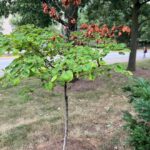
With recent rain storms across the state, watering may not be at the forefront of everyone’s minds. But as we head deeper into summer it is food to remember most of Indiana is in a state of abnormal dryness to moderate drought, continuing similar conditions from previous years. With that in mind, we should be…Read more about Summer Tree Care: Watering Your Trees[Read More]
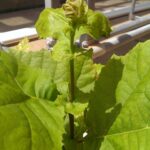
A recent conversation with a landscaper about tank mixing led to a brief discussion about glyphosate products with a contact herbicide included. I thought I would share my thoughts on the addition of contact herbicides and its effectiveness on weed control. We all know that we live in a microwave society. Most people want things…Read more about Does weed control improve with adding a contact herbicide to glyphosate?[Read More]

The 2023 Purdue Turf and Landscape Seminar will be held on November 16th and 17th at the W.H. Daniel Turfgrass Research and Diagnostic Center in West Lafayette, IN. This event is designed for intermediate and advanced turf and landscape professionals, providing them with the latest technology for managing turf and landscape systems, and to maintain…Read more about Purdue Turf and Landscape Seminar Announced[Read More]

Many areas around the Midwest continue to creep towards an increasing drought situation (Fig. 1). Currently almost 80% of the Midwest is listed as being abnormally dry to exceptional drought (Fig. 2). Current soil moisture data indicates that most of the Midwest is very dry (Fig. 3). Going into the fall it’s very important…Read more about Drought Spreading Throughout Much of the Midwest[Read More]

Many trees are planted for their beautiful fall color, especially in locations where the climate provides reliable autumn weather. I have said this multiple times during extension talks and conversations with submitters to the PPDL, but I seem to have not experienced a ‘normal’ fall since moving to Indiana with how erratic the weather has…Read more about Early Fall Color – A Symptom of Stress[Read More]

Stop me if you’ve heard this one…. A tree is in a slow decline year after year. You are called to your client’s property only to find the root flare well below grade. Most professionals in the Green Industry have encountered this at some point in their career. The most common reason for the slow…Read more about Another Case of Mortality from Planting Trees Too Deep[Read More]

Remember the pre-Christmas freeze? What about the extremely long fall? The Midwest experienced above-average temperatures through most of the winter, but those extremely cold temps in late December made for more than a few pipes to freeze in the southern part of the Midwest. The dichotomy in weather patterns over the last several years has…Read more about Cold Injury During a Very Mild Winter?[Read More]

Recently, home lawns have been maligned in several media outlets as a waste of time and resources. Mismanagement by using too much water or misplacing fertilizer may compound the issue by straining environmental resources or serving as pollutants. While not going into all the defenses for turfgrass use on home lawns, (remember “right plant, right…Read more about Look Below Before Blaming Above[Read More]

When transplanting trees, it is important to consider the long-term viability. Since the typical life span of an urban tree is 7-20 years (USDA), proper establishment techniques are very important to decrease this mortality rate. When a tree becomes established, it is much more difficult to correct below ground problems. Root deformations can occur for…Read more about Using Pneumatic Digging Equipment to Correct Root Deformations, Deep Planting, and Compaction on Established Trees[Read More]

While recent temperatures have been moderate in many parts of the state, rainfall has been lacking. (See The Annual Drought Article). There are chasms in the clay of my backyard that will swallow my kids and dogs whole. While I am not truly worried about the safety of my smaller family members, a lot of…Read more about What is happening to the Weeping Willows?[Read More]

About ten years ago I was listening to a talk by a climatologist. She indicated that data is trending towards more floods and more droughts in the Midwest. At first listen this made absolutely no sense. How can a place simultaneously have more flooding and more drought? Well, if you’ve paid attention over the last…Read more about The Annual Drought Article[Read More]

Join us at the Purdue Turf and Landscape Field Day on July 26th! The Purdue Turf and Landscape Field Day is an annual one-day event with the objective of providing professional turf and landscape managers exposure and educational opportunities with the latest research and technical resources. The Field Day features research tours, talks on current…Read more about Purdue Turf and Landscape Field Day[Read More]

When we see round holes in the bark of a tree we often think the cause might be due to wood boring insects or bark beetles. However, that is not always the case. Small holes arranged in neat, uniform rows and columns on the trunks of trees or woody shrubs are usually caused by sapsuckers,…Read more about Rows and Rows of Holes[Read More]

Depending on where you are located in the Midwest, rainfall in 2021 has either been too much or too little. This trend was forecasted several years ago by climatologists, in that more droughts and more floods are projected as the ramifications of climate change take shape in the future. Though this statement doesn’t make logical…Read more about Is it time for drought-proof plants in the Midwest?[Read More]
Sign-up to receive email news and alerts from Purdue Landscape Working Group:

This is US

For More Information

Purdue Home Page

Purdue Extension

Find your county office