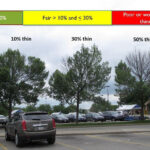
Recently, there has been an uptick in questions related to one of Indiana’s most notorious invasive pests: the emerald ash borer. Homeowners, businesses, even professionals have asked if ash trees are still present in Indiana, and if the insect is still a threat to our ecosystem. Emerald ash borer wreaked significant havoc among Indiana’s hardwoods,…Read more about Revisiting Ash Tree Protection[Read More]
Resources for landscapes and gardens in the Midwest
Landscape Report
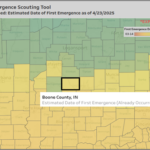
Midwestern farmers have faced a buildup of pesticide resistance in pigweeds (waterhemp and Palmer amaranth), highlighting the importance of scouting to detect weeds early in their growth stages. Otherwise, weed escapes are a common issue as herbicides lose their efficacy when weeds are allowed to grow long enough into their growth cycle. The Midwestern Regional…Read more about Midwestern Regional Climate Center Launches New Experimental Weed Emergence Scouting Tool[Read More]
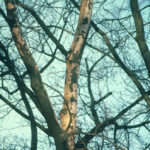
Hypoxylon canker is a common disease of mature hardwood trees both in landscapes and in natural wooded areas. The disease, caused by the wood decay fungus Biscogniauxia (formerly Hypoxylon), is most frequently observed in oak tree species, but can also cause dieback in pecan, hickory, golden rain tree, sycamore, maple, beech, birch, elm, willow, basswood,…Read more about Hypoxylon Canker of Hardwoods[Read More]
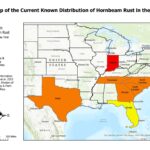
During a nursery inspection in Owen County in 2024, I noticed an unusual yellowing of the leaves on some American Hornbeam (Carpinus caroliniana) trees (Fig 1). A look at the underside of the leaves revealed yellow-orange pustules, suggesting a rust fungus. After help from the Purdue Plant & Pest Diagnostic Lab, this fungal pathogen was…Read more about Hornbeam Rust: An emerging rust disease in the US[Read More]

It is the policy of the Purdue University that all persons have equal opportunity and access to its educational programs, services, activities, and facilities without regard to race, religion, color, sex, age, national origin or ancestry, marital status, parental status, sexual orientation, disability or status as a veteran. Purdue is an Affirmative Action Institution. This material may be available in alternative formats. 1-888-EXT-INFO Disclaimer: Reference to products in this publication is not intended to be an endorsement to the exclusion of others which may have similar uses. Any person using products listed in this publication assumes full responsibility for their use in accordance with current directions of the manufacturer.
Sign-up to receive email news and alerts from Purdue Landscape Working Group:

This is US

For More Information

Purdue Home Page

Purdue Extension

Find your county office