Emerald Ash Borer Awareness week is taking place this year from May 17th to the 23rd, so it’s a great time to revisit one of Indiana’s most notorious invasive pests. One can walk through state parks and natural areas to find skeletal ash tree husks standing testament to emerald ash borer’s impact on the Hoosier landscape. Many communities still have small, active infestations in their few remaining ash tree stands, committing a significant amount of investment to keep those stands alive. While the populations of emerald ash borer are now smaller due to a lack of host plants, reviewing this insect’s biology and ecology is always a good idea to keep up with identification and management.
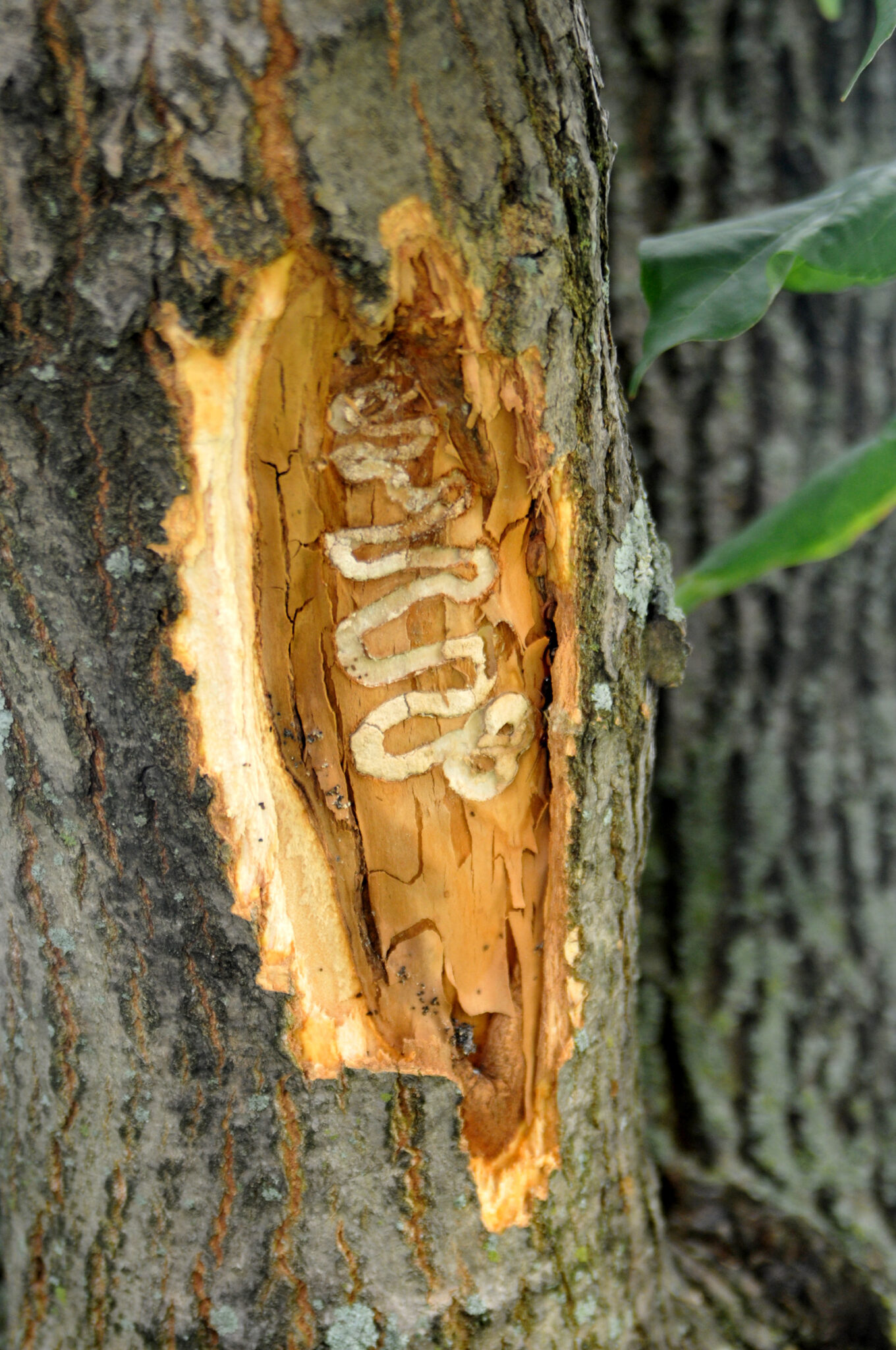
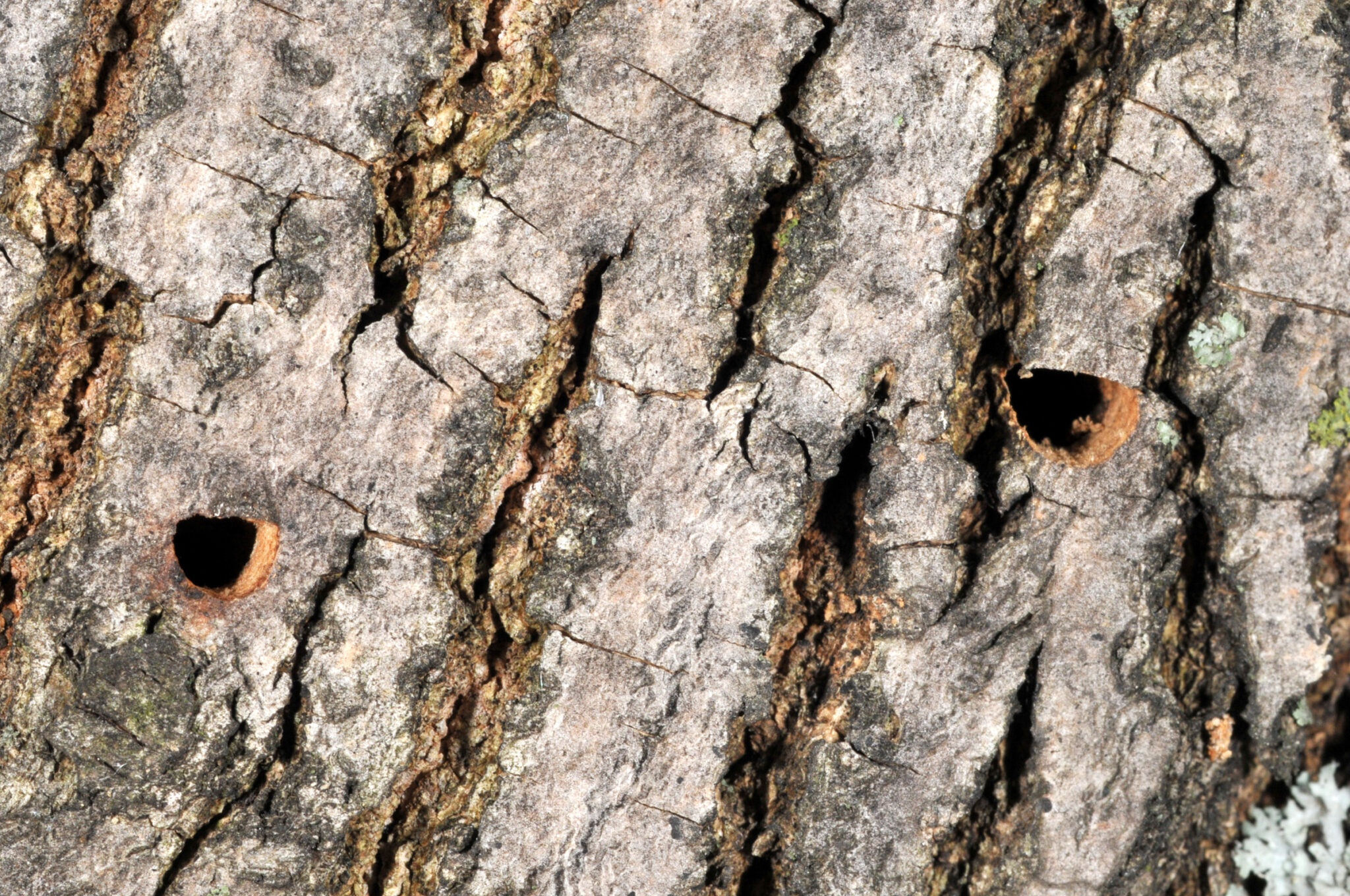
The emerald ash borer (Agrilus planipennis), a wood-boring insect native to Asia, is responsible for decimating ash (Fraxinus spp.) throughout the United States and elsewhere. Ash trees are not only food, but also where the insect will complete the entirety of its life cycle. Starting in the early summer, adult insects lay eggs in crevices in the bark of an ash, and after hatching in two weeks, the new larvae begin to bore through the tree’s cambium tissue. This tissue is responsible for transporting water and nutrients throughout the tree, giving the larvae ready access to everything it needs to develop. Unlike many other wood-boring insects, emerald ash borer will only be found just under the bark of the tree and do not bore through any other parts. As the insect feeds, it will create tell-tale S-shaped galleries under the bark. After feed for 1 to 2 years, larval ash borers will also create a pupation chamber for the transition to their adult form in the winter months. From late May through September, adult emerald ash borer will emerge from D-shaped exit holes in the bark, completing their life cycle.
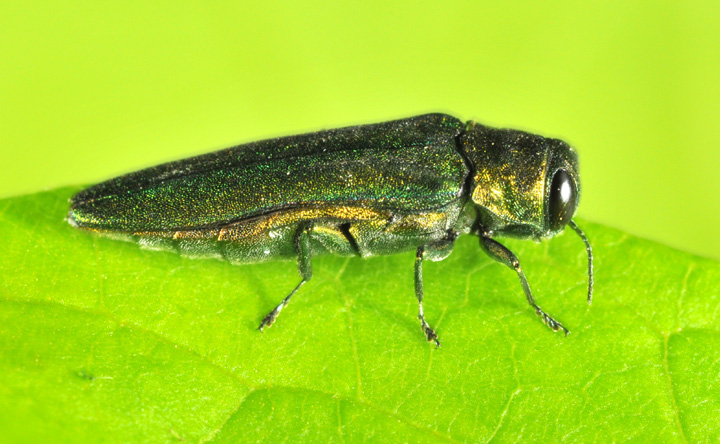
Most people will only know this insect is present by the damage done to their trees: loss of canopy, D-shaped exit holes, limb loss, and bark detachment. However, adults can be readily observed in infested areas. Emerald ash borer is well-named, having an iridescent surface that glitters green like its namesake stone. The insects are small, only ½ inch in length, and are very slender. As with other species of beetles, their forewings have hardened into armor-like plates called elytra, but they are capable of flight. As adults, emerald ash borers consume the leaves of ash trees, but do not severely damage the tree like their larvae. Adults will live for three to six weeks and do not overwinter.
The eggs, larvae, and pupae of emerald ash borer are much more cryptic than the adults. Eggs are extremely small with a 1 mm diameter and are typically laid in or near crevices in the bark to give newly-hatched larvae easy access to the tissue they need to feed. When viewed under a microscope or hand lens, the eggs are circular, almost flat in appearance, and have a coppery color. The larvae that hatch from those eggs are cream-colored with bell-shaped segments and a bulbous head with darker mandibles. The larvae can grow up to 1.5 inches in length. The larvae will eventually develop into a naked pupa. The pupa is not contained in any kind of cocoon and will display adult features as they develop.
The most important part of emerald ash borer monitoring and identification is to simply observe the health of ash trees. While Indiana’s ash populations are significantly reduced, small stands of ash can still be found wild, and many landowners have planted ash trees ornamentally. If an ash tree shows signs of flagging, it’s a safe assumption that an infestation has taken hold. Canopy coverage can give you a good idea of the severity of an infestation; any tree that has lost 30% or more of its canopy is most likely severely infested and cannot be saved. However, trees that have lost only 10% of their canopy are only light infested and can be rescued with treatment. Other signs of infestation include limb loss and bark detachment. Emerald ash borer feeding can kill tree limbs, and those limbs will not regenerate and need to be removed for safety. Feeding by this insect can render a tree very brittle, so any infested tree should be closely monitored to protect property and general safety. If bark detachment is occurring, a tree is severely infested and most likely needs to be cut down.
Emerald ash borer is most likely a permanent part of Indiana’s ecosystem, but research is ongoing into finding resistant ash tree varieties and pest management options. By continuing to monitor and protecting those trees that can be saved, we can help the development of new ash populations and hopefully find a balance between this insect pest and the survival of our trees.
-
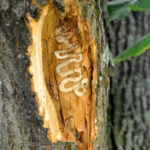
- S-shaped galleries, photo credit, John Obermeyer
-

- Side view of EAB, photo credit, John Obermeyer
-
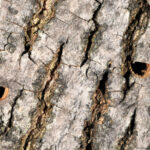
- Exit holes, photo credit John Obermeyer
Resources
Purdue Plant & Pest Diagnostic Laboratory:
https://ag.purdue.edu/department/btny/ppdl/
Purdue Entomology’s Emerald Ash Borer Info Page:
https://extension.entm.purdue.edu/EAB/
ReportINvasive:
https://ag.purdue.edu/reportinvasive/
Emerald Ash Borer University:
Emeraldashborer.info