Fall is one of my favorite times of year. The temperatures begin to cool, the humidity drops, and the landscape starts its annual transformation as trees trade their summer greens for shades of yellow, orange, and red. For those of us who enjoy spending time outdoors, it can also be one of the most pleasant times of year to work in the landscape.
As fall approaches, one question I frequently hear is: “Is fall a good time to plant a tree?”
The answer is yes!
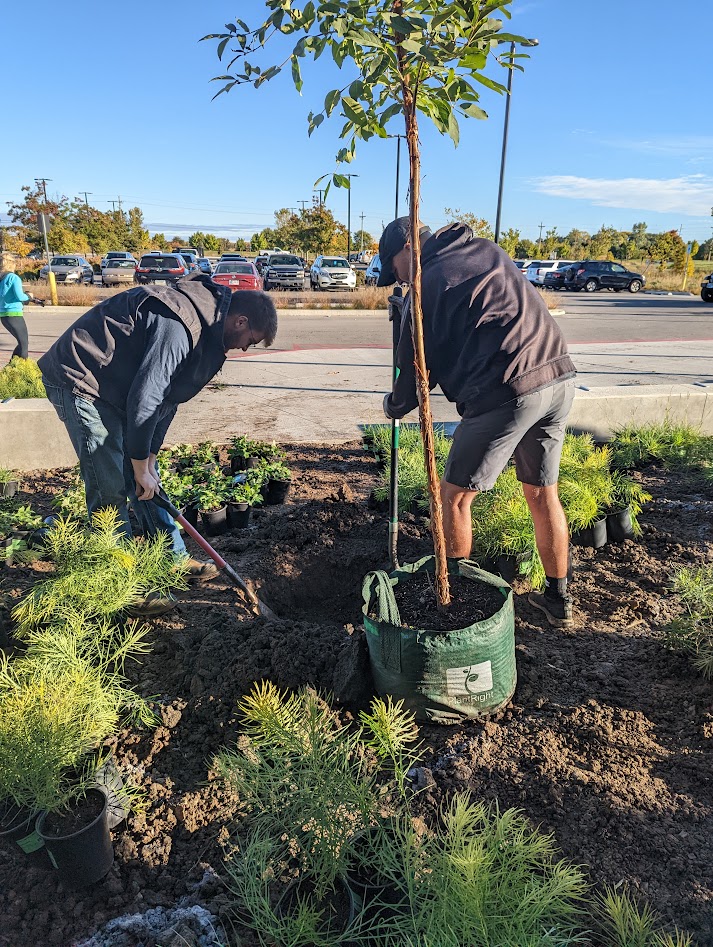
In fact, fall can be an excellent time to add a new tree to your landscape. Cooler temperatures and decreased drought stress can make the transition from nursery to landscape less stressful for newly planted trees. As long as you select an appropriate tree, plant it correctly, and provide proper care after planting, a fall planting can give a tree an excellent start.
Why plant trees in the fall?
One of the biggest advantages of fall planting is the weather. Compared with the heat of summer, cooler fall temperatures reduce heat stress and typically lower evapotranspiration—the amount of water lost from plants and soil to the atmosphere.
Fall also shifts the tree’s priorities. Rather than putting most of its energy into producing new shoots and leaves, a deciduous tree is preparing for dormancy and continuing to develop its root system. Planting during this period can allow roots to become established before the tree has to deal with the heat and water demands of the following summer.
Of course, cooler temperatures and fall rainfall do not eliminate the need to water a newly planted tree. Newly installed trees still require regular attention while their root systems become established.
What should I consider when planting in the fall?
There are a few important considerations to keep in mind.
Water is still important. If rainfall isn’t providing approximately 1 inch of water per week, newly planted trees will need supplemental irrigation. A useful general guideline is approximately 5 gallons of water per week for every inch of trunk diameter, although actual watering needs will vary depending on soil, weather, tree size, and site conditions. Rather than relying solely on a calendar, check the soil and adjust watering based on conditions.
Don’t forget to mulch. Apply a layer of organic mulch over the root zone to help conserve soil moisture and moderate soil temperatures. Keep mulch away from direct contact with the trunk—avoid creating the familiar “mulch volcano” around the base of the tree.
Give the tree time to establish. Ideally, trees should be planted early enough in the fall to allow their roots to become established before the ground freezes. A common recommendation is to allow approximately six weeks between planting and the first hard freeze.
Choose the right tree for the site. Fall is a good planting season, but it doesn’t make a poorly matched tree a good choice. Consider the mature size of the tree, available growing space, soil conditions, sunlight, drainage, and other site characteristics before making your selection.
Think about winter protection. Some trees, particularly broadleaf evergreens, may be more susceptible to winter injury because they continue to lose moisture through their leaves when the ground is frozen and roots cannot readily replace that water. Newly planted trees may also benefit from protection against trunk damage from wildlife or winter sun exposure, depending on the species and site.
Give your tree a good start
Planting a tree is a long-term investment. The work you put into selecting, planting, watering, and caring for a tree during its first few years can have a significant impact on its future health and structure.
So, if you’ve been waiting for cooler weather to add a tree to your landscape, fall can be a great time to get planting. Choose the right tree for the right place, plant it properly, and don’t forget about it once the leaves have fallen.
If you have questions about selecting, planting, or caring for a tree, contact your local Extension office or consult an ISA Certified Arborist for site-specific advice. You can find an ISA Certified Arborist through Find an Arborist.