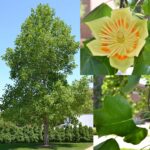
Spring is just around the corner, green spaces are beginning to wake from their winter slumber, Earth Day and Arbor Day are a little over a month away, and people are ready to get outside with planting on their minds. But before you go and get your tree(s) for planting, there is quite a lot…Read more about Urban Tree Spotlight – Planting Deciduous Shade Trees[Read More]
Resources for landscapes and gardens in the Midwest
Landscape Report
tulip poplar
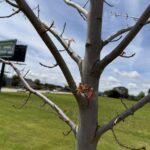
Diagnosing abiotic (non-living) problems in plants can be challenging due to the many interacting factors and varying levels of plant tolerance. In many cases, reviewing the recent weather history of a given area provides valuable insight into the possible causes of observed symptoms. Over the past few weeks, several samples submitted to the Purdue Plant…Read more about Delayed and Sporadic Budbreak in 2025: Could Spring Weather Be to Blame?[Read More]
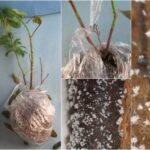
Plants that show little growth, are stunted, or are wilted and in active decline are all hallmarks of root stress. Some of the more prominent pathogens that cause root rot include Fusarium, Phytophthora, Pythium, and Rhizoctonia, but there is another fungus which can cause just as much damage in the right situation that does not…Read more about Cylindrocladium Root Rot[Read More]
Sign-up to receive email news and alerts from Purdue Landscape Working Group:

This is US

For More Information

Purdue Home Page

Purdue Extension

Find your county office