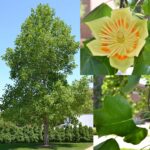
Spring is just around the corner, green spaces are beginning to wake from their winter slumber, Earth Day and Arbor Day are a little over a month away, and people are ready to get outside with planting on their minds. But before you go and get your tree(s) for planting, there is quite a lot…Read more about Urban Tree Spotlight – Planting Deciduous Shade Trees[Read More]
Resources for landscapes and gardens in the Midwest
Landscape Report
oak
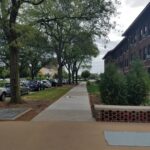
An unfortunate question I am sometimes asked is similar to this: “I lost my prized shade tree! What can I plant that will grow fast and give me shade?” While there is no instant fix to this scenario, let’s review a few trees that might be better choices here in northern Indiana. One obstacle to…Read more about Fast-Growing Trees for the Landscape[Read More]
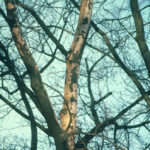
Hypoxylon canker is a common disease of mature hardwood trees both in landscapes and in natural wooded areas. The disease, caused by the wood decay fungus Biscogniauxia (formerly Hypoxylon), is most frequently observed in oak tree species, but can also cause dieback in pecan, hickory, golden rain tree, sycamore, maple, beech, birch, elm, willow, basswood,…Read more about Hypoxylon Canker of Hardwoods[Read More]
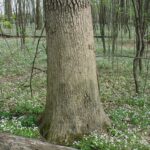
These oak trees are showing the symptoms of smooth patch (Figures 1, 2, 3). This condition is the result of a fungal infection that is restricted to the outer bark, causing it to slough off. The bark layer remaining is smoother and lighter in color than uninfected, normal bark. Patches can vary from a few…Read more about Smooth Patch of Oak[Read More]
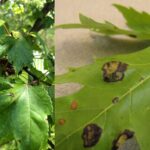
The past two months have been relatively wet and cool to warm. This prolonged period of overcast conditions, high humidity, and light to moderate rainfall is perfect for some of our foliar disease issues. “April flowers bring May Leaf spots” doesn’t have the right ring to it, but we are seeing quite a bit of…Read more about Leaf Curl and Leaf Blister Brought By Wet Weather[Read More]

Inonotus dryadeus is one of the more common wood decay fungi we receive at the diagnostic lab in association with declining trees, specifically oaks. Inonotus is found so frequently on oaks it has the common name oak bracket fungus, but it can cause root rot of a number of other hardwood trees (including maples, sweet…Read more about Inonotus Dryadeus – butt and root rot of oaks[Read More]
Sign-up to receive email news and alerts from Purdue Landscape Working Group:

This is US

For More Information

Purdue Home Page

Purdue Extension

Find your county office