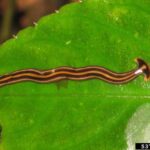
When talking about invasive species, specialists are most commonly talking about some kind of plant or insect that is making an impact on landscape plants, soil, or hardwood. Most of these species are relatively easy to understand, with a biology that typically resembles that of a native counterpart. Wood-boring insects, vining plants, and fast-growing shrubs…Read more about Keep an eye out for hammerhead worms![Read More]
Resources for landscapes and gardens in the Midwest
Landscape Report
insect
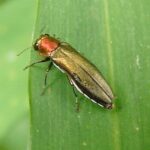
We are often the bearers of bad news when a new exotic insect species is discovered in Indiana. This time, however, we have some good news to share. Agrilus smaragdifrons, a beetle that feeds exclusively on Tree-of-Heaven (Ailanthus altissima), was detected in Indiana last year in Allen County. You might notice that this beetle belongs…Read more about Beetle that attacks Tree-of-Heaven found in Indiana[Read More]
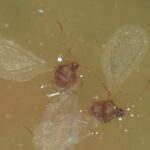
Christmas tree growers have been struggling with an invasive scale pest called Cryptomeria scale (Aspidiotus cryptomeriae), which is a serious pest of conifers. The scales infest the undersides of the needles and extract plant juices with their piercing-sucking mouthparts. Economic losses are due to the unsightly yellow discoloration and needle drop that occurs from the…Read more about Cryptomeria scale on Christmas trees[Read More]
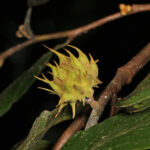
Aphids are some of the most common insect pests of herbaceous plants and broadleaf trees and shrubs. I have to admit, I do not always enjoy identifying aphids – but I find their shapes, colors, and biology fascinating. One species of aphid, which I first met myself this year, threatens plants in our landscapes on…Read more about This aphid is a double threat to the landscape[Read More]

Purple coneflower, Echinacea purpurea, is an old native standby that can thrive even in some difficult landscapes. With beautiful purple flowers and the ability to reseed and fill an area, it has been used widely, especially in gardens comprised primarily of native plants; however, they are not without their problems. We sometimes see some fungal…Read more about When purple coneflowers are not purple: Aster Yellows and Eriophyid mites[Read More]
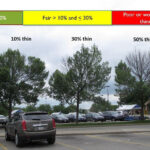
Recently, there has been an uptick in questions related to one of Indiana’s most notorious invasive pests: the emerald ash borer. Homeowners, businesses, even professionals have asked if ash trees are still present in Indiana, and if the insect is still a threat to our ecosystem. Emerald ash borer wreaked significant havoc among Indiana’s hardwoods,…Read more about Revisiting Ash Tree Protection[Read More]
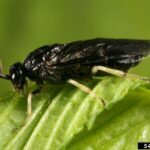
The elm zigzag sawfly (EZS), Aproceros leucopoda, is a non-native insect recently detected in several midwestern states. Originally from eastern Asia, this insect is rarely considered a problem in its native range, having several natural enemies and environmental factors able to keep it in check. However, when in new landscapes, aspects of this insect’s life…Read more about A New Threat to Elms in North America[Read More]
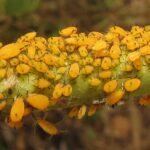
Milkweed is a popular choice in urban landscapes as more citizens engage with monarch conservation efforts and strive to maintain pollinator-friendly landscapes. This past month I have seen numerous images of aphids found on milkweed plants from all over the state. Homeowners are concerned that the infestation will negatively affect the monarch butterflies that rely…Read more about What are these small yellow bugs on my milkweed?[Read More]
Sign-up to receive email news and alerts from Purdue Landscape Working Group:

This is US

For More Information

Purdue Home Page

Purdue Extension

Find your county office