Resources for landscapes and gardens in the Midwest
Search Results: invasive

As we step into a new year, the Purdue Landscape Report team is excited to welcome you to the first newsletter of 2026. Whether you are a long-time reader, a landscape professional, an arborist, a nursery grower, or a homeowner invested in the health and beauty of your landscape, we’re…Read more about Welcome to the 2026 Purdue Landscape Report[Read More]

The 2026 Indiana Green Expo (IGE), held February 9–11 at the Indiana Convention Center, marked another highly successful year for one of the Midwest’s leading educational and networking events for turfgrass, landscape, nursery, and green industry professionals. The Expo drew 1,412 attendees and hosted 113 exhibiting companies, reinforcing its role…Read more about 2026 Indiana Green Expo Delivers Strong Educational Impact, Industry Engagement, and Measurable Value[Read More]
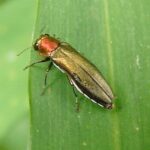
We are often the bearers of bad news when a new exotic insect species is discovered in Indiana. This time, however, we have some good news to share. Agrilus smaragdifrons, a beetle that feeds exclusively on Tree-of-Heaven (Ailanthus altissima), was detected in Indiana last year in Allen County. You might…Read more about Beetle that attacks Tree-of-Heaven found in Indiana[Read More]
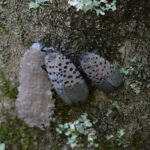
As emerald ash borer reached its highest populations throughout the landscape in Indiana, Purdue University, partnered with other organizations, helped to spread several messages intended to engage the public in helping limit the movement of the insect. Readers may recall one such message in the form of bumper stickers with…Read more about October is Firewood Awareness Month![Read More]
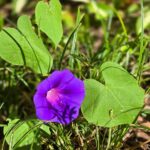
Untangling the Vines: Identifying Bindweed, Morning Glory, and Honeyvine Milkweed Few garden problems cause as much frustration as untangling vines. Sometimes the vines are beautiful climbers planted with intention. Other times, they creep in uninvited and smother everything in their path. Among the most common, and the most confusing, vines…Read more about Untangling the Vines: Identifying Bindweed, Morning Glory, and Honeyvine Milkweed[Read More]
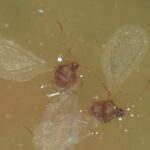
Christmas tree growers have been struggling with an invasive scale pest called Cryptomeria scale (Aspidiotus cryptomeriae), which is a serious pest of conifers. The scales infest the undersides of the needles and extract plant juices with their piercing-sucking mouthparts. Economic losses are due to the unsightly yellow discoloration and needle…Read more about Cryptomeria scale on Christmas trees[Read More]
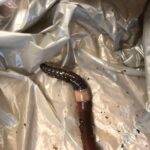
It’s that time again! With the arrival of warm temperatures and increased rainfall, many of us are getting to work on our lawns, gardens, and landscaping. Unfortunately, this often comes with discovering what new (or old) invasive species are here to haunt us. So far this year, the invasive I’ve…Read more about Asian Jumping Worms: How to ID this soil pest[Read More]
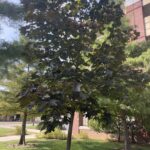
These three maples have somewhat similar-looking leaves. On the surface, you may think this is simply an academic exercise. But if you care about invasive plants and local ecology, this distinction is an important one. Norway maple is an invasive tree species, while sugar and black maples are native tree…Read more about Distinguishing Between Norway, Sugar, and Black Maples[Read More]
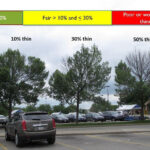
Recently, there has been an uptick in questions related to one of Indiana’s most notorious invasive pests: the emerald ash borer. Homeowners, businesses, even professionals have asked if ash trees are still present in Indiana, and if the insect is still a threat to our ecosystem. Emerald ash borer wreaked…Read more about Revisiting Ash Tree Protection[Read More]
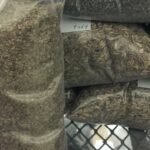
Some of you may recall news in 2020 about unsolicited seeds being sent in the mail from overseas (https://www.purdue.edu/newsroom/archive/releases/2020/Q3/unsolicited-seeds-could-wreak-havoc-on-agriculture,-environment,-state-officials-warn.html). There have now been recent reports of this happening again. Ric Bessin, Entomology Extension Specialist, and Joe Collins, Deputy State Entomologist, from the University of Kentucky, wrote about reports of…Read more about More Reports of People Receiving Unsolicited Seeds[Read More]
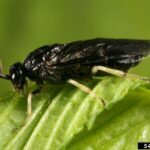
The elm zigzag sawfly (EZS), Aproceros leucopoda, is a non-native insect recently detected in several midwestern states. Originally from eastern Asia, this insect is rarely considered a problem in its native range, having several natural enemies and environmental factors able to keep it in check. However, when in new landscapes,…Read more about A New Threat to Elms in North America[Read More]
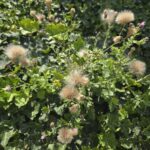
As summer comes to a close, plants are rapidly releasing seeds and the most noticeable are the flying fluffy type. Thistles, asters, and milkweed are just a few of the summer-flowering plants that depend on the wind to disperse their seeds, sometimes carrying them miles away to potentially suitable locations,…Read more about What the Fluff?![Read More]

In the last newsletter, an article on triclopyr (www.purduelandscapereport.org/article/the-summer-of-triclopyr-mounting-evidence-for-off-target-damage/) brought up much discussion on the Roundup brands now containing multiple active ingredients other than glyphosate. Professionals in the industry may encounter a client with herbicide damage symptoms that mimic growth-regulator injury instead of typical glyphosate damage symptoms. While the client…Read more about When Roundup Isn’t Roundup: Clearing up the confusion between products[Read More]
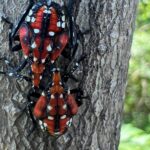
Spotted lanternfly is continuing to spread through Indiana.

Spongy moth is contained and managed, but requires awareness and vigilance to prevent its spread.

Blight, Leafminers, and Moths: The Plight of Boxwoods Boxwoods (Buxus spp.) were introduced into the United States during colonial times, and still today they are one of the most popular evergreen shrubs used in landscapes. They are frequently selected for hedges and topiaries because they are easily trimmed into geometric…Read more about Blight, Leafminers, and Moths: The Plight of Boxwoods[Read More]

Asian bush honeysuckle (Lonicera spp.) is an extremely invasive plant that is a serious problem in most areas of the Midwest. These invasive plants grow very fast, especially along woodland edges, and shade out most of the understory plants that are found in these areas. Honeysuckle can also significantly reduce…Read more about Consider Fall Eradication of Asian Bush Honeysuckle[Read More]

Despite the sublime name, tree-of-heaven, Ailanthus altissima, is a particularly bad actor when it comes to trees encountered in the Midwest. This native of Asia was introduced to North America more than 150 years ago and has since become a widespread invasive pest. Rapid growth, extremely high seed production (hundreds…Read more about Tree-of-Heaven is not so Heavenly[Read More]

It’s that time of year when we remind everyone to watch for spotted lanternfly (SLF) infestations. Spotted lanternfly is an invasive insect first detected in Pennsylvania in 2014, and has since spread throughout the eastern USA. Its preferred host is the invasive Tree-of-Heaven, but it also feeds on a wide…Read more about Spotted lanternfly egg hatch is here[Read More]

The hemlock woolly adelgid (Adelges tsugae) continues its eastward spread across the US. In 2022, seven new counties were added to the distribution map of this invasive insect. While it is not present in Indiana yet, it is confirmed throughout the eastern USA from northern Georgia to Maine, extending west…Read more about Hemlock Woolly Adelgid: Distribution update[Read More]
Sign-up to receive email news and alerts from Purdue Landscape Working Group:

This is US

For More Information

Purdue Home Page

Purdue Extension

Find your county office