Spring is just around the corner, green spaces are beginning to wake from their winter slumber, Earth Day and Arbor Day are a little over a month away, and people are ready to get outside with planting on their minds. But before you go and get your tree(s) for planting, there is quite a lot to think about. Every tree is an investment, and if properly cared for, will outlast us and potentially future generations. So, what goes into planting trees, especially large trees?
One important note for successfully planting any tree is thinking about your goals, or what you want out of a new tree. In the case of large trees, the first thing that usually comes to mind is shade. Having a large shade tree to block the sun on your home in hot summers can significantly reduce power consumption from air conditioning. Large shade trees also give us great locations to play, picnic, or relax outside in our backyard, at local playgrounds, or parks. Given the space and care to grow, they can create wonderful local environments and beautiful aesthetics, driving down neighborhoods and city streets. The right species can benefit local wildlife with food production and habitat improvement.
When you know what you want, you can begin to assess your site to see if you have the right space for your future tree. Large trees require larger spaces. If your tree survives to a mature size, will it interfere with anything else around it? Are there utility lines above or below your planting site? What is the proximity to homes, buildings, or other structures? Will it obstruct road signs, lights, or line of sight? Will falling leaves, nuts, or fruits adversely affect anything around the tree? What is the quality of the soil: pH, well-drained, wet, clay, loam, or sand? A poorly assessed planting site could lead to a doomed planting project by placing the wrong tree in the wrong place.
Once you have your goals in mind and know what type of site you have, you can begin to consider what species you may want to plant. A couple of good resources for considering species selection in the Midwest include your local extension offices, reputable nurseries, and online resources like the Morton Arboretum. In the case of large shade trees, we all would like to have our shade now, but trees take time to reach mature heights. That being said, some species grow a little faster than others. Faster-growing trees that grow well in urban settings include:
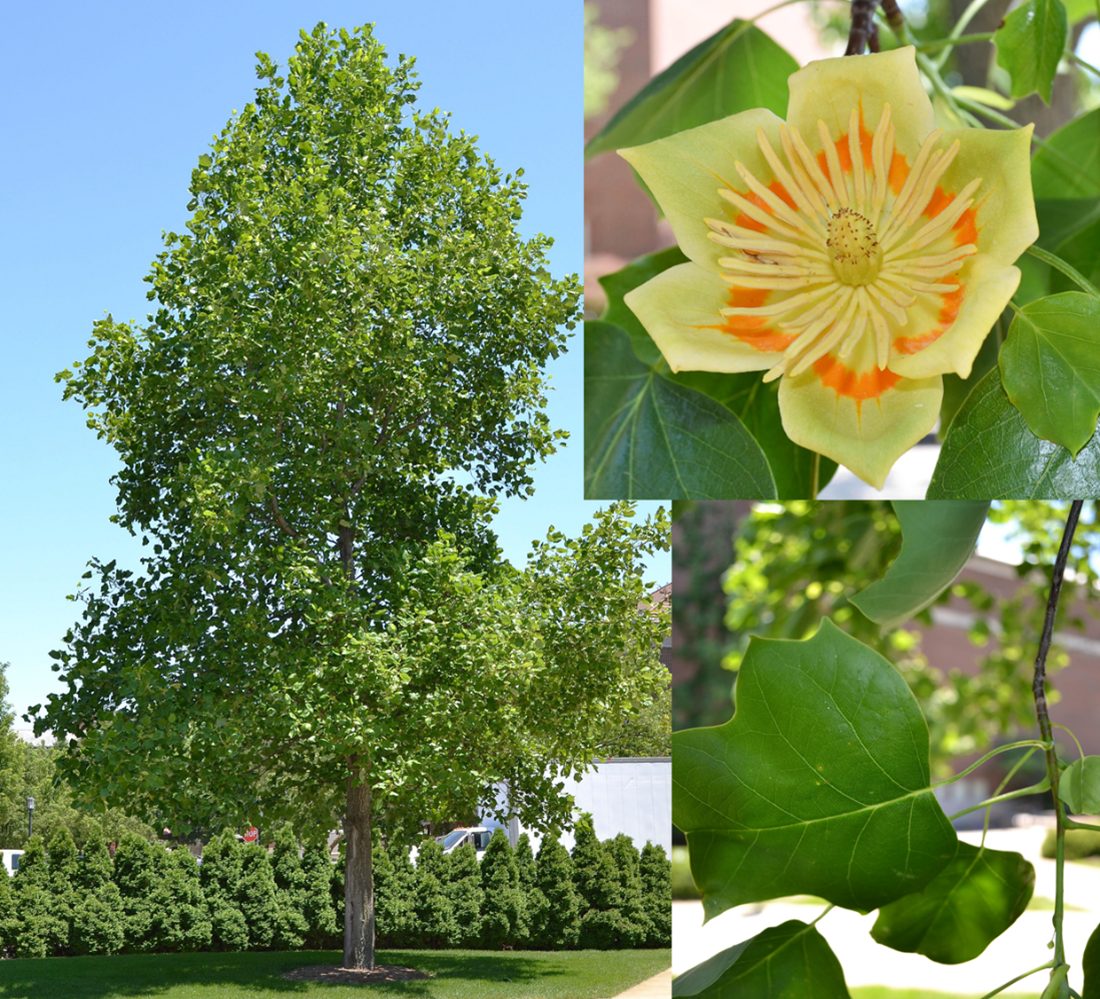
- Tuliptree or tulip-poplar, Liriodendron tulipifera, the state tree of Indiana, can withstand varying light exposure, acidic soil that is moist to well-drained, is moderately sensitive to drought, and can reach heights up to 70-90 feet. It is susceptible to ice damage and has weaker wood than other species.
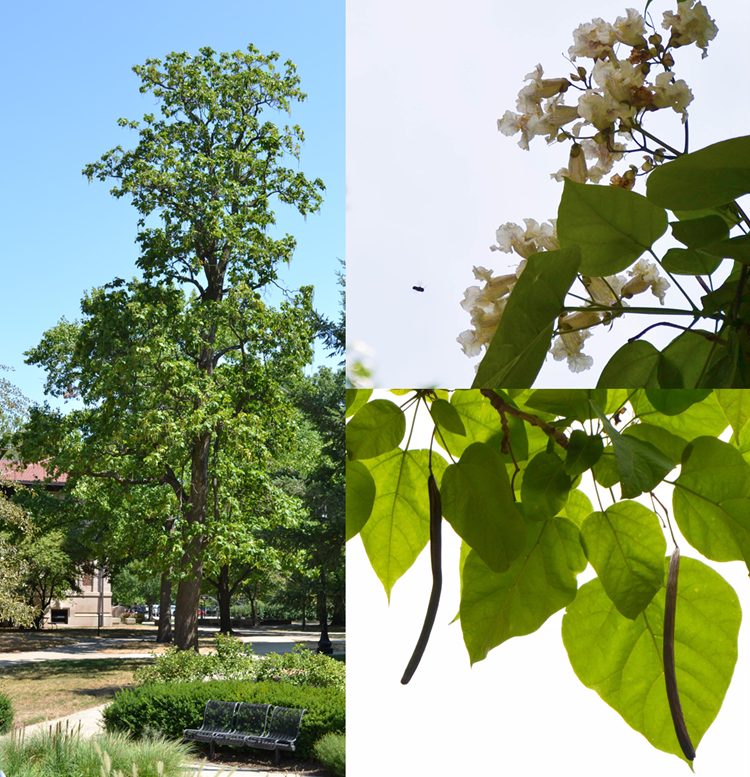
- Northern catalpa, Catalpa speciosa, is slightly smaller at about 60 feet in good conditions, thrives in full sun, and a little more alkaline soil that is moist to well-drained. Large leaves and long bean-like seed pods can be messy, and the wood and structure are on the weaker side.
- Dawn redwood, Metasequoia glyptostroboides, is a deciduous conifer (drops its foliage every fall) that can reach heights of 70-100 feet. A non-native tree, it does very well in urban settings without competing with native trees, and can survive full sun in acidic, moist to well-drained soils. It is tolerant of some drought and flooding as well as road salt during the winter.
-
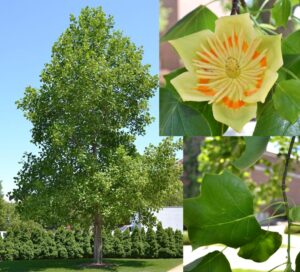
- Figure 1:Tuliptree or tulip-poplar, Liriodendron tulipifera; tree structure, flower, and leaf. Photo Credit: Purdue Arboretum
-
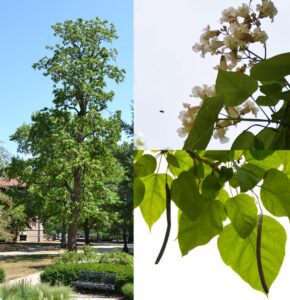
- Figure 2: Northern catalpa, Catalpa speciosa; tree structure, flower, and leaf. Photo Credit: Purdue Arboretum
-
- Figure 3: Dawn redwood, Metasequoia glyptostroboides; tree form, leaf, and cone. Photo Credit: Purdue Arboretum
Next, we have some examples of trees slowing down to moderate growth:
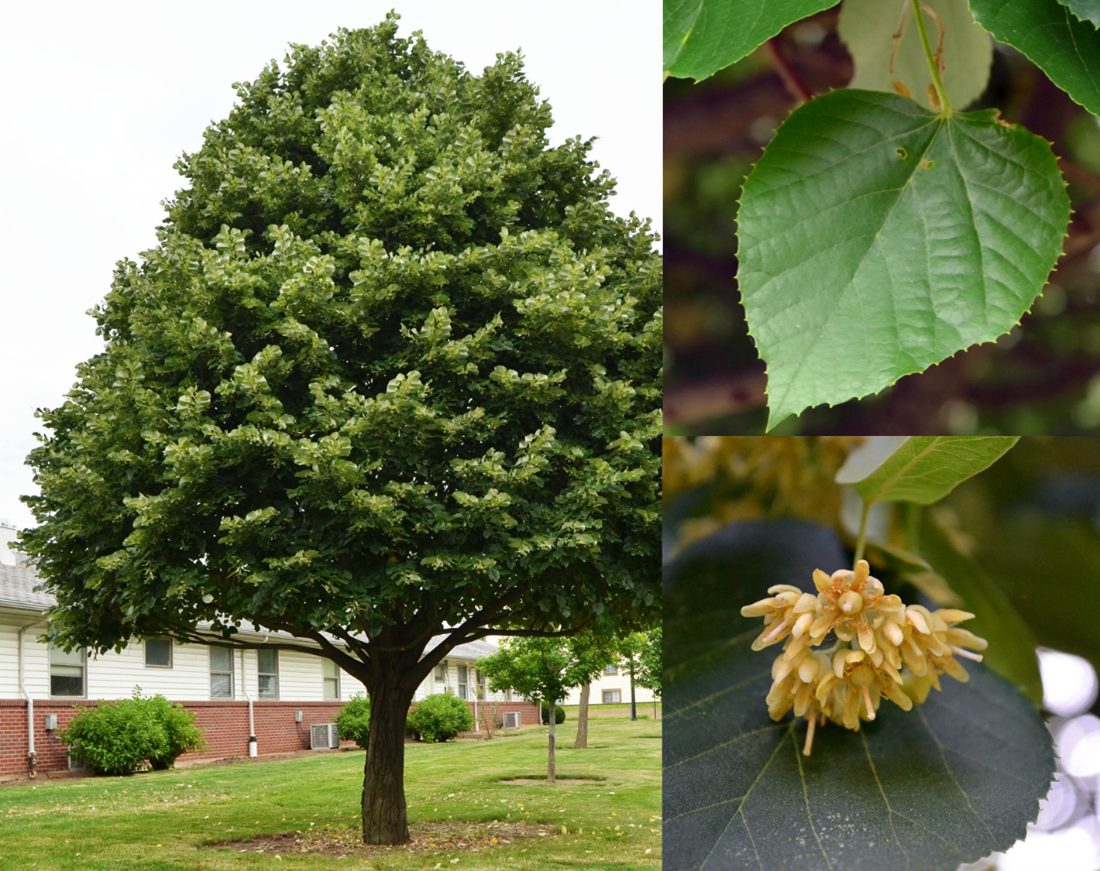
- Silver linden, Tilia tomentosa, another non-native, is a common street tree that can reach heights up to 70 feet. Surviving in full sun to shade, it does well in moist to well-drained soils and is tolerant of some drought, alkaline soils, and road salt. Leaves that are dark green on top and silvery on the bottom, and flowers that can benefit some pollinators.
- Northern red oak, Quercus rubra, is one of my favorite native trees and reaches mature heights up to 75 feet. Preferring acidic, moist to well-drained soils, they can tolerate some drought as well as alkaline soils and clay soils. Leaves are dark green in summer and a beautiful red in the fall, with acorn production and interesting branch structure that benefits native birds and small mammals.
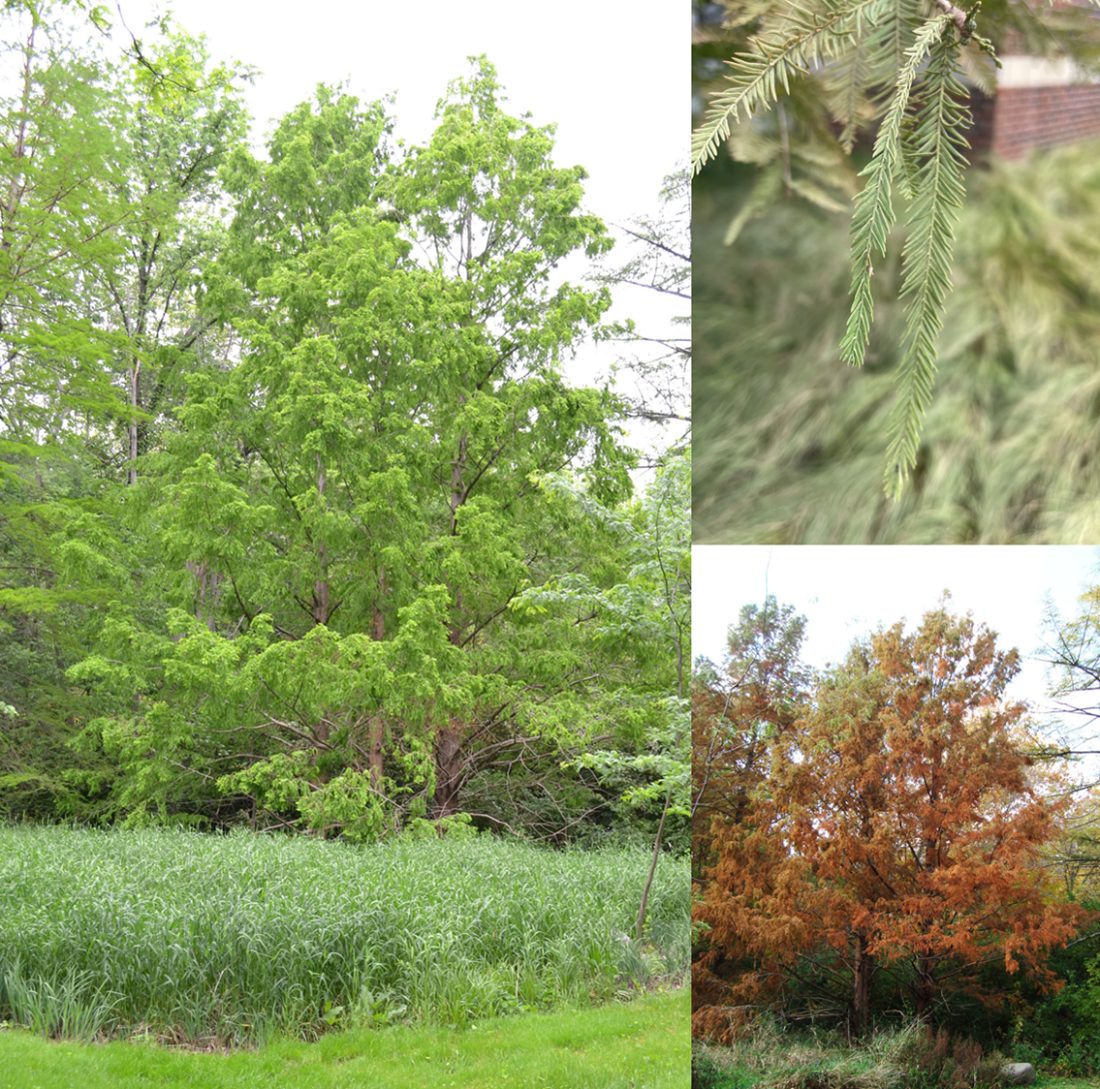
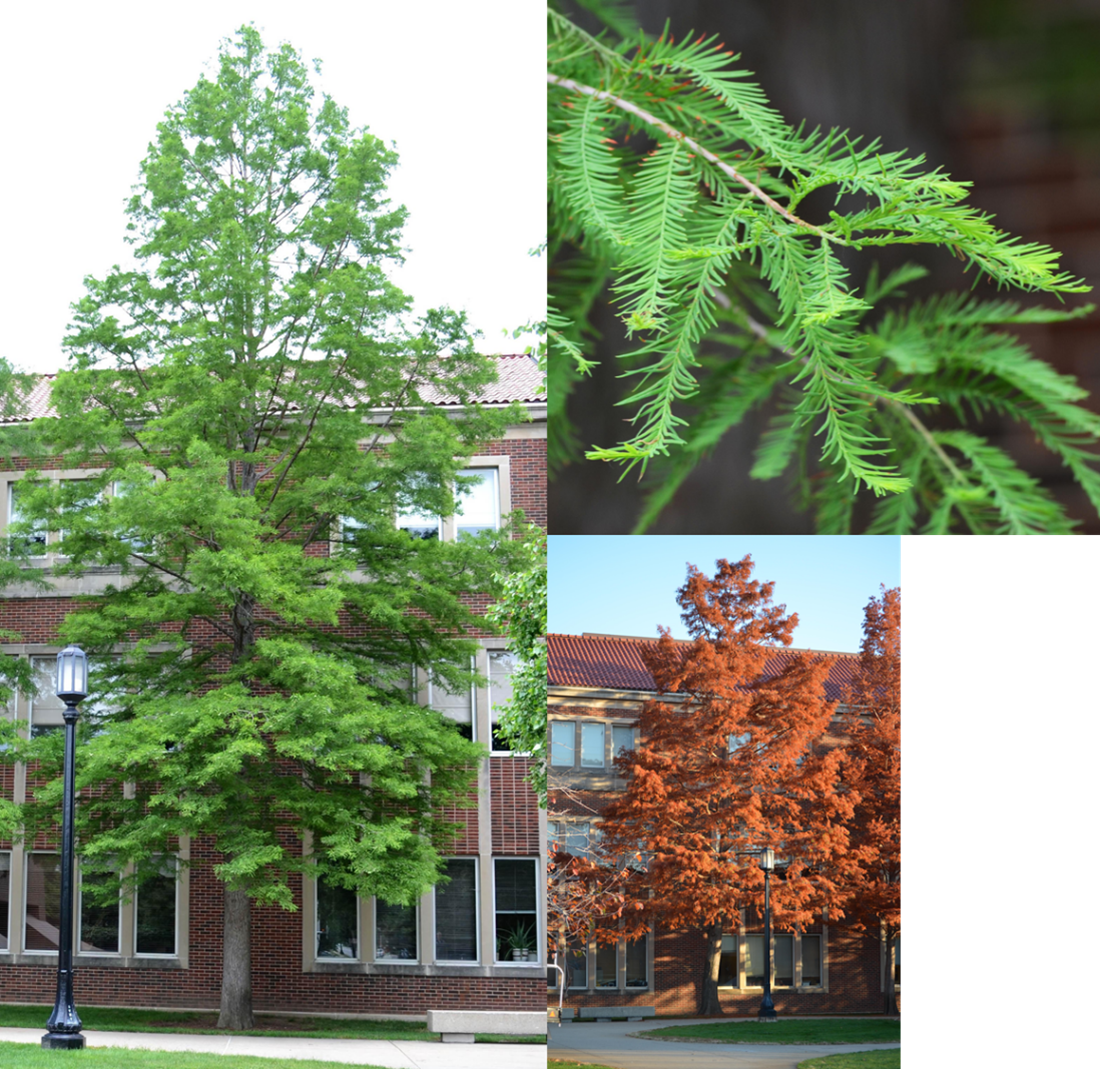
- Bald-cypress, Taxodium distichum, is similar to the dawn redwood. A deciduous conifer that loses its needles after the fall and can grow up to 70 feet. It can survive many soil types, but thrives in acidic, wet soils. In wetter sites, one thing to take into consideration is that it can send up “knee-like” roots well above the soil line to improve structural support and gas exchange. If these appear in lawn situations, they can both damage and be damaged by mowing operations. Extending mulch beds can reduce these negative interactions.
-
- Figure 4: Silver linden, Tilia tomentosa; Tree form, upper leaf, and flower. Photo Credit: Purdue Arboretum
-
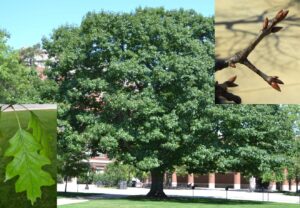
- Figure 5: Northern red oak, Quercus rubra; Tree form, leaf, and buds. Photo Credit: Purdue Arboretum
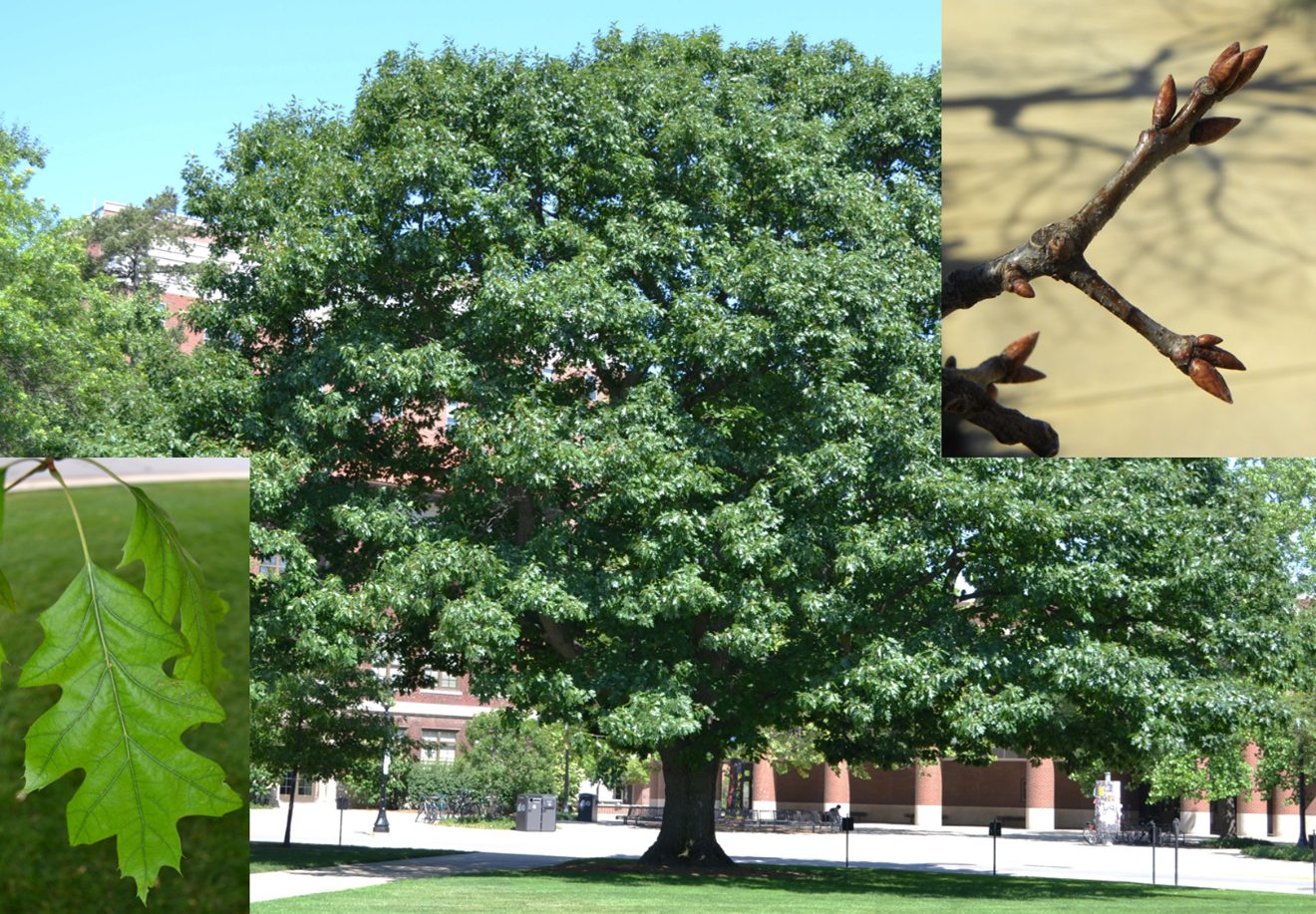
-
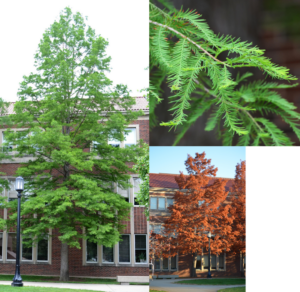
- Figure 7: Bald-cypress, Taxodium distichum; Tree form, Fall color, and needles. Photo Credit: Purdue Arboretum.
These suggestions are a small sample of large shade trees that can grow well in different urban settings. Remember to think of what the overall goal is for your planting and to assess your site to make informed species choices. With proper forethought, you can make a resilient landscape that your trees will be able to survive in for years and years. If you still have questions, you can contact your local extension office or find an ISA Certified Arborist at https://www.treesaregood.org/findanarborist/arboristsearch.
Other Resources
Tree Selection for the “Un-natural” Environment