Scale insects are some of the most common pests sent in for identification from homeowners, arborists, and nurseries. This series will highlight some of the most frequently encountered scales in our region with an emphasis on their identification, biology, potential for damage, and control options.
Scales are a type of ‘True Bug’ (Order Hemiptera) and are related to aphids, cicadas, and leaf hoppers. Scales are highly modified bugs which have traded mobility for a specialized life attached to plants where they insert their mouthparts into vascular tissues and drink sap from within their host. This can cause some stress to a plant, especially when scales are in large numbers. However, the larger concern is often from the honeydew they secrete – the sugary liquid leftovers from the sap they drink – which can promote sooty mold growth which detracts from the ornamental value of plants and can inhibit their photosynthesis and fitness in the landscape.
Scales can be roughly divided into two functional groups: armored scales and soft scales. Soft scales (Figure 1) are sticky to the touch and are usually somewhat spherical. Armored scales (Figure 2) are usually much flatter and are covered by a waxy protective shell called the ‘test.’ Females of both types of scales lay many eggs which hatch into “crawlers” which are a mobile life stage that seek out tasty parts of their plant host. This crawler stage is when they are the most vulnerable and is the best time to enact control measures.
Control of scales relies on an accurate identification which informs the appropriate timing of several shared techniques. First, plants should be kept healthy. Draught, heat, or other general stressors often lead to higher susceptibility to scale pests. If further control is still required, pesticide applications should be coordinated with crawler activity and seasonally timed to avoid negatively impacting natural enemies of scales and pollinators. A full guide on control measures is included in the fact sheet Scale Insects on Shade Trees and Shrubs. The Purdue Plant & Pest Diagnostic Lab always accepts samples where we will determine the scale problem and provide further control recommendations.
As the days get warmer and our landscape begins to green up, keep an eye out for scales in the landscape and articles on some of our most common species in upcoming Purdue Landscape Report issues this season.
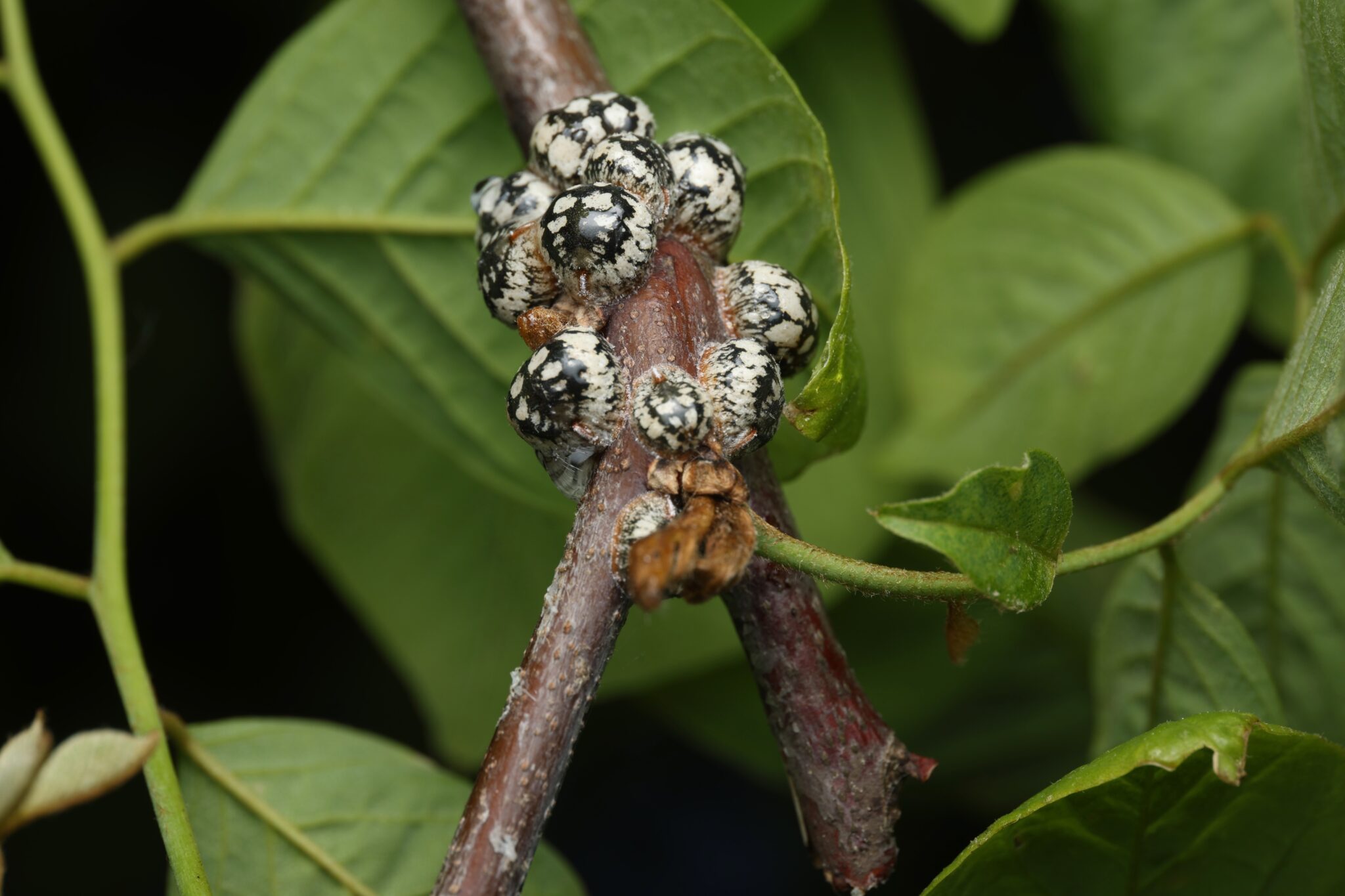
Figure 1. Calico Scale is a soft scale found commonly on many hardwoods in our area. They are often found in clusters where leaves and stems branch off.
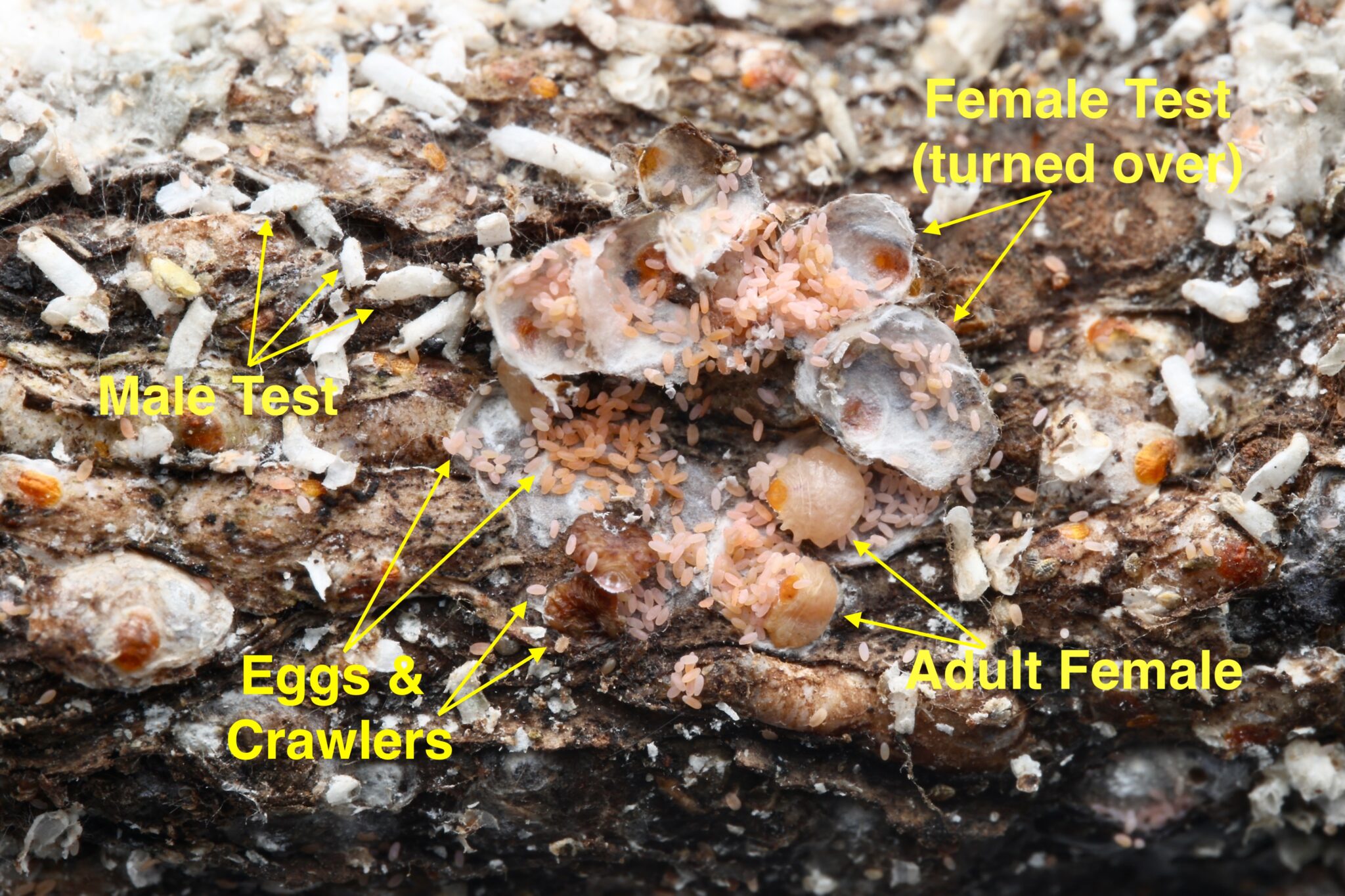
Figure 2. White Peach Scale is a common armored scale in our area. The different life stages are often found together, but be on the look out for the minute crawlers.